East Tennessee ALPR Transparency Hub
Tracking Flock Safety and automated license plate reader programs, public records, contracts, government decisions, and surveillance activity across East Tennessee — community by community.

☰ Jump to
A Local Camera Can Become Part of a Much Larger Network
Looking only at the number of cameras installed by one city or county does not necessarily show the practical reach of an ALPR system. Vehicle-location records can be stored in a centralized platform and, depending on agency access and sharing settings, searched beyond the jurisdiction where the original camera is located.
ONE VEHICLE PASSES A LOCAL CAMERA
│
├── license plate
├── timestamp
├── camera location
└── vehicle image / characteristics
        │
        ▼
LOCAL ALPR SYSTEM
        │
        ▼
CENTRALIZED SEARCH PLATFORM
        │
        ├── local agency access
        │
        └── authorized sharing
              │
              ├── nearby jurisdictions
              ├── county agencies
              ├── state agencies
              └── other participating agencies
                      │
                      ▼
            INDIVIDUAL CAMERA SYSTEMS
            CAN BECOME PART OF A MUCH
            LARGER SEARCHABLE NETWORK
That is why this hub looks at East Tennessee as a region while still documenting each city and county separately.
Questions about ALPR systems can come from different directions: constitutional limits on government power, civil-liberties and privacy concerns, roadside safety and permitting, system misuse or error, and local control over surveillance infrastructure.
                            FLOCK
                              │
               Mass collection of vehicle movements
                              │
        ┌─────────────────────┼─────────────────────┐
        │                     │                     │
        ▼                     ▼                     ▼
┌─────────────────┐   ┌─────────────────┐   ┌─────────────────┐
│ CONSTITUTIONAL  │   │ CIVIL LIBERTIES │   │ ROADSIDE SAFETY │
│ LIMITS / RIGHTS │   │ & PRIVACY       │   │ & PERMITTING    │
└────────┬────────┘   └────────┬────────┘   └────────┬────────┘
         │                     │                     │
         ▼                     ▼                     ▼
 Government power       Ordinary travel       Surveillance poles
 should have limits.    becomes searchable    still raise questions
                        location data.         of approval, placement,
                                              ownership and permitting.
         │                     │                     │
         │                     │                     │
         ▼                     ▼                     ▼
 No warrant?           Who is being           Who installed it?
 No suspicion?         watched?               Who approved it?
 What safeguards       Who can search         Who owns it?
 apply?                 the records?           Was permission required?
         │                     │                     │
         └──────────────┬──────┴──────────────┬──────┘
                        │                     │
                        ▼                     ▼
               ┌─────────────────┐    ┌─────────────────┐
               │ NETWORK EFFECT  │    │ LOCAL OVERSIGHT │
               └────────┬────────┘    └────────┬────────┘
                        │                     │
                        ▼                     ▼
              Individual cameras       Records, contracts,
              can become part of       policies, permits,
              a much larger            audits and public
              searchable system.       decision-making.
                        │
               ┌────────┴────────┐
               │                 │
               ▼                 ▼
       ┌─────────────────┐ ┌─────────────────┐
       │ MISUSE / ERROR  │ │ COMMUNITY POWER │
       └────────┬────────┘ └────────┬────────┘
                │                   │
                ▼                   ▼
       Incorrect data or      Communities can
       improper searches      examine the records,
       can affect people      debate safeguards,
       who were not the       change policy, or
       intended target.       change the program.
                │                   │
                └─────────┬─────────┘
                          │
                          ▼
              ┌─────────────────────────────────┐
              │        THE COMMON THREAD        │
              │                                 │
              │ Flock and Axon are not just     │
              │ cameras. They can create        │
              │ searchable records tied to      │
              │ where and when people travel.   │
              └─────────────────────────────────┘
📍 Maryville, Tennessee
Active NetworkMaryville has deployed a Flock Safety ALPR network across city streets and key intersections. MaryvillePrivacy.org documents the contracts, policies, email correspondence, public-records disputes, and a controversial “ghost vehicle” whitelist that allows private cars to bypass system alerts.
City Council unanimously adopted “A RESOLUTION APPROVING THE INSTALLATION OF LPR/CAMERAS IN MARYVILLE, TN FOR THE PURPOSE OF PUBLIC SAFETY.”
- Andy White — Mayor. Presided; declared resolution adopted.
- Fred Metz — Vice Mayor. Made the motion to adopt.
- Tommy Hunt — Councilmember. Seconded the motion.
- Drew Miles — Councilmember. Voted in favor.
- Sarah Herron — Councilmember. Absent.
- Greg McClain — City Manager. Present.
- Sherri Phillips — City Recorder. Authorized to transmit certified copy to TDOT.
- Melanie Davis — City Attorney. Approved as to form.
- Tony Jay Crisp — Chief of Police / Director of Public Safety. Primary implementer.
- Lt. Rod M. Fernandez — MPD point of contact with Flock Safety. Arranged March 20, 2024 meeting with Flock rep.
Maryville Flock Camera Map
📍 Alcoa, Tennessee
Active · ExpandingAlcoa sits directly adjacent to Maryville, sharing major commuter routes. Regional deployments across both cities create a combined tracking net — residents commuting through Alcoa may be scanned by multiple jurisdictions in a single trip.
- October 2020: 10 stationary Flock Safety LPR cameras installed at major Alcoa entry points.
- FY 2021–2022: Two additional Flock LPRs added.
- FY 2024–2025: Further cameras added.
- Retention policy: Data held 30 days unless needed for an active investigation.
- Odis Clint Abbott Jr. — Mayor · Vaughn Belcher — Commissioner
- Jim Buchanan — Commissioner · Tracey Cooper — Commissioner
- Tanya Martin — Commissioner · Mark Johnson — City Manager
- Stephanie Coleman — City Attorney · Kim Wade — Assistant City Recorder
Alcoa Regional ALPR Map
📍 Friendsville, Tennessee
Resident-Led OutreachFriendsville is a small incorporated city in northwest Blount County, near the Lamar Alexander Parkway (US-321) corridor and the routes feeding toward Alcoa, Maryville, and the Loudon County line. A resident-led group, Freedom from Flock – Blount County, is running community outreach here, asking the Board of Mayor and Commissioners to place Flock/ALPR removal and a ban on mass surveillance on a public agenda. This section documents the city’s governing body and the citizen ask. It does not assert that Friendsville currently operates a Flock network — whether the city runs, leases, or is considering ALPR cameras remains an open public-records question.
A resident group has circulated a public call asking Friendsville citizens to contact their elected officials and request that the Board add the removal of Flock cameras within the city, and a ban on mass surveillance, to a public agenda. Tennessee’s Open Meetings Act requires Friendsville to post meeting agendas at least 48 hours in advance, and residents may address the Board directly (three minutes per speaker, name and address stated for the record).
| Office | Official | Term | Official Contact |
|---|---|---|---|
| Mayor | Steven Cardwell | 2024–2028 | mayor@friendsvilletn.gov |
| Vice Mayor | Jonathan Newberry | 2022–2026 | jnewberry@friendsvilletn.gov |
| Commissioner | Shane Rogers | 2022–2026 | srogers@friendsvilletn.gov |
| Commissioner | Margaret Maze | 2024–2028 | mmaze@friendsvilletn.gov |
| Commissioner | Dale Wilkins | — | dwilkins@friendsvilletn.gov |
Open Tennessee Public Records Act targets for Friendsville:
- Whether the City operates, leases, or is evaluating any Flock Safety or other ALPR cameras
- Any contracts, quotes, invoices, or budget lines for ALPR or camera systems
- Any written ALPR use, retention, or access policy
- Any data-sharing arrangement with the Blount County Sheriff’s Office or neighboring city networks
Until these are produced, this section stands as a governing-body and community-action record, not a deployment record.
Friendsville Map (Deflock.me)
🔗 Open DeFlock.org centered on Friendsville, TN →📍 Blount County, Tennessee
The Blount County Sheriff's Office operates its own Flock Safety license plate reader network across the county surrounding Maryville and Alcoa. BCSO's original 2020 proposal described nine cameras and a plan to combine neighboring agencies' data into what the project description called “a much larger grid.” Flock Safety's September 2026 transparency portal now reports 21 LPR cameras for BCSO.
The dedicated Blount County page tracks the 21-camera network, original 2020 procurement, expansion from nine proposed cameras to 21, current county government, the BCSO public-records dispute, Tennessee Open Records Counsel guidance, outstanding records requests, and regional surveillance developments.
View Full Blount County ALPR Transparency Page →- August 2020: BCSO sought nine stationary Flock Safety license plate readers through a Project Safe Neighborhood East Tennessee grant.
- Original funding request: $47,250 for purchase, installation, maintenance, and operating costs.
- NCIC integration: the proposal described comparison against National Crime Information Center hot sheets that the project description said were “updated every 24 hours.”
- Regional plan: BCSO said it intended to request data from Oak Ridge, Maryville, Alcoa, Lenoir City, and other agencies using the system.
- The project description stated: “This will allow for local access to a much larger grid and promotes interoperability.”
- September 2026: Flock Safety's Blount County Sheriff's Office transparency portal reports 21 total cameras, all 21 identified as LPR cameras.
Executive and program officials:
- James Lee Berrong — Blount County Sheriff. The ALPR program operates through the Sheriff's Office.
- Jared Anderson — Blount County Mayor. Anderson took office September 1, 2026.
2026–2030 County Commissioners:
Jessica Hannah · Keenan Sudderth · Mike Akard · Joe Cooper · Tanner Jones · Neal Porter · Robbie Bennett · Robert G. Simerly · Bob Ramsey · Rick Carver · Nick Bright · Misty Davis · Shannon Effler · Jasmine Satterfield · Roy L. “Hoot” Shields · Jeff Jopling · David Corwin · Chip Blakenship · Doug Moore · David Wells
In September 2026, a public-records request submitted to BCSO included Tennessee photo identification with the driver's license number redacted while the requester's name, photograph, address, and expiration date remained visible. BCSO later denied the request, stating that it would not accept identification “altered from its original form.”


This Tennessee sample driver license illustrates how selected information can be obscured while other identifying information remains visible.
Illustrative example only: this is not the identification submitted to BCSO.
September 11, 2026: Open Records Counsel provided written guidance directly to BCSO concerning the disputed identification.
Open Records Counsel stated that if the requester's name, address, and expiration date are visible, its position is that the identification is “sufficient to establish Tennessee citizenship and the request should be processed.”
Tenn. Code Ann. § 10-7-503 →
The public record reviewed to date does not fully explain the expansion of Blount County's ALPR network from the original nine-camera proposal to the 21 LPR cameras currently reported by Flock Safety.
This investigation will be updated as additional public records become available. Where the underlying record has not yet been established, this project does not attribute a particular decision, approval, or vote to an individual official.
- Tennessee public records show Flock Safety pitched a regional drone-as-first-responder program involving Maryville, Alcoa, Blount County, and the Blount County 911 Center.
- The estimated regional program cost was $300,000 to $600,000 per year.
- The proposal shows how ALPR infrastructure may be combined with additional real-time surveillance technologies.
Blount County Regional ALPR Map
The standalone page contains the expanded chronology, current camera count, county-government accountability record, BCSO public-records dispute, state Open Records Counsel guidance, outstanding records, and source material.
📍 Knoxville, Tennessee
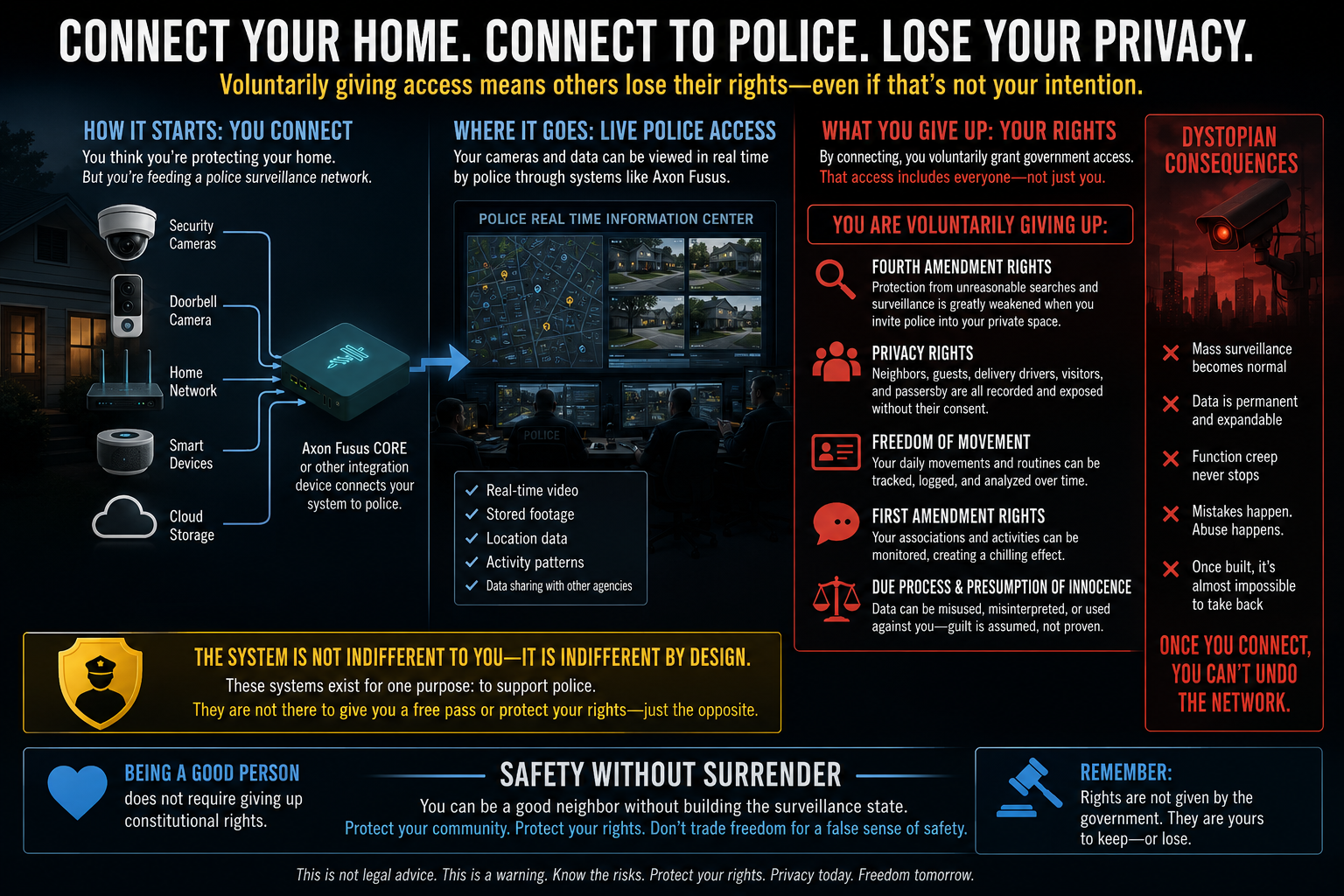
Knoxville’s Flock contract expired Dec 31, 2025; cameras went offline Jan 1, 2026. The city is transitioning to Axon ALPR while rolling out a $9.4M drone program with 12 drones and city-wide docking stations. A vendor change is not a privacy fix. Axon is also marketing “Connect Knoxville,” a program asking residents and businesses to link their private security cameras into KPD’s platform.
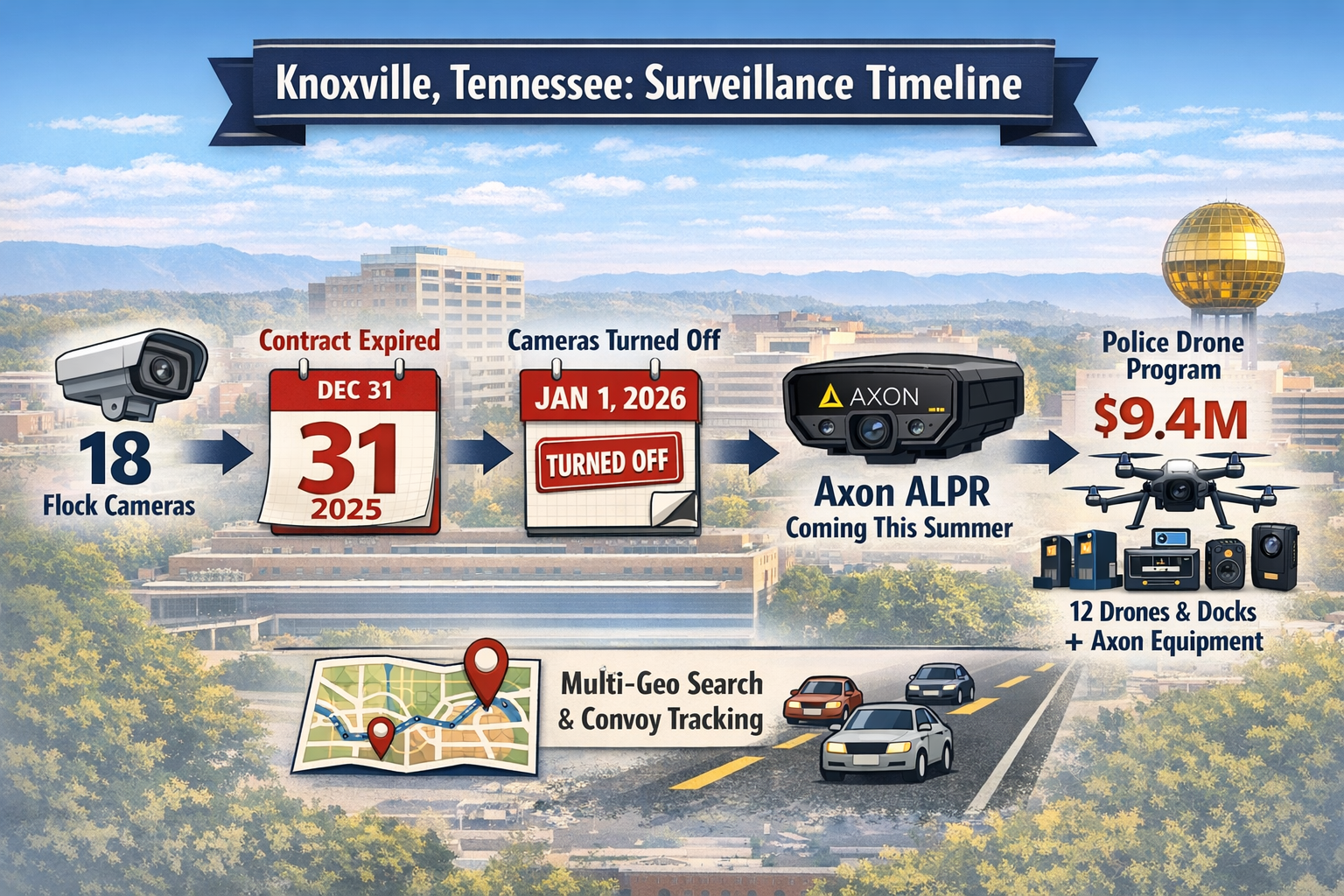
- 18 Flock cameras placed around Knoxville (City of Knoxville “City Matters” page).
- Contract expired Dec 31, 2025; cameras turned off Jan 1, 2026.
- KPD plans to transition to Axon ALPR “this summer.”
- $9.4M approved by City Council for KPD tech expansion.
- Plan includes 12 drones + docking stations around the city.
- Package covers drones, body & dash cameras, and Tasers from Axon.
- KPD promised a public dashboard showing drone flight paths, duration, and launch purpose.
- Drones not operational for at least ~6 months; KPD must finalize policies with Axon.
Watch this local news report discussing Knoxville’s transition from Flock to Axon ALPR, the city’s expanding drone program, and the growing surveillance network.
Facebook does not permit this video to play directly on external websites.
Watch the Video on Facebook →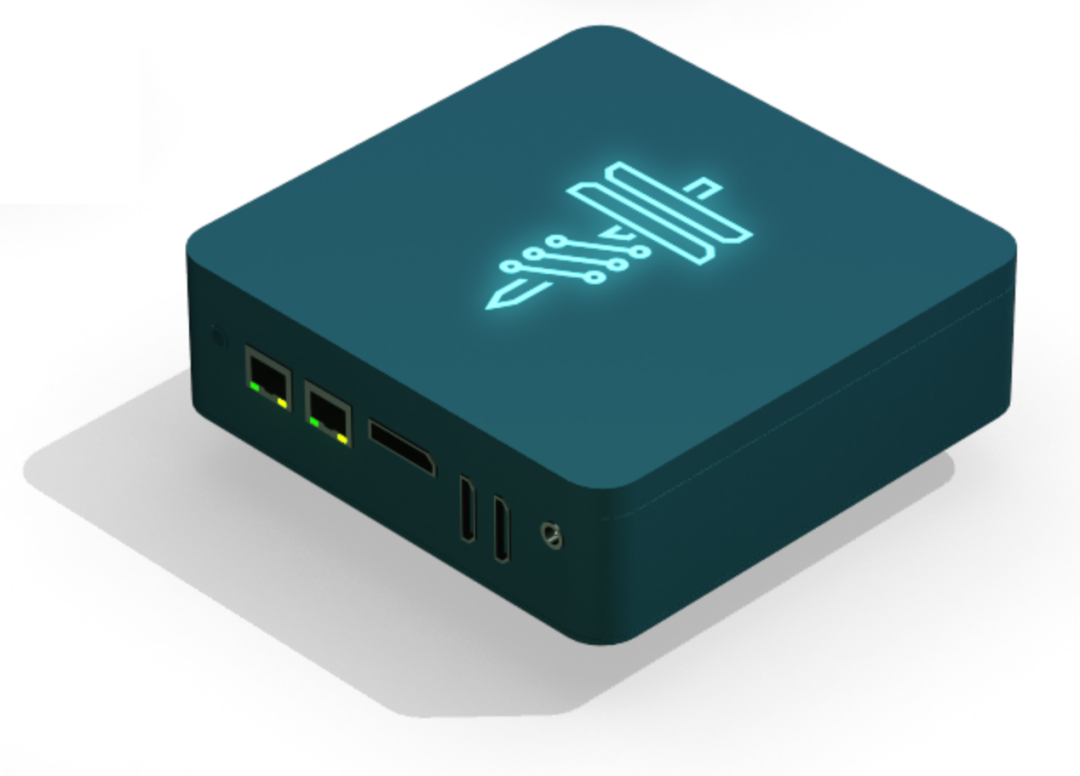
- connectknoxvilletn.org asks residents and businesses to register their cameras with KPD (Level 1) and, at Level 2, to purchase a fususCORE device that gives KPD conditional live access to private camera feeds.
- Despite the civic-sounding .org name, the site is Axon-operated: the footer reads “Powered by Axon, ©2026 Axon Enterprise, Inc.” and the contact address is connect@fusus.com.
- Residents pay for the hardware themselves; feeds route to AWS GovCloud into FususONE, the platform behind KPD’s Real Time Information Center.
- AI-enabled CORE devices come “pre-loaded with dozens of search and analysis variables and profiles” that trigger automatic alerts across a designated area.
- The program FAQ claims registry data is “protected non-public data” and not subject to public records disclosure: a database of citizen camera locations the public cannot inspect.

 🧾 Knoxville Accountability Log — Who Approved These Programs
A) 2026 Drone + Axon Program — Elected Officials
- Mayor: Indya Kincannon
- Council Districts 1–6: Karyn Adams, Nathan Honeycutt, Doug Lloyd, Matthew DeBardelaben, Charles Thomas, Denzel Grant
- At-Large A/B/C: Lynne Fugate, Debbie Helsley, Amelia Parker
- Police Chief: Paul Noel
B) Flock ALPR Procurement (Dec 2020) — Historical Record
- Kenny Miller — Deputy Chief; KPD Flock order-form contact.
- Natalie Reyes — Contract Manager, City Purchasing; managed sole-source letter.
- Penny Owens, Stacey Payne — CC’d on sole-source email thread.
Knoxville Regional Map (Deflock.me)
🔗 Open DeFlock.org centered on Knoxville, TN →Flock’s Multi-Geo & Convoy Tools →
📍 Sevierville, Tennessee
TPRA DeniedSevierville denied a TPRA request for sample ALPR images, citing Tenn. Code Ann. § 10-7-504(a)(32). The City did provide a complete list of its camera locations — reproduced below.
“We will not provide ALPRS images as requested. The justification for withholding these images is Tenn. Code Ann. § 10-7-504(a)(32)… Captured plate data must be treated as confidential and shall not be open for inspection by members of the public.”
- Robbie Fox — Mayor · Mitch Rader — Vice Mayor
- Wayne Helton, Devin Koester, Travis L. McCroskey, Joey Ohman — Aldermen
- Dustin Smith — City Administrator · Lynn McClurg — CFO/City Recorder
- Ed Owens — City Attorney · Joseph Manning — Police Chief
Sevierville Map (Deflock.me)
🔗 Open DeFlock.org centered on Sevierville, TN →📍 Oak Ridge, Tennessee
TPRA — No ResponseOak Ridge has a documented Flock Group ALPR lease renewed by City Council vote — and failed to respond to a TPRA request for basic camera records within the legally required 7 business days, likely violating Tennessee open-records law.
- July 8, 2024 (Res. 7-103-2024): Voted Aye: Mayor Pro Tem Jim Dodson; Councilmembers Derrick Hammond, Charlie Hensley, Chuck Hope, Ellen Smith. Absent: Sean Gleason, Mayor Warren Gooch.
- August 11, 2025: Renewed Flock lease (≤$52,000). Roll call: Mayor Warren Gooch, Mayor Pro Tem Jim Dodson, Councilmembers Sean Gleason, Derrick Hammond, Charlie Hensley, Chuck Hope, Ellen Smith.
- City Manager: Randy Hemann
Under Tenn. Code Ann. § 10-7-503(a)(2)(B), a records custodian must — within 7 business days — provide records, issue a written denial with legal basis, or give a written time estimate. Silence is treated as denial of access and is likely non-compliant with the statute and OORC guidance.
Oak Ridge Map (Deflock.me)
🔗 Open DeFlock.org centered on Oak Ridge, TN →📍 Johnson City, Tennessee
Johnson City approved one of the most extensive Flock Safety deployments in East Tennessee — a 10-year agreement covering 145 LPR devices, 145 PTZ cameras, gunshot detection, mobile security trailers, and a Real Time Crime Center. The per-capita camera density is among the highest in the region.
Approved on Consent Agenda, 4–0 vote.
- John Hunter II — Mayor. Presided; present.
- Greg Cox — Vice-Mayor. Voted in favor.
- Jenny Brock — Commissioner. Voted in favor.
- Joe Wise — Commissioner. Voted in favor.
- Todd Fowler — Commissioner. Absent.
- Cathy Ball — City Manager. Present. · Stephanie Laos — City Recorder. Present.
Local Coverage — Johnson City Flock Cameras
Johnson City Map (Deflock.me)
🔗 Open DeFlock.org centered on Johnson City, TN →📍 Crossville, Tennessee
Active NetworkCrossville marks the western edge of the documented network, in Cumberland County on the plateau between Knoxville and Nashville. Crossville PD has operated Flock Safety ALPRs since 2022, originally pitched by Chief Jessie Brooks as “extra eyes” for investigations. The dedicated companion site CrossvillePrivacy.org documents the full procurement trail, taxpayer cost projections, the Tennessee misuse record, and a City Council liability brief.
- June 2022: Chief Jessie Brooks presents Flock to council and local media as “extra eyes” for investigations, Amber/Silver alerts, and database hits — not red-light ticketing.
- Flock Quote Q-00234: 10 Falcon ALPRs at $2,500 each = $25,000 recurring, plus $3,500 implementation ($28,500 total before tax); 12-month term starting Aug 26, 2022.
- September 2025: EFF’s Atlas of Surveillance lists 11 Crossville PD Flock ALPRs — one more than quoted, with no published public map explaining the growth.
- Cost trajectory: At quoted rates, cumulative spend reaches roughly $128,500 over five years and $253,500 over ten — before tax, add-ons, or the 11th camera.
- R.J. Crawford — Mayor (term expires 12/3/2026)
- Art Gernt — Mayor Pro-tem / Councilmember
- Mike Turner — Councilmember · Mark Fox, MD — Councilmember
- Jessie Brooks — Chief of Police. Primary implementer; pitched the system in 2022.
- Valerie Hale — City Manager · Baylee Rhea — City Clerk
- Randall A. York — City Attorney
- Greg Wood — City Manager at the time of the 2022 Flock work-session discussion (historical).
Crossville Map (Deflock.me)
🔗 Open DeFlock.org centered on Crossville, TN →🗺️ East Tennessee ALPR Coordination Map
This map plots agencies invited to Flock Safety’s “Deep Dive” regional training event in Sevierville on March 1, 2024. Markers reflect agency headquarters. Data from a TPRA-obtained internal Flock Safety email distribution list.
💡 Inclusion indicates regional coordination and invitation — not necessarily in-person attendance.
Who Was on Flock’s Regional Training List
| Region | Agency | Personnel in TPRA records |
|---|---|---|
| Maryville | Maryville Police Dept. | Rod Fernandez, Daniel Dockery, Adam Russell, Chief Tony Crisp |
| Alcoa | Alcoa Police Dept. | Underwood, Carswell, Sparks, Nielsen, Hughes |
| Knoxville | Knoxville Police Dept. | McVay, Harvey, Marshall, Chadwell, Sisk, Henderson |
| Knox County | Knox County Sheriff’s Office | Sheriff Tom Spangler, Jennifer Ward |
| Sevierville | Sevierville Police Dept. | Milliron, Brantley, Turner, Powers |
| Sevier County | Sevier County Sheriff’s Office | Cassidy, Russell, Legg |
| Tri-Cities | Kingsport Police Dept. | Charles DeGreen, Martin Taylor, Kevin Ewing |
| Regional | Additional agencies | Lenoir City PD, Sweetwater PD, Rocky Top PD, Bluff City PD, Monroe County SO, Hamblen County SO, Unicoi County SO, White Pine PD, Dandridge PD, Bean Station PD, Tazewell PD, Maynardville PD, Blaine PD, Spring City PD, and others. |
Flock Safety is not the only surveillance-equipment vendor operating in East Tennessee. Propel Ops LLC dba Critical Tech Solutions of Knoxville sells mobile surveillance towers, solar surveillance trailers, IP cameras, antenna masts, and rapid-deploy police camera systems to law enforcement, military, and government agencies across the region. According to its corporate website at criticaltechsolutions.com:
- The company markets a no-competitive-bid purchasing path for government agencies under TIPS Contract #230105, advertising “No bid documents, no RFP, no delay.”
- It identifies itself as a 2026 Strategic Alliance Partner of the FBI National Academy Associates.
- It publishes a customer case study titled “Maryville PD’s Rapid Watch Ensures Biker Bash Safety” (December 22, 2023, updated July 8, 2025), describing the Maryville Police Department’s deployment of a Hitch-Mounted RATT mobile surveillance tower during Smoky Mountain Bike Week. The case study quotes Lt. Rod Fernandez.
- Its homepage displays a testimonial section featuring Chief Tony J. Crisp’s name alongside the Maryville Police Department identifier as part of its sales marketing.
- Propel Ops LLC dba Critical Tech Solutions contributed $1,000 to Chief Crisp’s Tennessee House District 8 campaign on February 5, 2026, per filings on OpenTN.org.
The pattern this regional page documents with Flock Safety is not vendor-specific. The same dynamics — direct vendor-to-command-staff communication, marketing use of municipal identifiers, no-competitive-bid procurement pathways — are visible across multiple private vendors operating in East Tennessee.
National ALPR Map — East Tennessee Regional View (Deflock.me)
🔗 Open DeFlock.org — East Tennessee regional view →Tools & Transparency
📚 Resources & Transparency Tools
External tools to understand ALPR systems, map cameras, review audit logs, monitor local-government discussions, and pursue open records in Tennessee.
- DeFlock.org — open-source project mapping license plate readers
- DeFlock Maps — crowdsourced ALPR camera map and privacy-route tool
- Atlas of Surveillance (EFF) — police technology database
- Have I Been Flocked? — searchable Flock audit-log project
- What Are Flock Audit Logs? — explanation of audit-log records
- Eyes on Flock — independent aggregation of Flock transparency portal data
- Plate Privacy (Institute for Justice) — ALPR litigation and Fourth Amendment challenge
- Chatrie v. United States (2026) — Supreme Court opinion on third-party location data
- ALPR Watch — local-government meeting alerts for ALPR and surveillance technology
- EPIC: License Plate Recognition Systems — policy background
- ACLU: Privacy & Technology — civil-liberties policy resources
- TN Office of Open Records Counsel — Tennessee Public Records Act guidance
- RCFP Open Government Guide: Tennessee — practical overview of Tennessee records law
- Tennessee Coalition for Open Government — open-government advocacy and education
- MuckRock — public-records request tools and archive
Common Questions
❓ Q&A — East Tennessee ALPR
Why include multiple cities on one page?
Is Deflock.me an official government map?
Why do some cities deny ALPR image requests?
What’s the most useful record to request?
Does switching from Flock to Axon fix the privacy problem?
Does Maine or Virginia have laws Tennessee could copy?
Did the Supreme Court’s Chatrie decision (2026) outlaw Flock cameras?
How can I help improve accuracy?
Have public records, maps, or local information about ALPR cameras in East Tennessee?
Help grow this community resource by sending documents, tips, or verified camera locations.
This page consolidates public maps, city-specific records, and accountability data for automatic license plate reader (ALPR) and Flock Safety deployments across East Tennessee — including Axon-integrated surveillance ecosystems and emerging police drone programs — so residents understand how surveillance infrastructure is being built across the region, who approved it, what data it collects, and what they can do about it through public records, civic action, and engagement with their state and local representatives.