Flock Safety Cameras & ALPR Surveillance in Maryville, Tennessee
Public records research on Flock Safety automated license plate readers (ALPR), proposed AI drone programs, and a hidden Flock whitelist "ghost vehicle" system affecting drivers in Maryville, Alcoa, and Blount County, Tennessee.
Before the maps: remember what this is
These tools exist because this is a paid private surveillance platform. Cameras capture data in public space, and government pays subscription fees to search and analyze the resulting database. See the business model section.
📍 Maryville, Tennessee Flock Camera Map
This interactive map highlights known and observed Flock Safety surveillance camera locations throughout Maryville, Tennessee and nearby Alcoa in Blount County, Tennessee. Updated periodically to support public transparency and informed community discussion.
💡 Your email app will open automatically. Thank you for helping keep the map accurate. Maintained by MaryvillePrivacy.org
🧾 Who Approved This System: Maryville City Officials & Their Business Interests
According to the official July 2, 2024 City of Maryville Council minutes and meeting packet, the City Council unanimously adopted a resolution titled "A RESOLUTION APPROVING THE INSTALLATION OF LPR/CAMERAS IN MARYVILLE, TN FOR THE PURPOSE OF PUBLIC SAFETY."
The officials listed below voted for or facilitated this system's adoption. Where these officials are publicly associated with businesses or professional firms, those connections are included here so residents can evaluate potential conflicts of interest and ask informed questions. These business associations are listed for transparency purposes only and do not allege wrongdoing. The question residents deserve answered is: were any of these private business interests considered alongside community privacy interests when the vote was cast?
📸 Official photos courtesy of maryvillegov.com. Click any photo to view the full council profile.





- Greg McClain — City Manager. Listed as present at the adoption meeting.
- Sherri Phillips — City Recorder. Authorized to transmit a certified copy of the LPR resolution to the Tennessee Department of Transportation.
- Melanie Davis — City Attorney. Signature on the "Approved as to form" line. (Bio · Firm) — Transparency question: Were enforceable privacy safeguards written into policy before approval?
- Lt. Rod M. Fernandez — Maryville PD. Primary Flock Safety point of contact. Arranged March 20, 2024 vendor meeting and drafted the May 31, 2024 letter to the Electric Department to secure camera installation permissions. The City confirmed Lt. Fernandez approved the three plates added to the hidden Safe List with no written policy governing that decision.
- Written policy published publicly: who can search, what justification is required, retention, sharing, and audit logging.
- Independent oversight: periodic audits + public reporting (counts, reasons, hits, sharing, misuse findings).
- Strict limits: retention caps, purpose limitation, and clear bans on repurposing beyond stated uses.
- Procurement transparency: full contract, costs, renewals, and any add-on analytics products.
- Vendor influence safeguards: written gift/hospitality rules + disclosure of vendor meetings and communications (especially when discussing expansions like drones).
Source: City of Maryville City Council Meeting Minutes, July 2, 2024, agenda background materials, and email records produced through the Tennessee Public Records Act. Business/professional links and "transparency questions" are provided for context and accountability and do not allege wrongdoing.
🔓 These Systems Were Designed Without Oversight — On Purpose
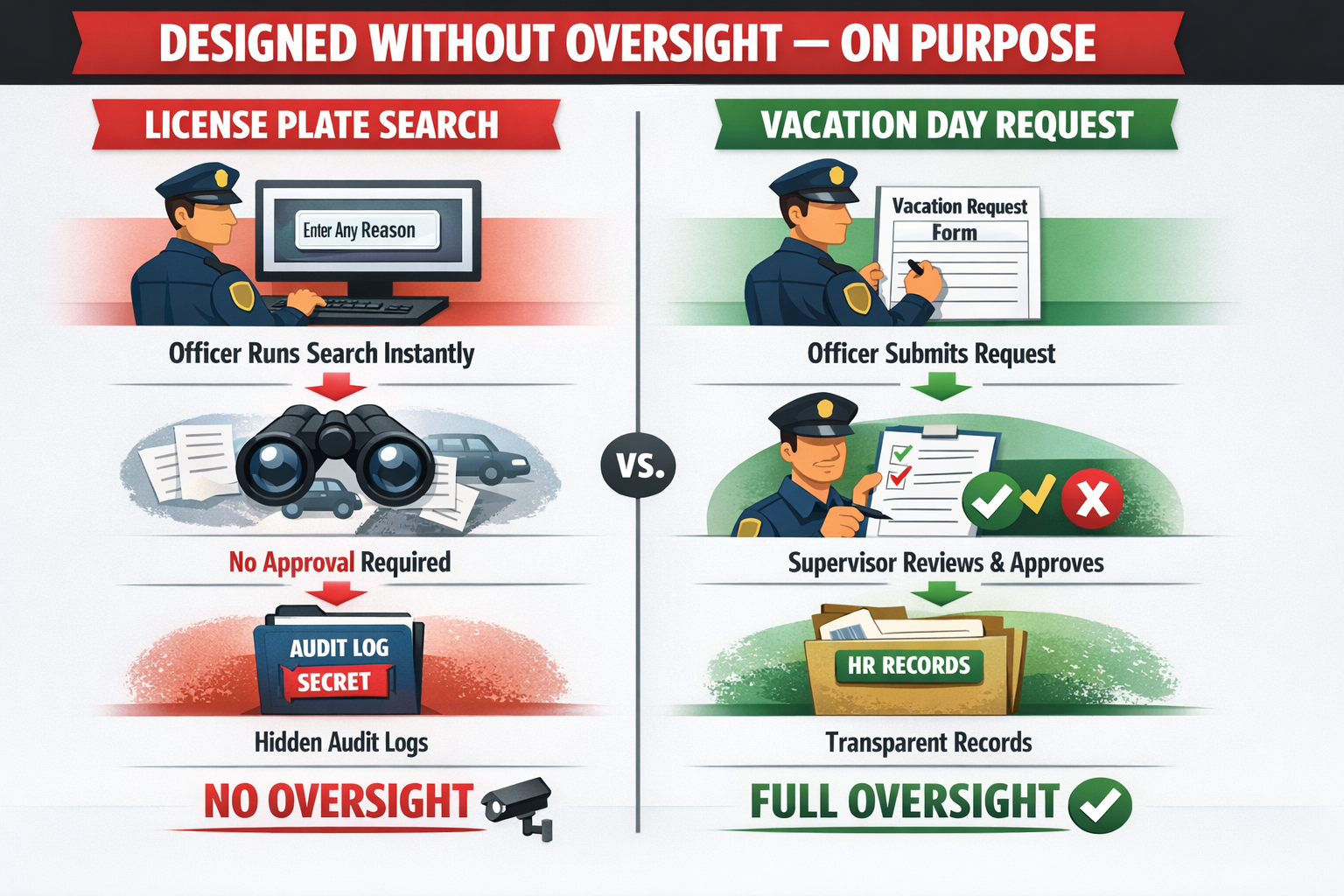
This isn't a gap that slipped through. It's a product decision. Flock Safety and Axon could easily build supervisor-approval workflows into their platforms. They don't — and the reason isn't technical.
|
🔴 To Run a License Plate Search in Maryville
|
|
✅ To Request a Vacation Day in Maryville
|
The technology to fix this already exists. A two-person integrity workflow for ALPR searches would be straightforward to implement: an officer submits a search request with a documented reason, a supervisor approves or denies on their phone within seconds, and the approval is logged automatically. This is how most government procurement, use-of-force reporting, and evidence handling systems work.
Flock and Axon don't build it that way. Frictionless access means more searches, more data, more platform value. Robust audit trails mean more exposure when misuse is discovered. The absence of a supervisor-approval workflow is not an oversight — it is a feature that protects the vendor's business model, not the public.
|
👤 Anyone can be tempted
Documented misuse spans chiefs, deputies, and patrol officers. Power without accountability is a universal human problem — not a rare one.
|
|
🏢 Vendors benefit from opacity
Every confirmed misuse case was found through public records requests — not vendor-provided audit tools. Flock and Axon's audit logs are incomplete, inconsistently kept, and rarely public.
|
|
📋 The fix is simple
Require supervisor approval before every plate search. Publish monthly totals. Cap retention. These are policy choices — any council member could demand them today.
|
|
|||
|
|||
|
|||
|
⚠️ When Oversight Fails: Real Cases Near Maryville and Across the Country
Supporters of ALPR systems often say "if you've done nothing wrong, you have nothing to hide." But the documented record of how these systems are actually used tells a different story — one of personal vendettas, sexual misconduct, officers with disciplinary histories moving between departments, and a complete absence of the checks ordinary citizens take for granted in other contexts.
🛒 Walmart Has More Oversight on Returns Than Police Have on Flock Searches
When you return something at Walmart, the system requires an employee login, records your photo, checks your ID, logs the transaction, and flags unusual patterns — all before approving a $12 return. When a police officer searches your movements in Flock, many departments simply require a typed "reason" — often a single word like "investigation" — with no supervisor approval, no probable cause standard, and no community audit. In Wisconsin, data shows nearly 1,900 ALPR searches at one department in six months, the sole justification being the word "investigation." No names. No outcomes. No accountability. More accountability exists for returning a pair of socks than for tracking every neighborhood a resident has visited.
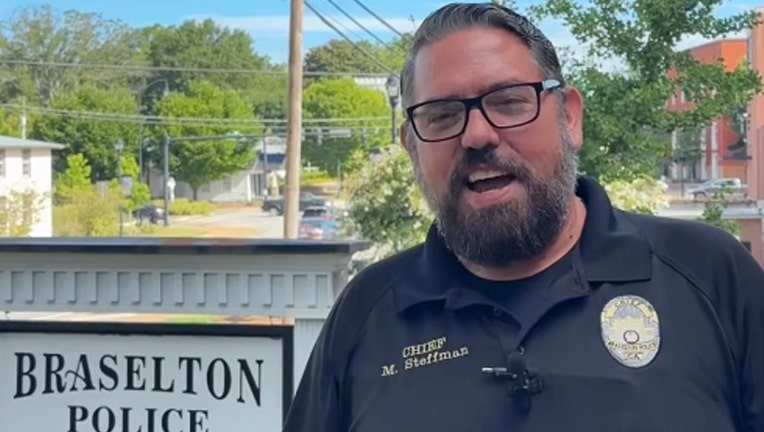
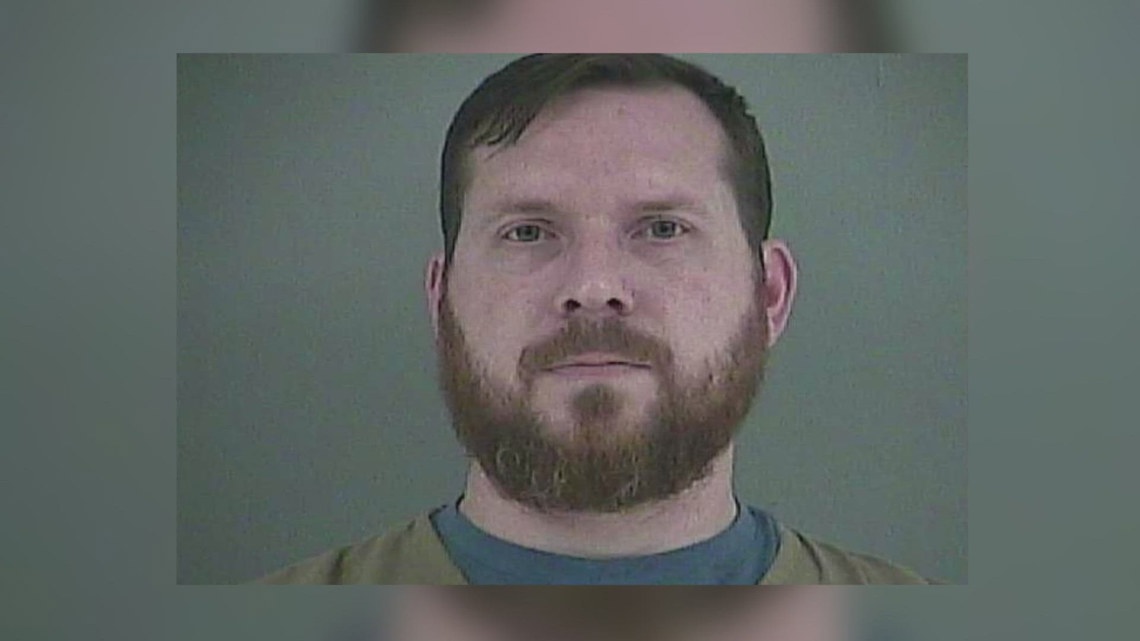
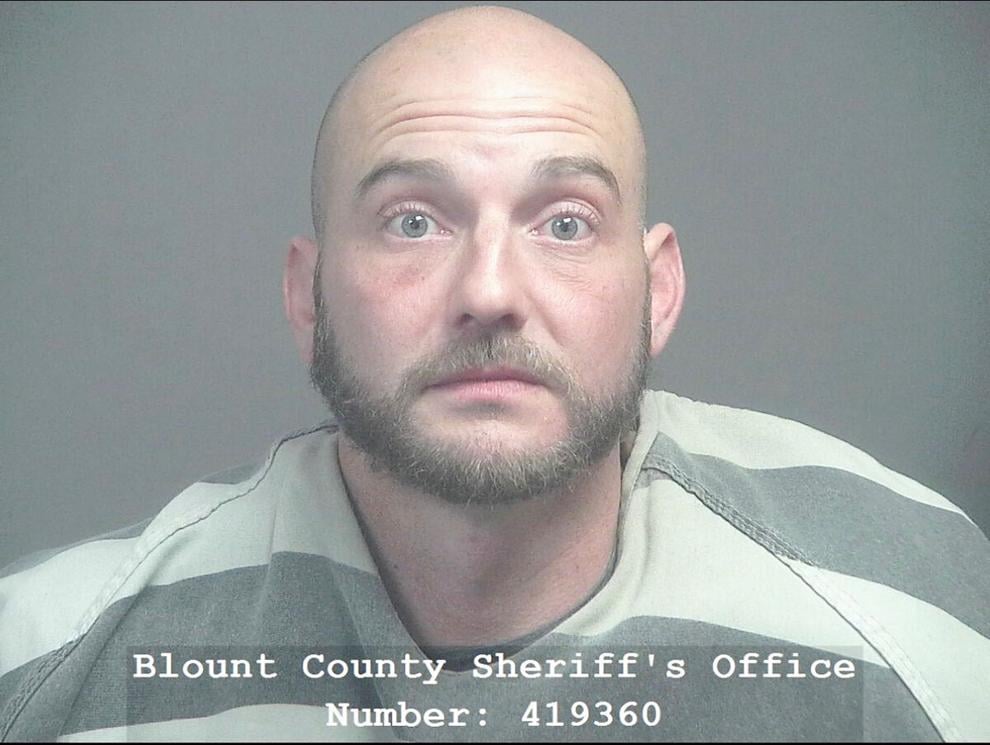
📋 National Pattern: A Growing List of ALPR Misuse Cases
These are not isolated incidents. Documented Flock ALPR misuse cases in recent years include:
- Oak Ridge, Tennessee (2025): Former ORPD Officer Zachary Gauthier pleaded guilty to 23 counts of official misconduct — 18 specifically for misusing the Flock ALPR system for personal use between February and March 2025. Oak Ridge is approximately 20 miles from Maryville and is part of the same East Tennessee Flock data-sharing network. He was fired April 24 and indicted July 1, 2025.
- Maryville, Tennessee (Dec. 2025): Maryville PD Officer Reid Gray Walker was arrested by neighboring Alcoa PD for choking his girlfriend after drunkenly accusing her of kissing someone. Walker was placed on paid leave by Chief Crisp. The same department operates Maryville's Flock cameras with no written search policies.
- Sedgwick, Kansas (2024): Chief Lee Nygaard used Flock to search his ex-girlfriend's plate 228 times over four months, including following her in his patrol car.
- North Charleston, South Carolina: Lt. Ryan Terrell used city surveillance cameras to monitor his wife, whom he suspected of having an affair. He was demoted, not fired.
- Milwaukee, Wisconsin (2026): Officer Josue Ayala pleaded not guilty to misconduct after allegedly using Flock to look up a woman he was dating — and her ex-boyfriend — more than 170 times in two months.
- Menasha, Wisconsin (2025): Officer Cristian Morales faced charges for using Flock to track an ex-girlfriend.
In every case, the same tool that Maryville operates with no written policies was used against private individuals who had committed no crime. In most cases, the targets were women.
The bottom line: Flock Safety describes itself as a system with "accountability" built in. But accountability requires more than an audit trail that only researchers and journalists can access. Maryville has confirmed it has no written policies for plate suppression. It has no public audit reporting. It shares data with 1,000+ agencies under what it calls "no formal agreement." A system this powerful — in the hands of officers who are human beings capable of personal agendas — demands community oversight, written policies, and public accountability. Without it, Maryville residents are trusting their most personal movement data to a system that, by the city's own admission, has no written rules governing its use.
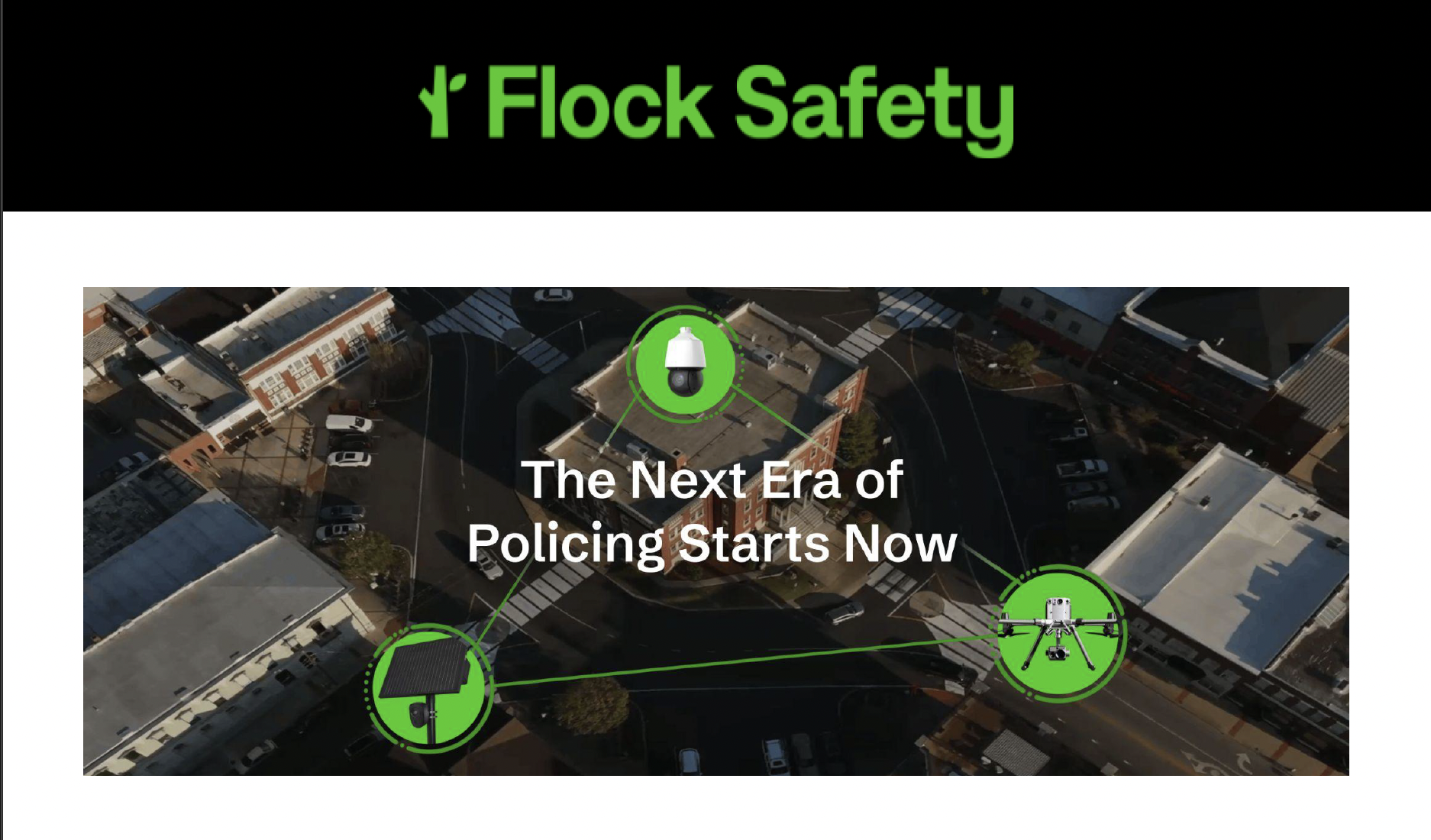
🚨 New Records: Flock Drone as First Responder Proposal in Maryville, Tennessee
Newly released public records show that Flock Safety pitched a countywide drone as first responder program, a major expansion of local surveillance across Maryville, Tennessee, Alcoa, Tennessee, and Blount County, Tennessee.
- Planning calls already held with the Blount County Sheriff's Office, Maryville Police Department, Alcoa Police Department, and the regional 911 center in Tennessee.
- Flock would manage all FAA waivers and supply a full time (40 hrs per week) drone pilot.
- Projected annual cost: $300,000 to $600,000 per year for the East Tennessee region.
- Intended coverage includes schools, neighborhoods, major roads, and residential areas in Maryville, Alcoa, and surrounding Blount County communities.
Flock also pitched a fixed wing surveillance drone capable of long range countywide flights, reaching Friendsville, Louisville, Rockford, Eagleton, rural Blount County, Tennessee, and outlying communities.
This would dramatically expand the region's aerial surveillance perimeter.
📄 Quick Access to Drone Records (Tennessee)
📘 Overview: What Flock Cameras Really Do in Maryville, Tennessee
MaryvillePrivacy.org documents the real world impact of Flock Safety's automated license plate surveillance system in Maryville, Alcoa, and Blount County, Tennessee. Unlike the vendor's marketing summary, this research is based entirely on public records, TPRA emails, Flock training materials, analytics screenshots, and the City of Maryville's own documents.
While the police and vendor claim the system "captures evidence without compromising privacy," the records show a very different picture:
- Flock scans every resident, visitor, churchgoer, and commuter with no warrant or suspicion.
- Analytics dashboards show tens of millions of vehicle scans per year, nearly all involving ordinary, law abiding citizens.
- Flock's portal shows Maryville shares data with 1,000+ agencies nationwide, despite a police memo stating "no formal agreement." Flock's Multi-Geo and Convoy tools extend tracking across entire regions.
- The City added only three vehicles to a hidden Flock Safe List, creating ghost vehicles exempt from alerts.
- Axon Fleet 3 police cruiser cameras feed their video hits directly into the Flock cloud database.
- Cameras were placed on neighborhood entrances, church roads, schools, and residential streets with no public notice or hearing.
Flock calls this system "objective evidence." Residents call it broad, suspicionless vehicle surveillance.
MaryvillePrivacy.org exists because this information was never clearly presented to residents. This site provides:
- A complete camera map
- Public records, emails, and portal screenshots
- Flock training showing officers use travel history and convoy patterns for stops ("guilt by travel")
- Drone program records and cost estimates ($300,000 to $600,000 per year)
- Analysis of local ALPR policies, omissions, and contradictions
🆚 Flock's Claims vs. What Public Records Show in Maryville
| Flock's Public Claims | What City Documents Reveal |
|---|---|
| "Objective evidence without compromising privacy." | Flock dashboards show 40 to 50+ million scans per year, overwhelmingly of ordinary civilians, not suspects. |
| "Retroactive search only to solve crimes." | Training materials teach officers to use travel history and convoy patterns as grounds for traffic stops. |
| "Just a safety camera system." | A subscription platform plus analytics pipeline that scales far beyond crime specific investigations. |
| "Proper guardrails are in place." | Maryville provides no complete ALPR governance policy. Police memos contradict the system's true scope and data sharing. |
| "Data is shared responsibly." | Flock's own portal shows Maryville shares with 1,000+ agencies, despite a memo stating "no agreement." |
| "Transparency portal ensures openness." | There was no public hearing or notice before placing cameras at neighborhood and church entrances. |
| "System is applied evenly." | Maryville created a three vehicle whitelist ("ghost vehicles") exempting select plates from alerts. |
| "Only Flock cameras feed the system." | TPRA images show Axon Fleet 3 cruiser cameras feeding hits into Flock's cloud based search interface. |
💰 How and Where Flock Sells Your Data
Flock markets itself as a "public safety" tool, but the system operates as a paid data platform: cameras capture images plus metadata, data is uploaded to a private cloud dashboard, and access to that database (and its analytics) is sold through subscriptions.
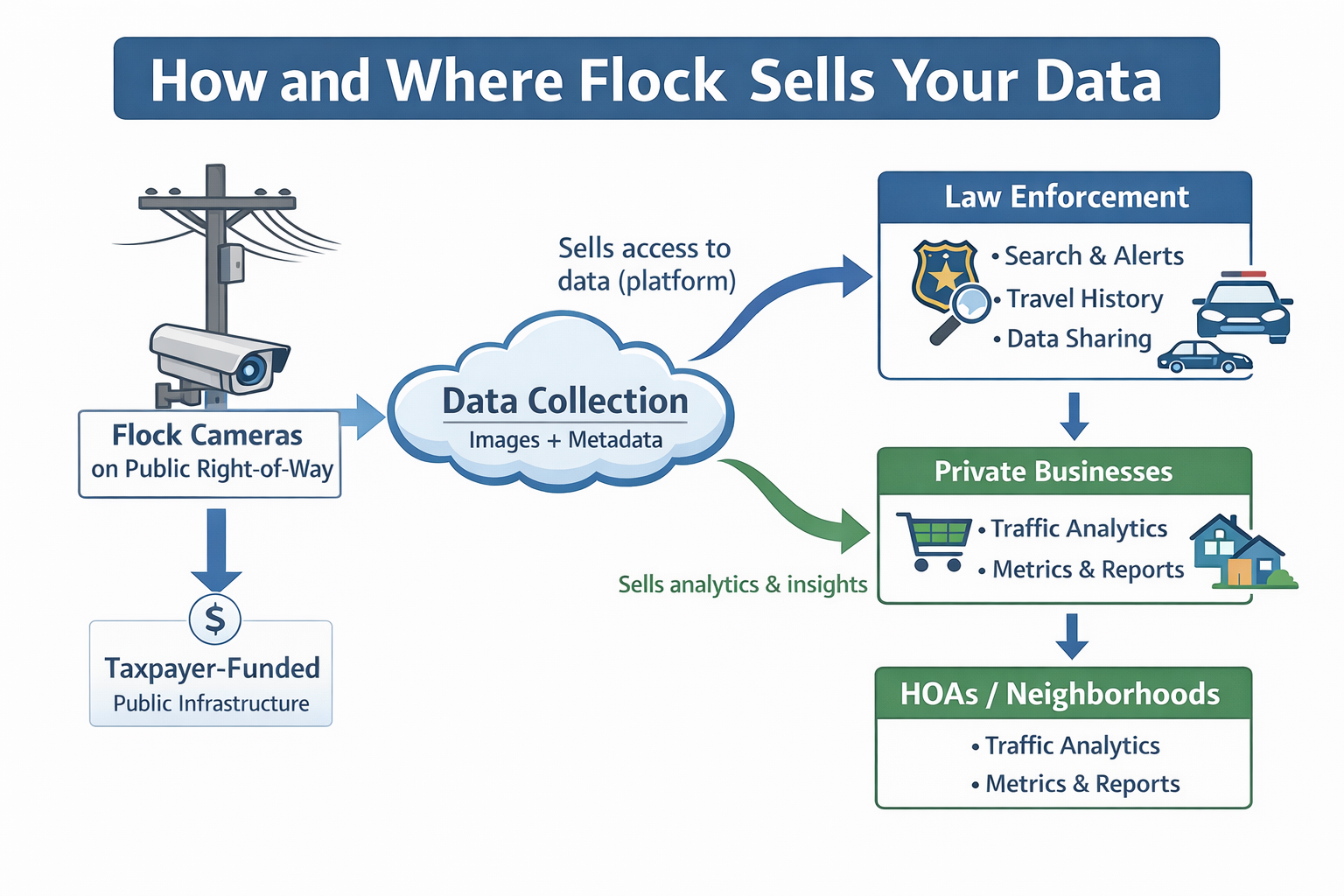
What's documented in Maryville and Alcoa
|
What we're actively investigating
|
Why this matters for taxpayers: when cameras are placed in public space, residents can reasonably ask why a private vendor is allowed to leverage public siting while the city also pays ongoing subscription costs for access to the resulting database and analytics. This is why transparency on contracts, retention, sharing rules, and audit logs matters.
🔎 Latest Public Records Findings
- Flock training shows traffic stops based solely on location history Training materials show officers taught to use travel history and "convoy" patterns as grounds for stops, what we call "guilt by travel."
- New Flock AI drone program proposal in Maryville, Tennessee (300k to 600k per year) Flock pitched a drone as first responder system over Maryville, Alcoa, and Blount County with projected costs up to $600,000 per year.
- Maryville's Flock whitelist: three "ghost vehicles" above the ALPR system New TPRA records show the City of Maryville added just three license plates to a hidden Flock "Safe List", creating ghost vehicles that bypass many automated alerts.
-
New · April 6, 2026
Private contractor and police documented at Maryville camera installation site A Dish Network-branded service van and technician were photographed working on a Flock Safety camera unit in Maryville while a Maryville Police Department vehicle was present on site. No public record has been released identifying which private companies have physical access to the city's surveillance hardware.
See full photo documentation on the Camera Map page →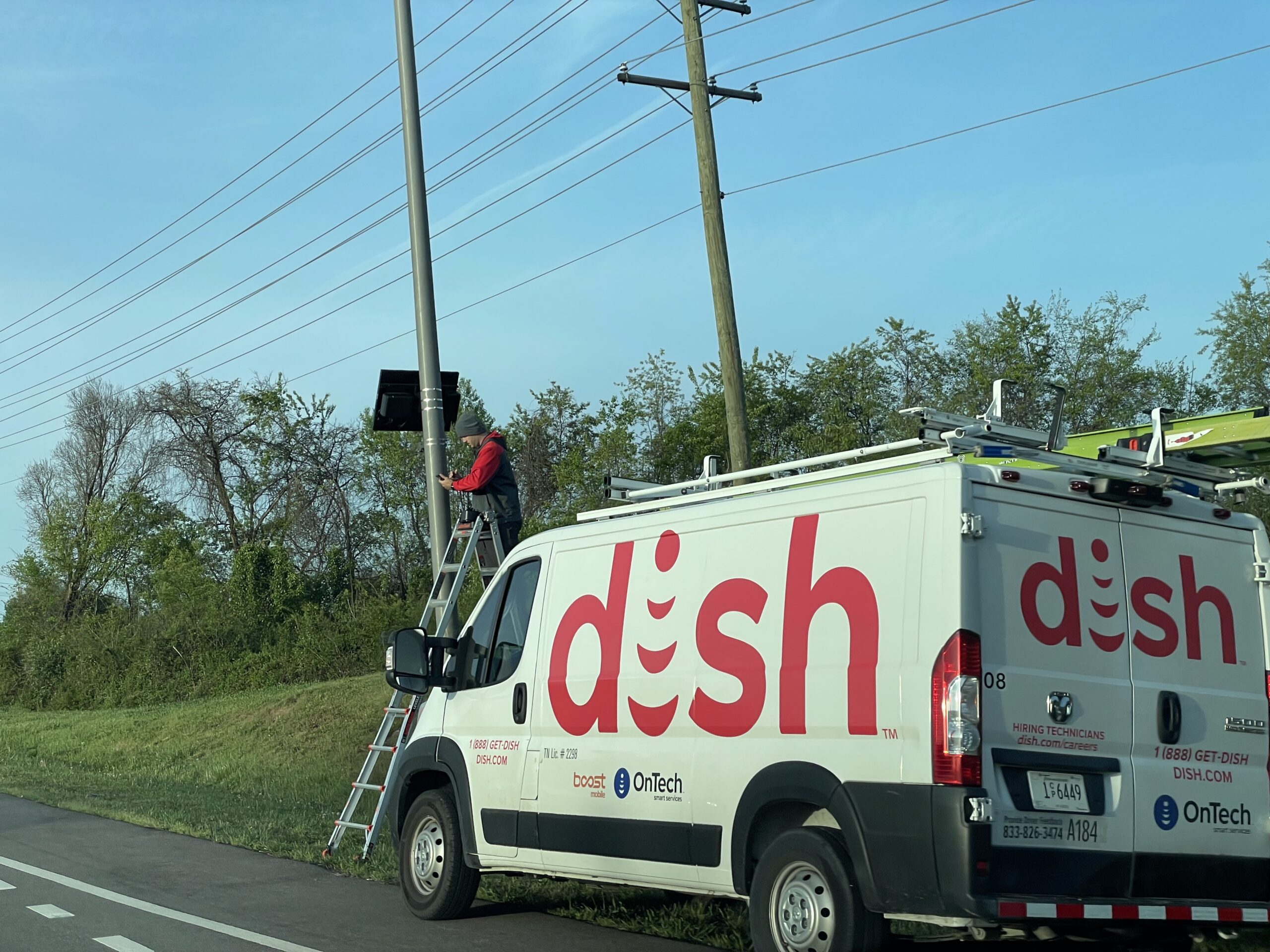
Dish Network van beside Flock camera unit, Maryville TN. April 6, 2026. 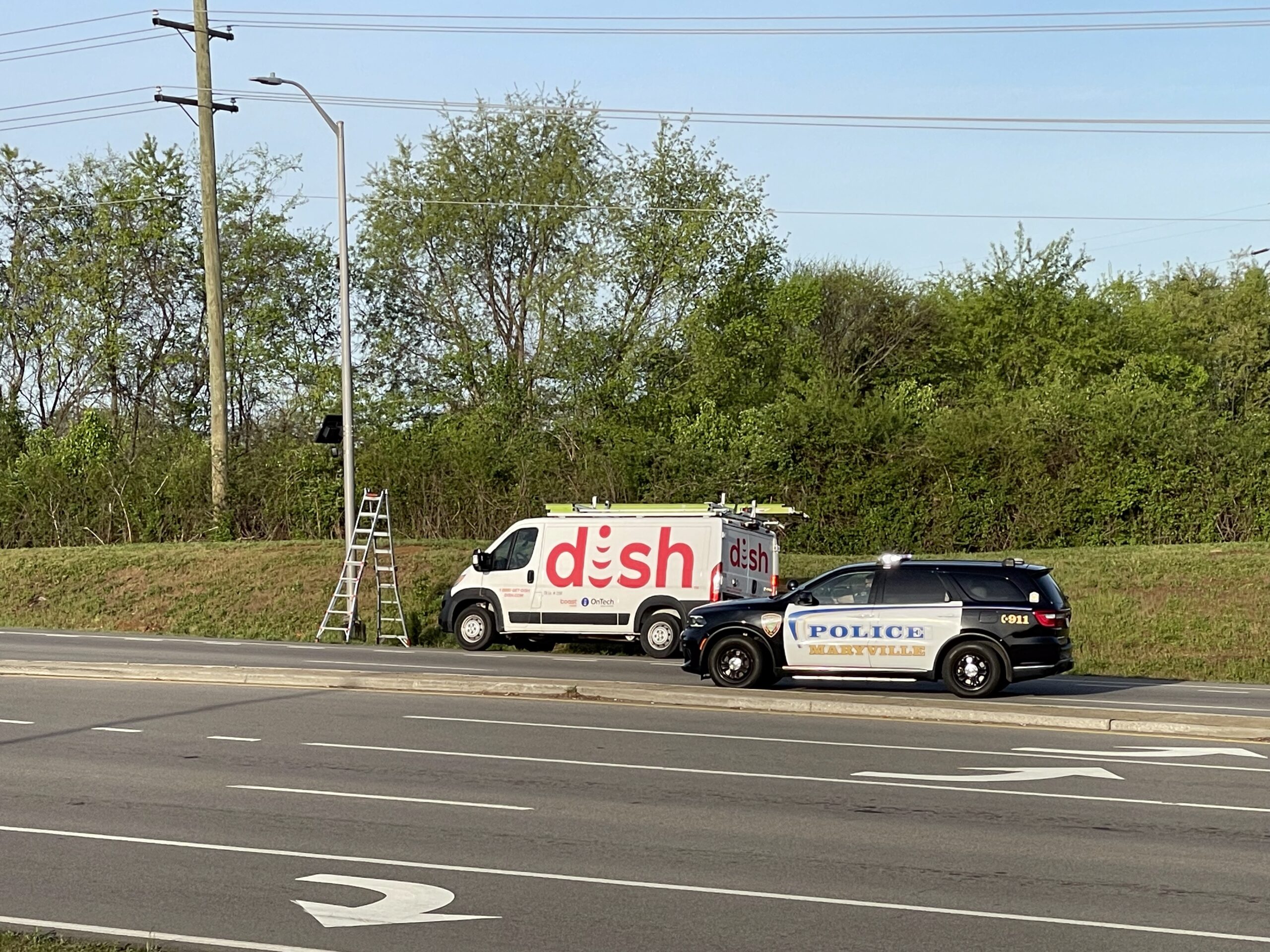
Contractor van and police vehicle present during surveillance equipment work. April 6, 2026.
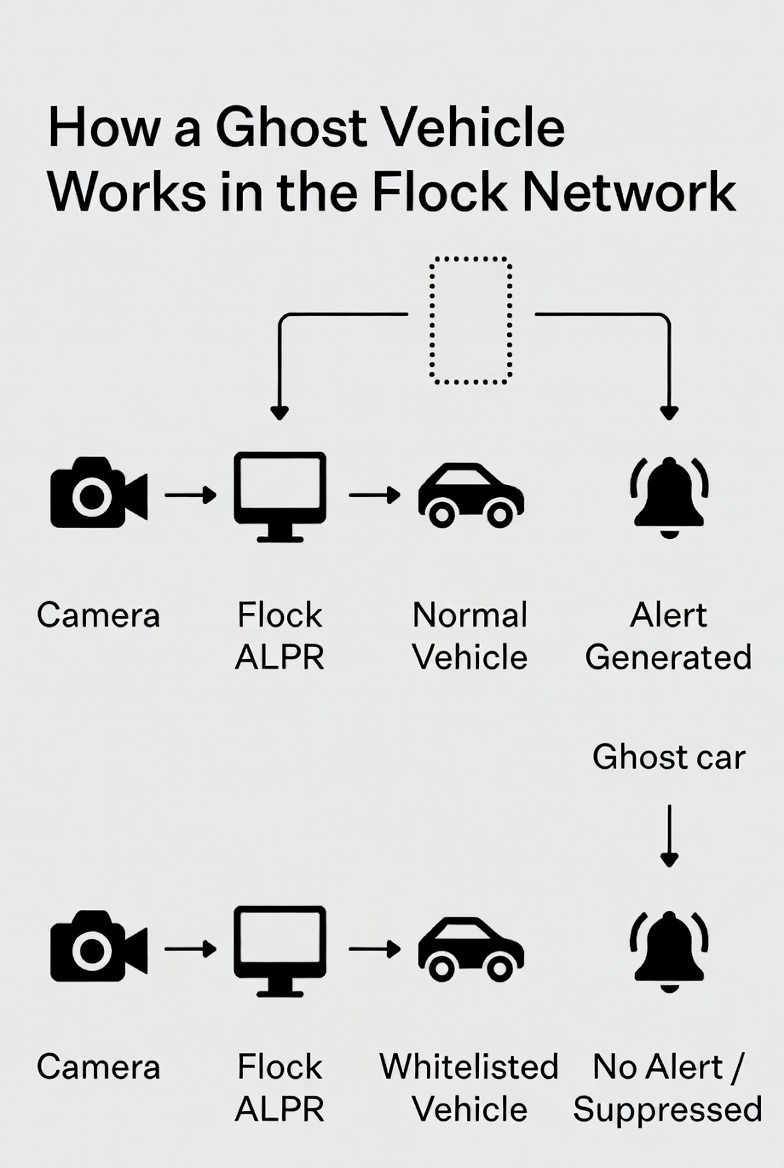 |
In the Flock whitelist system, "ghost vehicles" can move through Maryville's ALPR network while many automated alerts are suppressed. |
Maryville Flock Safety Cameras - Data Sharing, Policies, and Public Transparency
According to the official Flock Safety Transparency Portal for Maryville, TN Police Department, the city currently operates 16 Flock Safety automated license plate reader (ALPR) cameras with 30 day data retention. In one recent 30 day window, the system recorded 310,458 license plates in and around Maryville, Tennessee.
Flock's own portal states that Maryville Police Department uses this system for retroactive search and real time alerts, and that "data is used for law enforcement purposes only" with access logs "stored indefinitely." The portal also confirms that Flock detects license plates and vehicles, not faces, but the system still creates a detailed pattern of life record of when and where ordinary drivers move around Maryville and Alcoa, Tennessee.
Most importantly for local residents, the same transparency page lists hundreds of outside agencies across the United States, including federal agencies, out of state police departments, task forces, and campus police, that are granted access to Maryville TN PD Flock data. In practice, that means vehicle scans collected in Maryville, Tennessee can be searched far beyond Blount County, even though those drivers may have done nothing wrong.
You can view the official vendor page here: Flock Safety - Maryville TN PD Transparency Portal. This site, MaryvillePrivacy.org, exists to independently document what that system means for civil liberties, data sharing, and community oversight in Maryville, Tennessee.
Police vs Flock claims
In response to a Tennessee Public Records Act (TPRA) request asking for any agreements or communications about sharing Flock Safety data with state or federal agencies, the Maryville Police Department's written memo answered: "Not applicable (no formal agreement)."
At the same time, the Flock Safety Transparency Portal for Maryville TN PD lists hundreds of outside organizations that can access Maryville's ALPR data, including out of state police departments, federal agencies, drug task forces, and other government entities that have been granted cross jurisdictional access inside the Flock network.
Taken together, these two facts raise serious questions:
- How can Maryville claim there is "no formal agreement" while its data appears inside a national Flock sharing network?
- Who decides which outside agencies may query Maryville Flock data, and under what rules?
- Are Maryville residents' travel records being searched by agencies that do not answer to local voters?
MaryvillePrivacy.org uses public records and the vendor's own transparency tools to document this gap between official assurances and actual data flows. Residents deserve clear, written policies on: data retention, inter agency sharing, audit logs, and limits on how long their movements can be tracked.
📱 DeFlock App — Report Cameras & Plan Camera-Avoiding Routes
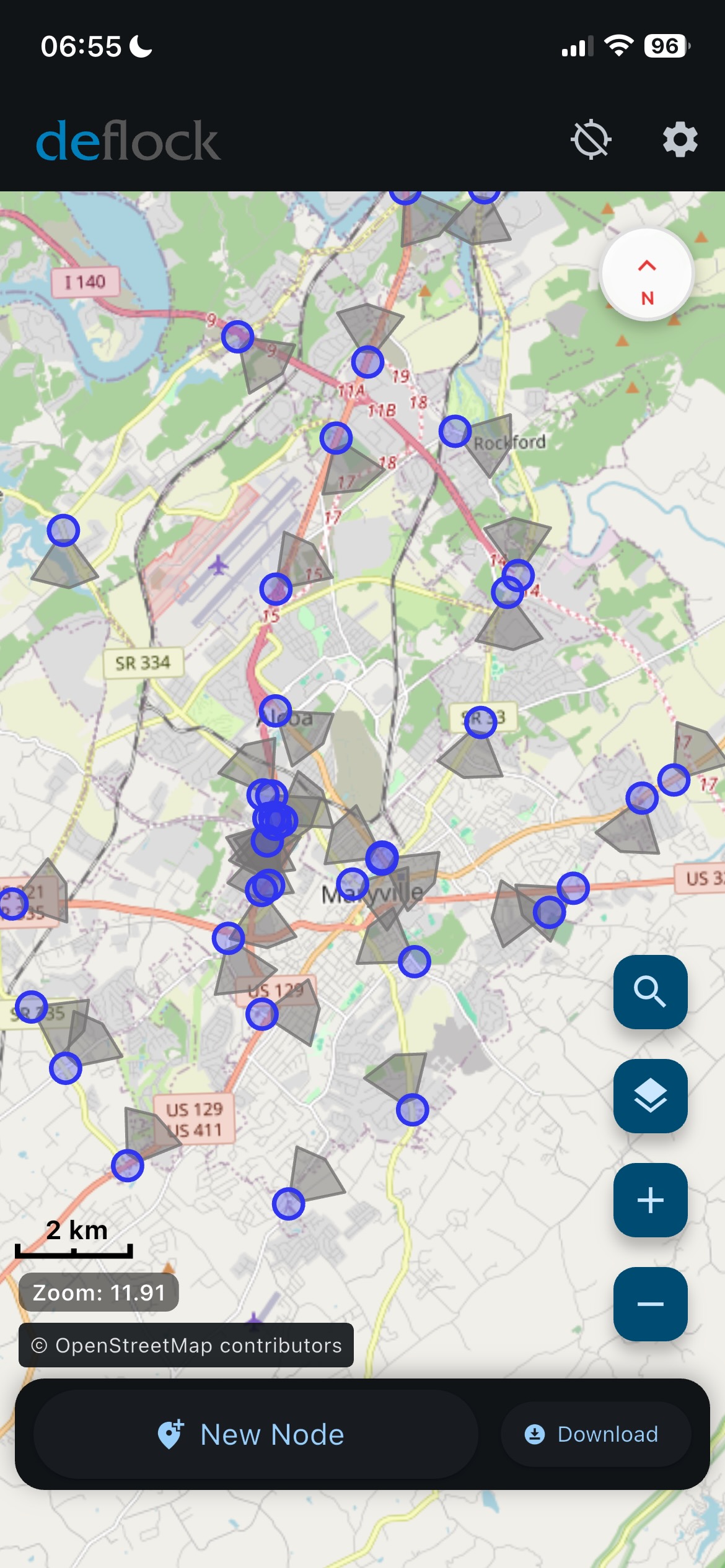
The DeFlock web app makes it easy to discover and report automatic license plate readers in your community and now offers route mapping to help you avoid known Flock and other surveillance cameras whenever possible.
- Quickly add new ALPR camera sightings to the national map.
- See plate reader hotspots before you drive through Maryville or East Tennessee.
- Generate suggested routes that try to minimize camera hits along the way.
DeFlock is an independent project. It gives residents practical tools to understand and reduce ALPR and Flock camera surveillance in their daily routes.
🧾 Audit logs & transparency tools
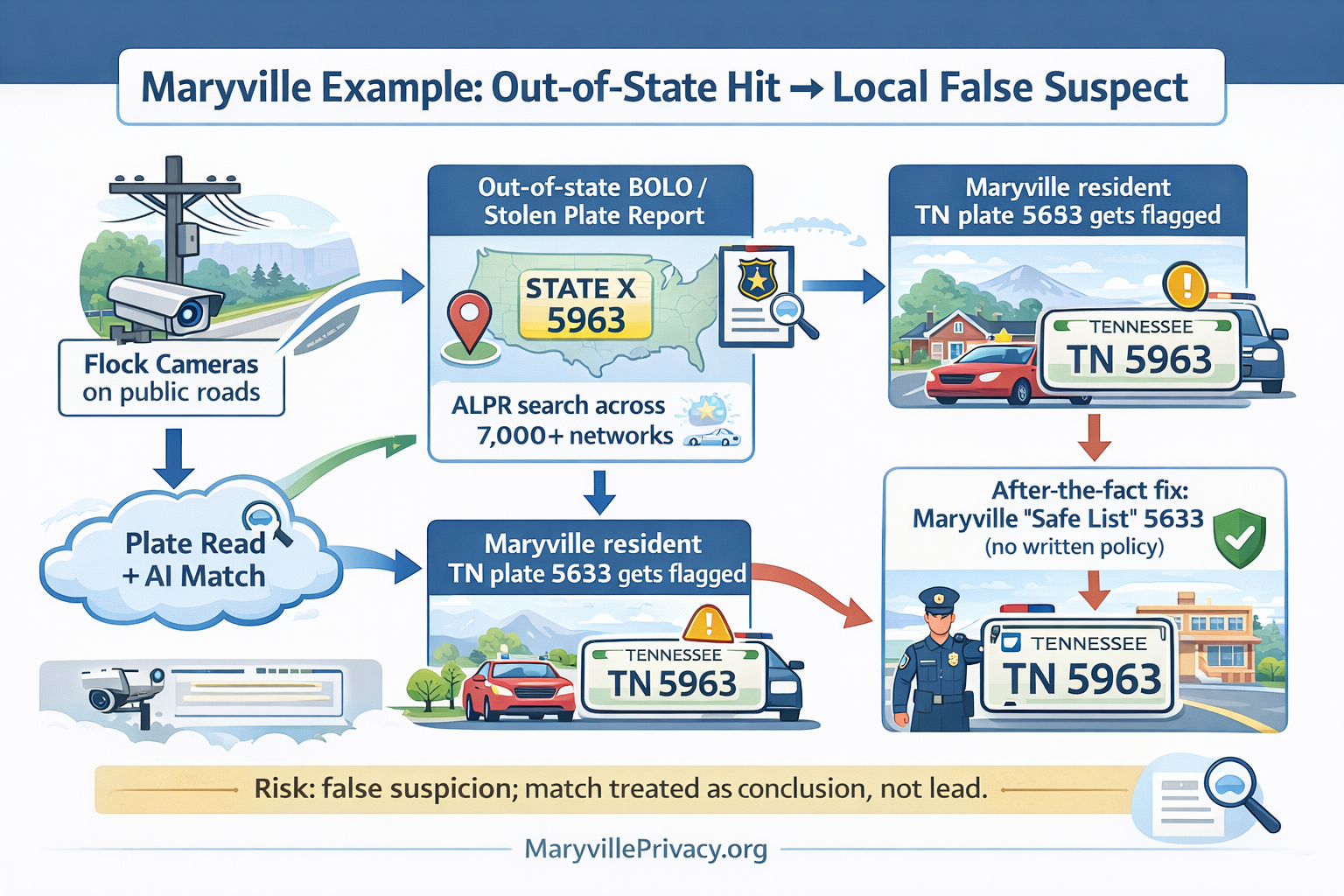
Cameras are only half the story. The other half is the searchable database and the audit logs that show how it's used across agencies. In Tennessee, plate-level transparency is often limited — but public releases from other states can still overlap with Tennessee plates and create real-world risk.
🔍 Have I Been Flocked (audit log database)This independent site aggregates released "audit logs" that track searches made within the Flock system. The dataset is incomplete and often redacted — but it provides a rare window into how "search first" policing can work in practice. Source description (from the site): released audit logs from Flock "transparency portals" and public-records requests. Availability can change over time. |
⚠️ Why this matters in MaryvilleA nationwide system plus cross-state searching means Tennessee drivers can still be affected even when Tennessee records are not released. The public is left with more questions than answers — and little visibility into how "hits" are verified.
Local example topic
Plate-only searching and missing context (state, plate type, full identifiers) can create false suspicion — especially across states.
 |
🚓 How Police Cruiser Cameras Feed Flock's Database
This screenshot comes from the same Flock Safety portal used by Maryville Police.
On the left side, under External Sources, it shows an option labeled Axon Fleet 3, a police cruiser camera system, alongside the regular Flock Cameras list.

In this example, an officer has searched for a specific license plate and Flock returns two hits: one from a city roadside camera and one from an Axon Fleet 3 patrol vehicle. Both images appear side by side inside the same Flock interface, with timestamps and locations.
What this screen quietly shows
- Police collected images are being sent into Flock's cloud. Axon Fleet 3 is not a pole mounted Flock camera. It is an in car police camera system.
- Flock becomes a hub for multiple surveillance feeds, not just its own cameras, expanding the size and detail of the database on everyday drivers.
- Officers can run a plate and see results from both city cameras and cruiser cameras in one place, with export and sharing options.
No warrant. No suspicion. No opt out.
This search screen is not limited to people accused of crimes. It shows how the platform is designed to let police type in a plate and instantly pull up where and when that car was seen across fixed cameras and cruiser cameras inside one private dashboard.
📊 What Flock Really Tracks in Maryville, Tennessee
This local Flock Safety dashboard from Maryville, Tennessee covers a 26 day period from October 18 to November 12, 2024.
It does not show crimes, suspects, or investigations.
Instead, it shows how the system monitors the entire driving population, every resident, every visitor, every family, every churchgoer, every commuter, with no warrant, no suspicion, and no opt out mechanism.
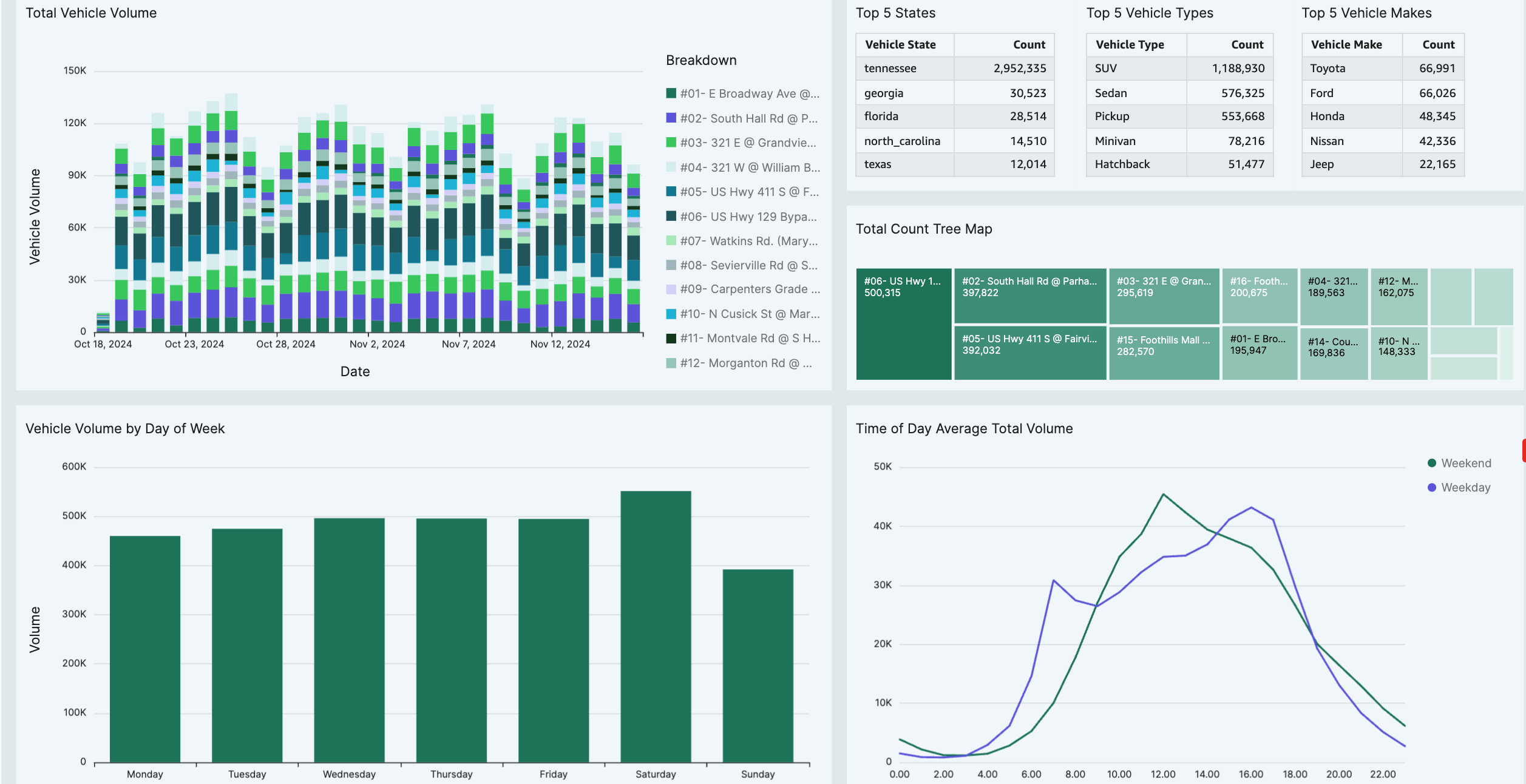
In less than one month, the dashboard reports extremely high volumes of surveillance:
- Millions of total scans across Maryville's Flock camera network in just 26 days.
- Hundreds of thousands of scans per camera at some locations.
- Breakdowns of ordinary civilian vehicles by state, make, model, and type.
According to the dashboard, this view appears to include data from 12 of the 16 known Flock cameras in Maryville.
Even using cautious estimates, that 26 day sample extrapolates to roughly 40 to 50+ million vehicle scans per year when all cameras are included. Nearly all of this surveillance falls on ordinary residents who are not accused of wrongdoing.
None of this activity is tied to warrants or individualized suspicion. It is behavioral analytics on everyday movement, when people leave home, which schools and churches they visit, which stores they frequent, which roads they use most, and what times they travel.
This is pattern of life surveillance, not targeted crime investigation.
The 12 camera locations represented in this dashboard snapshot
- Grandview Dr & Tuckaleechee Pike - residential plus commuter traffic.
- Grandview Dr near Grandview Baptist Church - captures church and surrounding driveways.
- Foothills Mall Dr (multiple approaches) - retail, medical, school area movements.
- US 129 / Alcoa Hwy corridor - high volume regional travel.
- W Lamar Alexander Pkwy - commercial plus school traffic.
- S Washington St - downtown feeder and neighborhood connector.
- W Broadway Ave corridor - business district and residential flow.
- Sevierville Rd - east side commuter traffic.
- Wilkinson Pike - hospital, clinic, and residential movements.
- Coulter Grove area - school adjacent daily patterns.
- Montvale Rd - church, neighborhood, and school zone traffic.
- Foch St / Downtown grid - ordinary local circulation.
These are not special law enforcement zones or criminal hotspots. They are everyday civilian locations, homes, churches, schools, stores, and commuter roads used by families and workers.
📸 What Are Flock Cameras in Maryville, Tennessee?
- Every vehicle in Maryville and Alcoa, Tennessee is scanned by private company AI cameras known as Flock Safety ALPRs. They don't just capture license plates, they track patterns of life for each driver:
- Where you go, when you leave home, when you visit work, school, church, or the doctor.
- All of this information is stored in massive databases, searchable by government and police agencies across Tennessee and the rest of the country.
- No warrants. No notice. No way to opt out.
- What began as a crime tool has evolved into a system that extensively tracks the movement of ordinary residents.
🏙️ Why It Matters in Maryville, Tennessee
- Neighborhood placement: Cameras are not just on highways, they're on quiet residential streets in Maryville and Alcoa, Tennessee.
- Routine tracking: Everyone's travel patterns can be logged, even when no crime occurred.
- Private control: A corporation hosts and handles the data, raising oversight and retention questions for Tennessee residents.
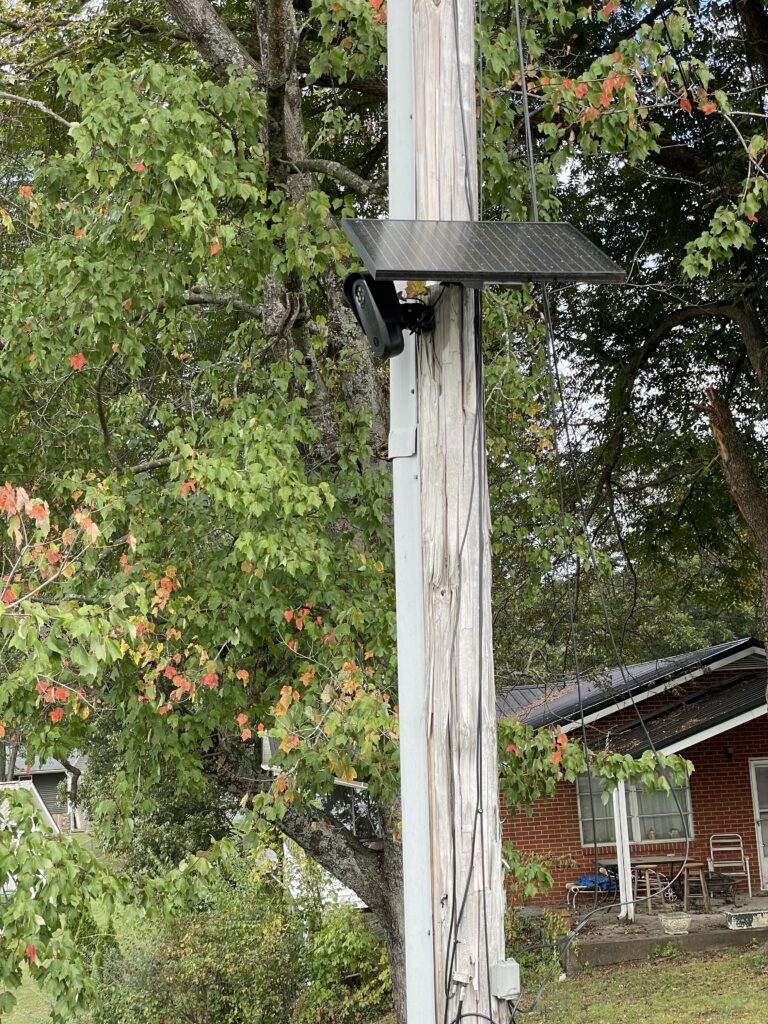
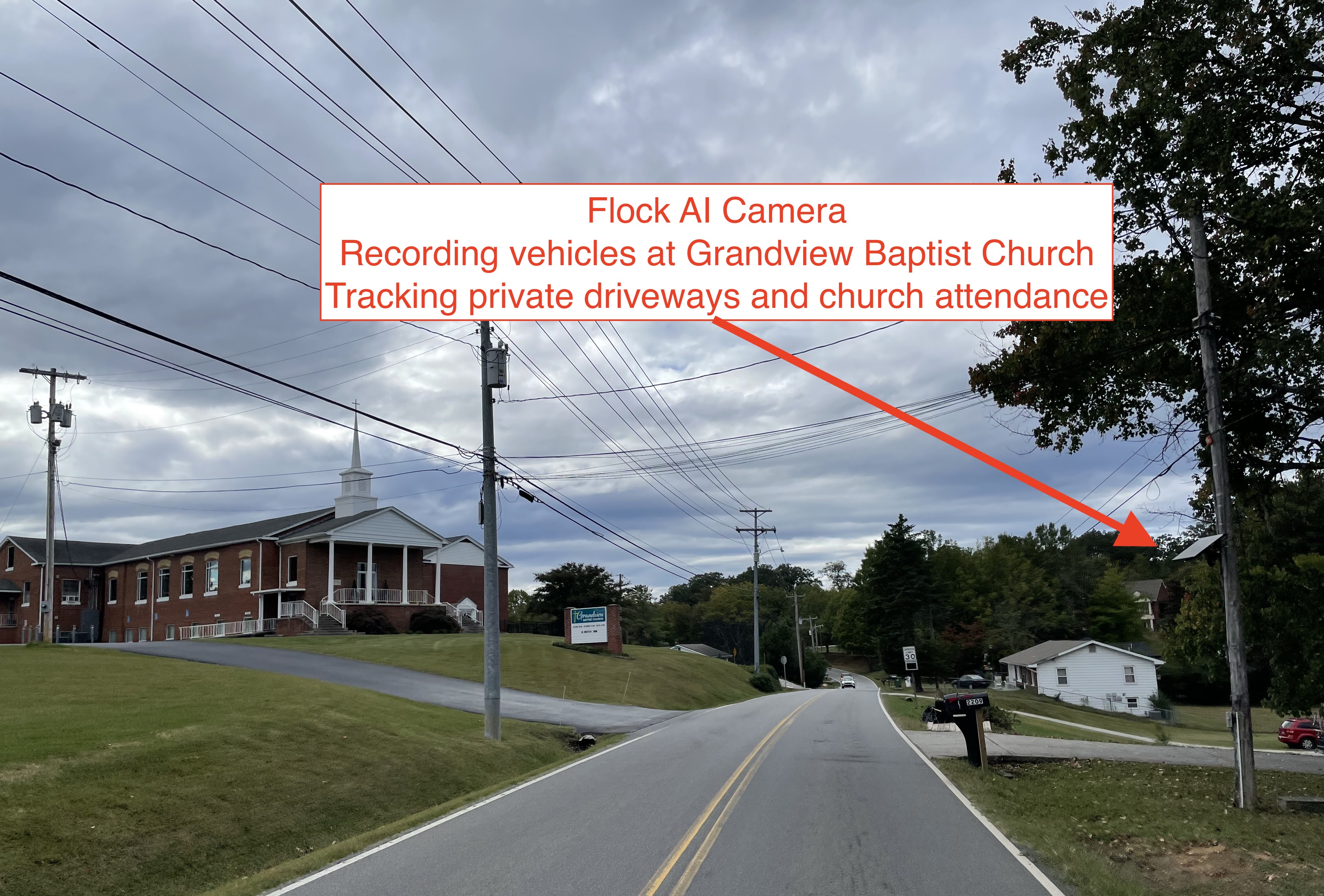
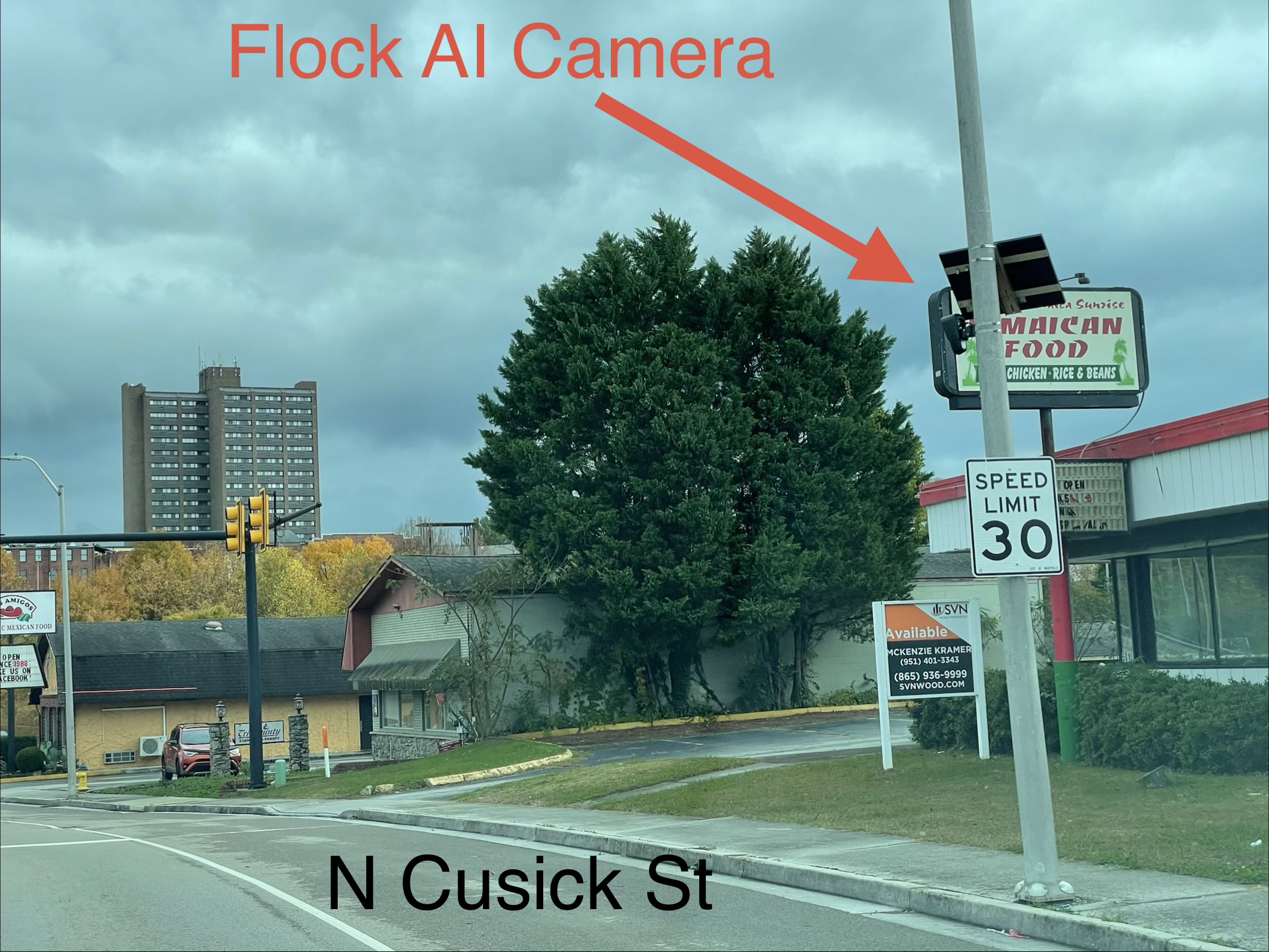
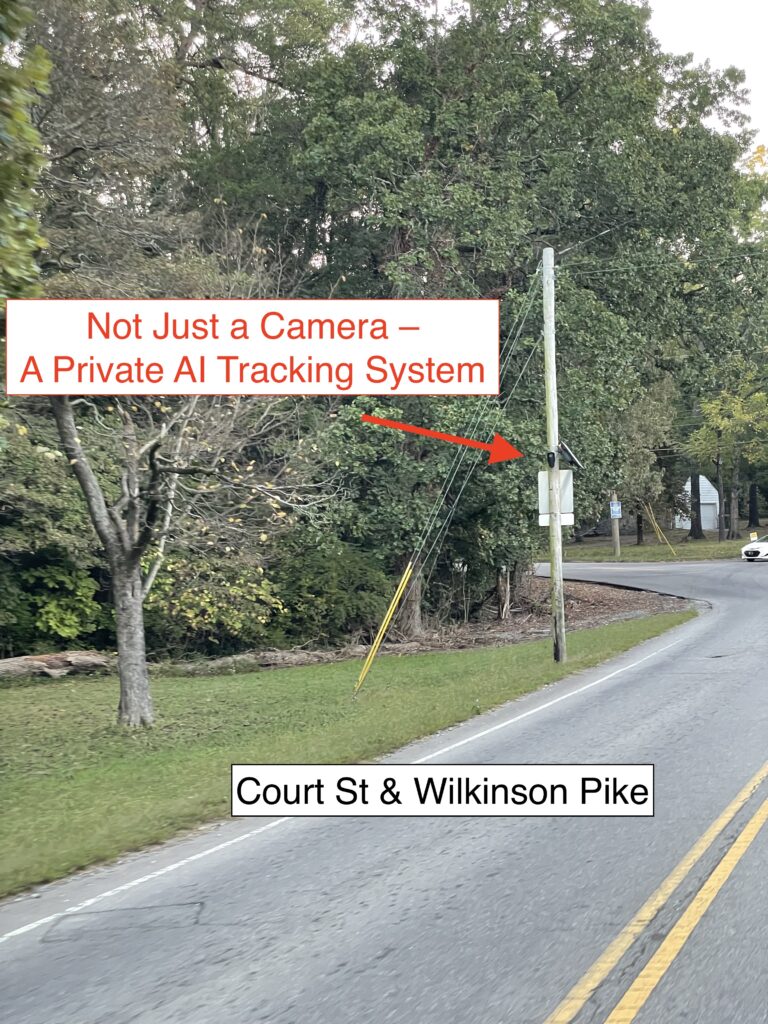
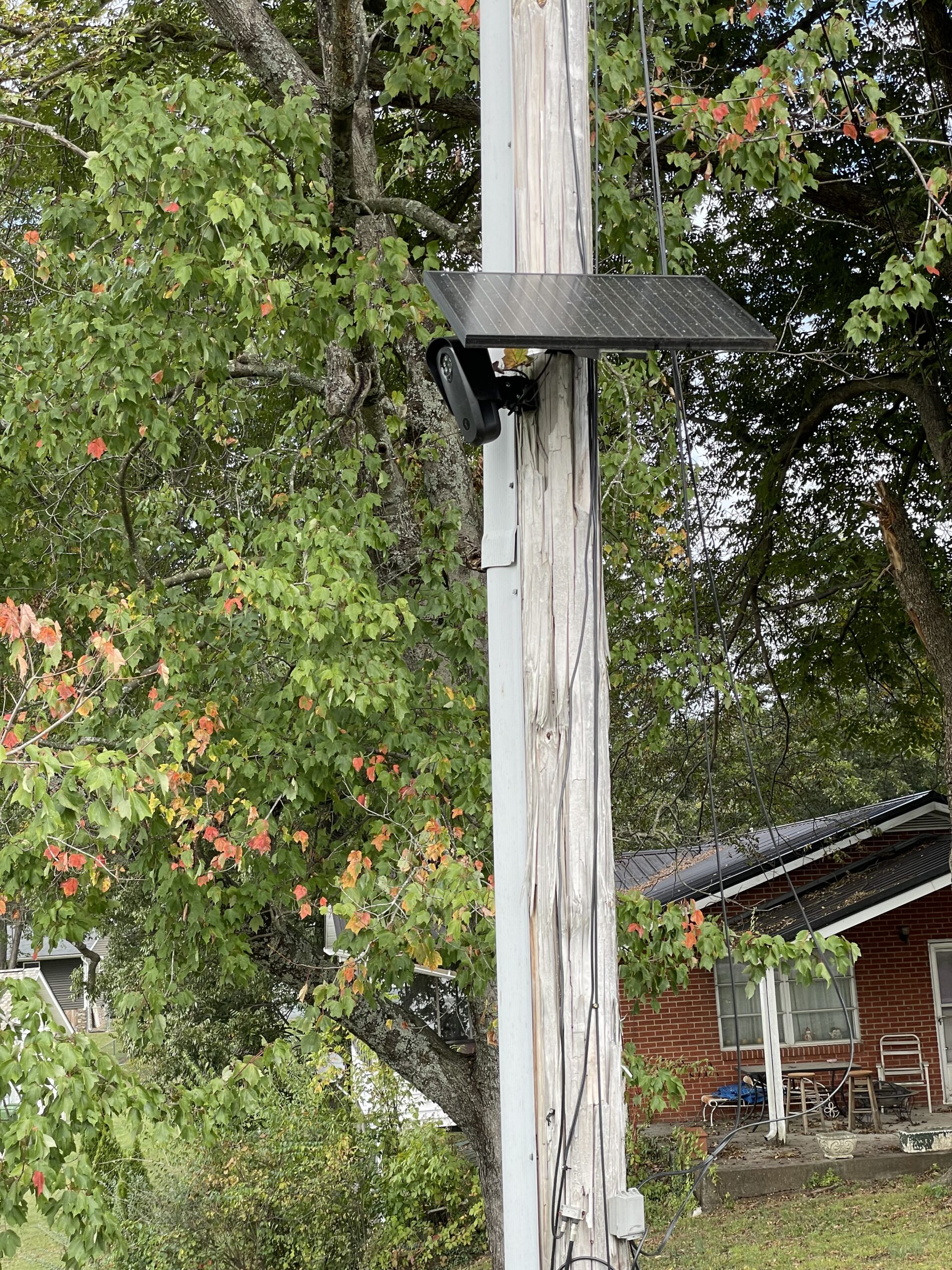
Community concern: This camera's field of view may collect vehicle data for residents' homes and places of worship without individualized suspicion or consent, highlighting the need for transparency and placement oversight in East Tennessee.
"Privacy is not about hiding; it's about the freedom to live without being constantly watched."

"Good intentions will always be pleaded for every assumption of authority. It is hardly too strong to say that the Constitution was made to guard the people against the dangers of good intentions. There are men in all ages who mean to govern well, but they mean to govern. They promise to be good masters, but they mean to be masters.
⚖️ How the Fourth Amendment Works — And How Flock Bypasses It
The Fourth Amendment requires government to have individualized suspicion before searching a person's private effects. Flock ALPR does an end-run around every step of this protection.
|
✅ Traditional 4th Amendment Path
|
|
❌ Flock ALPR — The Warrant-Free Path
|
The Fourth Amendment was not designed for a world of mass collection — it was designed to prevent it. Courts have yet to fully apply the Amendment's protections to network-scale ALPR surveillance. Until they do, residents in Maryville are the ones who must ask their city council for the protections the courts have not yet required.
🤖 Beyond License Plates: What Flock's AI Patent Actually Describes
Flock Safety's own U.S. Patent No. 11,416,545 describes a system capable of identifying not only vehicles, but people by race, gender, clothing, height, and weight — all linked with time and location data. Flock and Axon are not simply "license plate readers." They are advanced AI intelligence systems marketed under a safety brand, with capabilities that extend far beyond what residents were told when these cameras were quietly approved at a July 2024 City Council meeting.
The Axon ecosystem — which feeds images into the same Flock portal Maryville uses — also includes body cameras, in-car cameras, evidence cloud storage, conducted energy weapons (tasers), and AI-powered "real-time awareness" tools, all integrated into a single vendor relationship. The community was not informed of these AI dimensions when the LPR resolution passed with no public hearing.
🧭 Background: How Flock Cameras Came to Maryville, Tennessee
🧭 Background: How Flock Cameras Came to Maryville, Tennessee
Open summary (Maryville/Alcoa adoption, data details, timeline)
Over recent years, departments across the U.S. partnered with private vendors like Flock Safety to deploy AI driven ALPR networks. In 2023 to 2024, Maryville, Tennessee and neighboring Alcoa, Tennessee joined this trend. Cameras appear along major roads and in neighborhoods, often without broad public discussion.
The systems capture plate number, make, model, color, and exact time and location. Data is uploaded to the vendor's cloud and can be shared with other agencies. Residents raised questions about who controls the data, how long it's stored, and what guardrails exist.
⚖️ National Perspective: The Institute for Justice
Open summary (IJ's work on ALPRs)
The Institute for Justice (IJ) is a nonprofit public interest law firm challenging mass vehicle surveillance and defending the right to move freely.
- Plate Privacy Project - IJ's nationwide initiative.
- Norfolk, VA lawsuit - challenge to warrantless monitoring.
- Greers Ferry, AR letter - urging removal near homes.
IJ is engaging with residents in Maryville, Tennessee to promote transparency, accountability, and constitutional protections. More at ij.org.
📬 Community Letter to City Leaders in Maryville, Tennessee
📬 Community Letter to City Leaders in Maryville, Tennessee
- Public process: schedule an open meeting to explain where cameras are, why they're needed, and how results are measured.
- Publish policies: data retention period, who can access data, inter agency sharing rules, and audit logs.
- Residential safeguards: pause or remove cameras on neighborhood streets pending community input and clear necessity.
- Signage and notice: visible signs where cameras operate and advance public notice for any expansion.
- Independent review: annual privacy impact report and effectiveness audit available to the public.
- Sunset clause: end or renew only with demonstrated, publicly reported benefits and strict privacy protections.
Suggested lines you can copy (no personal info)
• I support public safety and privacy. Please hold a public meeting on Flock cameras in Maryville, Tennessee and publish the data use policy (retention, access, and sharing).
• Pause cameras on residential streets until residents can weigh in and clear, measured benefits are shown.
• Post visible signage and provide annual public audits, including access logs and retention timelines.
|
📬 Contact City Officials in Maryville, Tennessee |
Ask for a public review of neighborhood cameras and clear limits on data use and retention in Maryville, Tennessee.
Hours: Mon–Fri, 8 a.m.–5 p.m. (closed 12–1 p.m.)
Council Meetings: First Tuesday of each month · 7 p.m. · Municipal Building, Middle Level — Council Chambers
General Phone: (865) 273-3401
🧾 Learn More About Flock AI in Tennessee
- Documents & City Letters (Maryville, Tennessee)
- Flock ALPR Camera Location Map - Maryville, Tennessee
AI in Flock's Patent: What's Really Hidden Behind the Lens
 |
 |
Flock Safety's own U.S. Patent No. 11,416,545 describes a system capable of identifying not only cars, but people by race, gender, clothing, height, and weight, all linked with time and location.
These are not ordinary license plate readers. They're advanced systems incorporating advanced AI capabilities that can impact residents in Tennessee communities like Maryville and Alcoa.
🔍 Learn More❓ Frequently Asked Questions About Flock Cameras in Maryville, Tennessee
Do Flock cameras in Maryville require a warrant?
No. Public records show Maryville Police run Flock searches with no warrant and no individualized suspicion. Every resident and visitor is scanned automatically.
How much data do Flock cameras collect in Maryville?
Flock dashboards show an estimated 40 to 50+ million vehicle scans per year, overwhelmingly of ordinary law abiding citizens.
Does Maryville share Flock data with other agencies?
Yes. Flock's portal lists 1,000+ agencies that can access Maryville's ALPR data, contradicting a police memo claiming "no formal agreement."
Are police cruiser cameras feeding images into Flock?
Yes. TPRA screenshots show Axon Fleet 3 cruiser cameras appear inside the Flock interface as External Sources.
Does Maryville have a Flock whitelist or Safe List?
Yes. The City added three plates to a hidden Safe List, creating ghost vehicles exempt from many automated alerts.
Does the City have written policies for suppressing (whitelisting) plates?
According to a City email dated December 12, 2025, Chief Tony Crisp confirmed there are no written policies for suppressing vehicle license plates, and the City stated that Lt. Rod Fernandez approved suppressing the plates referenced in the records request.
Were residents notified before the cameras were installed?
Public records show no public notice, hearing, or meaningful public discussion before cameras were placed at neighborhood and church entrances.
Has Flock ALPR been misused by police officers — including near Maryville?
Yes, and one of the most documented cases happened in East Tennessee. Former Oak Ridge Police Department Officer Zachary Gauthier pleaded guilty to 23 counts of official misconduct in 2025, with 18 counts specifically for misusing the Flock ALPR system for personal use. Oak Ridge is approximately 20 miles from Maryville and is connected to the same regional Flock data-sharing network. His misuse was discovered by complaints from within his own department — not from any Flock audit tool or oversight system.
A Maryville PD officer, Reid Gray Walker, was arrested by neighboring Alcoa Police in December 2025 for domestic assault after allegedly choking his girlfriend. Walker was placed on paid administrative leave by Chief Crisp. We are not alleging Walker misused Flock — but he is an employee of the same department that operates Maryville's cameras with no written search policies. Nationally, documented misuse cases include a Georgia chief who used Flock to stalk private citizens (Nov. 2025), a Kansas chief who searched an ex-girlfriend's plate 228 times, and officers in Wisconsin and South Carolina who used ALPR tools for personal harassment. Nearly every case involved targeting a woman for personal reasons — and nearly every case was discovered through public records or internal complaints, not internal oversight systems.
Is Flock just a license plate reader, or something more?
More. Flock's own patent (U.S. No. 11,416,545) describes AI capabilities that can identify people by race, gender, clothing, height, and weight. The system integrates with Axon Fleet cruiser cameras, creating a multi-source surveillance network. It is more accurately described as an AI intelligence platform than a simple plate reader.
Keywords (for search engines and readers): Maryville Flock Safety cameras, Maryville TN ALPR, Maryville Police Department Flock Safety Transparency Portal, Maryville Tennessee license plate reader cameras, Flock Safety data sharing Maryville TN, automated license plate reader surveillance in Maryville and Alcoa, Blount County Tennessee Flock cameras, Maryville TN police Flock data, Maryville Tennessee ALPR policies, Flock Safety Maryville TN PD transparency, Maryville TN mass surveillance, Maryville Tennessee vehicle tracking, Flock Safety nationwide data sharing network, Flock Safety police misuse, ALPR Fourth Amendment Tennessee, Flock Safety AI patent, Axon Fleet surveillance integration.