EAST TN FLOCK WATCH
MARYVILLE RESIDENTS: SHOW UP. The Sept. 18 City work session is confirmed for 8:00 AM. The official agenda has not yet been released, but a City source has indicated the session will include discussion of Flock Safety. If you care about local surveillance, transparency, and public oversight, make plans to attend and let City leaders know residents are paying attention. City of Maryville →
Regional details
├── Knox County
Knox County Commission voted Aug. 31 to ban fixed automatic license plate reader cameras following weeks of public opposition and scrutiny of the Sheriff’s Office surveillance program. We are reviewing the final adopted ordinance and implementation details.
├── Kingston
Kingston’s Flock contract will not be renewed.
├── Sullivan County
Sullivan County suspended its use of Flock cameras.
├── Loudon County
A proposed Flock deployment stalled following public opposition.
├── Anderson County
Anderson County will hold a public meeting Sept. 10 at 6 p.m. at Clinton High School to hear public input regarding Flock cameras. Citizens will have up to three minutes for public comment.
├── Oak Ridge
Oak Ridge City Council meets Sept. 14 at 7 p.m. Local opponents of Flock are organizing for public comment.
└── Maryville
A Sept. 18 Maryville City Council work-session discussion regarding Flock cameras has been publicly reported, but an official city agenda has not yet been posted. This page will be updated when official city notice is published.
Know another East Tennessee event? Let us know.

Who Is Flock Safety? (And Why Public Oversight Matters)

Home Investigations Who Is Flock Safety?

Who Is Flock Safety?

An investigation into the private company behind a rapidly expanding network of roadside cameras, cloud-hosted vehicle records, police search tools, agency sharing, APIs, investigative software, and connected surveillance systems. This page follows the system from the roadside camera through the larger technical and institutional network behind it.

Garrett Langley, CEO of Flock Safety, from public company press material
Garrett Langley
CEO, Flock Safety · LinkedIn
Updated September 2026
Status Active Investigation
Type Company · Technology · Data Network
What this investigation examines Flock Safety is a private, venture-backed technology company selling camera systems and subscription access to a cloud platform used by law enforcement, cities, businesses, HOAs, and other customers.

This investigation documents the larger system behind those cameras: capture, storage, search, analytics, sharing, investigative tools, APIs, external integrations, contractors, cloud infrastructure, security research, public contracts, and local oversight.
93
“Surveillance”
Times in Flock’s own patent (vs. “safety”: 0)
1,000+
Agencies
Networked — your data searchable by all
↑ Rising
Contract Terminations
Unauthorized installs, price hikes, data-sharing disputes, trust breakdowns
ZERO
Public Rules
No written Maryville policy on retention, sharing, or audits
 Jump to a section
SECTION 1 · How Flock “Sells Your Data”

💰 How and Where Flock Sells Your Data

Flock markets itself as a “public safety” tool, but the system operates as a paid data platform: cameras capture images + metadata, data is uploaded to a private cloud dashboard, and access to that database (and its analytics) is sold through subscriptions.
🚨 The key point most people miss
Flock doesn’t “only capture criminals.” It captures everyone who drives past: a vehicle image plus time/location metadata (as shown in platform interfaces) — creating a searchable database of public movement. Oversight questions aren’t hypothetical; they’re about what happens when routine travel becomes retained, searchable, and shareable at scale.
Transparency note: The local images below are included to document the system’s real-world workflow (capture → record → map → alert), not to single out individuals.
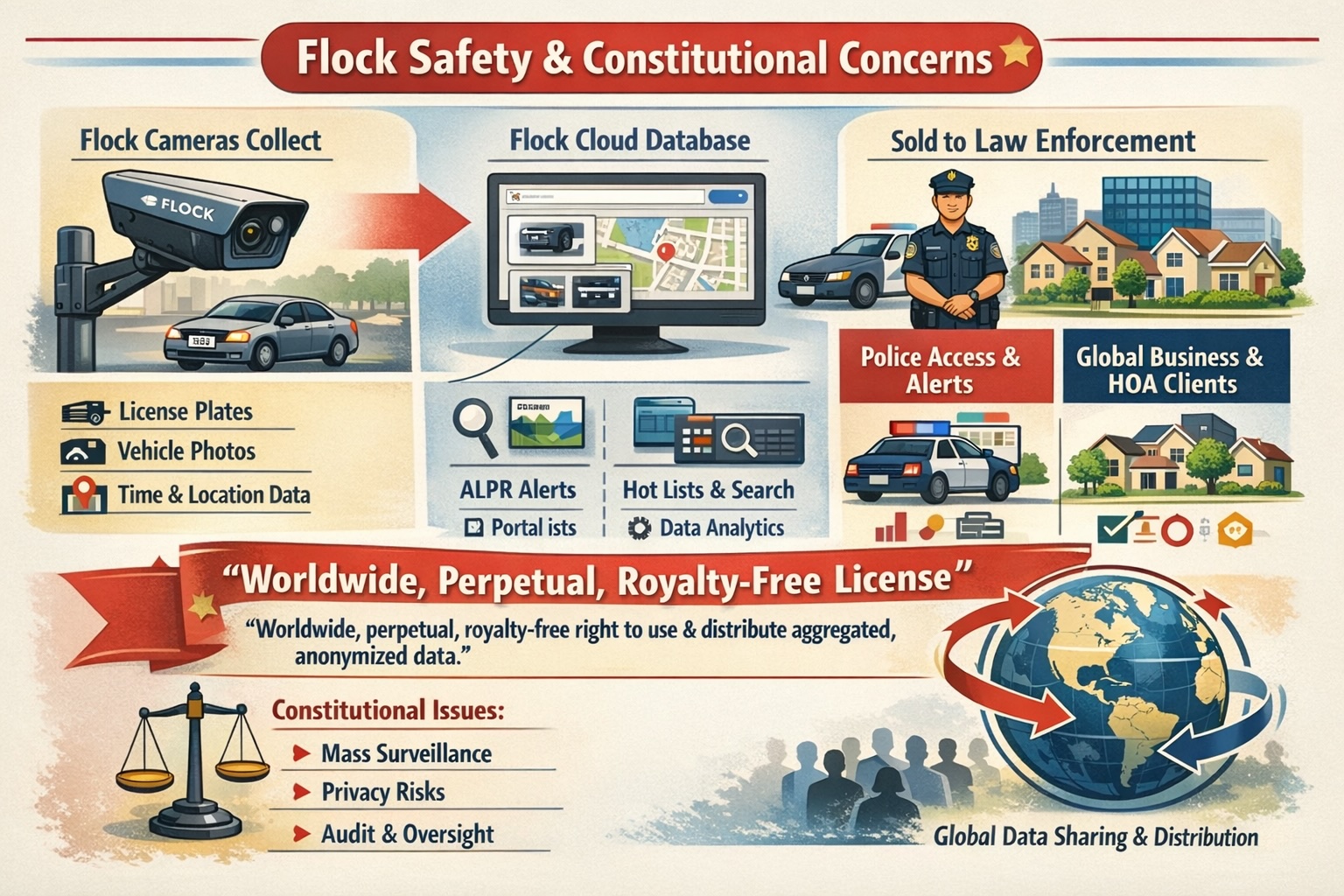
Constitutional oversight + contract terms
Infographic summarizing constitutional oversight issues and governance risks with Flock Safety ALPR surveillance systems.
Constitutional oversight summary + documented contract language example: some agreements grant a “perpetual, irrevocable, worldwide, royalty-free” license for use/distribution of Customer Data as “Aggregated Data,” and allow use of Aggregated Data for “marketing” and other purposes. (Contract example: Fenton, MO agreement language.)
Why this matters: “It’s just a camera” stops being true when the system’s value comes from retention + search + sharing + secondary use. If contract terms allow broad reuse/distribution of “Aggregated Data,” residents should demand enforceable limits and independent audits.
Source example: the Fenton, MO agreement includes “perpetual, irrevocable, worldwide, royalty-free” license language and explicitly references use of “Aggregated Data” for “marketing, development, diagnostic and corrective purposes.” View contract PDF
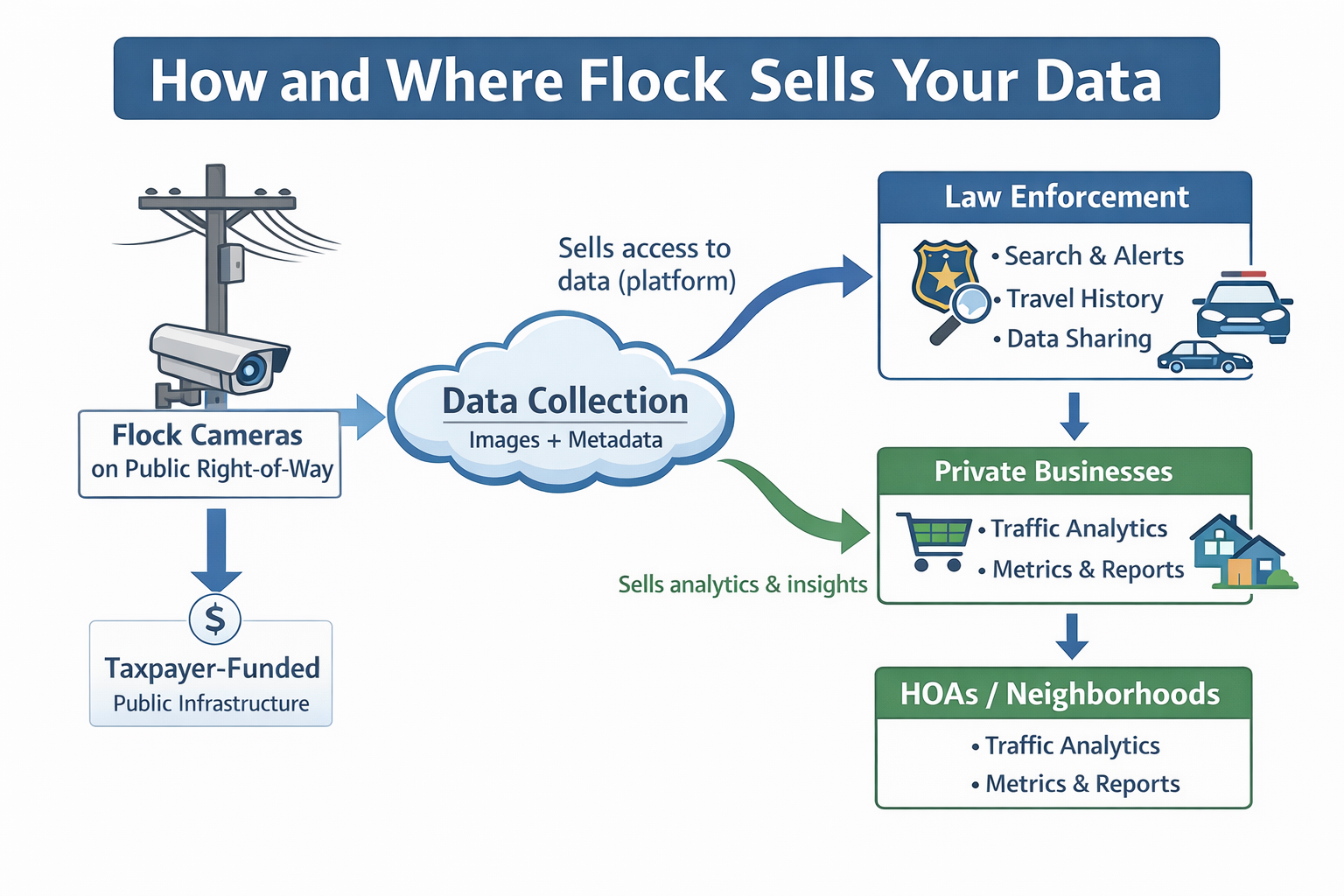
Infographic showing how Flock cameras collect images and metadata and sell platform access to law enforcement and analytics to private businesses and HOAs.
Summary of the Flock data pipeline: capture → cloud platform → paid access (law enforcement subscriptions + business/HOA products and analytics).
Plain-language definition: When residents say “Flock sells your data,” they mean: Flock sells access to a platform built from public-space captures (images + metadata), plus optional analytics products. Even if a vendor argues it’s “not personal data,” it is still a paid system built from the movement of the public.

What’s documented in Maryville / Alcoa (local focus)

  • Public infrastructure siting: cameras are installed on poles and roadside locations that exist because taxpayers fund and maintain public infrastructure.
  • Law enforcement access: the city pays for platform access that includes searching, alerts, and travel-history-style lookups (as reflected in portal screenshots, dashboards, and training materials published on this site).
  • Analytics about the driving population: dashboards can show aggregate breakdowns across the city, not just “suspect vehicles.”

What we’re actively investigating

  • Private network expansion: community observations indicate cameras operating in private retail lots and HOA settings, creating a public/private surveillance web.
  • Access requests to private cameras: publishing records showing when/how local agencies request access to private lot systems.
  • “Not personal data” language: reviewing contracts/terms for how “anonymized/aggregated” is defined and what rights the vendor keeps.
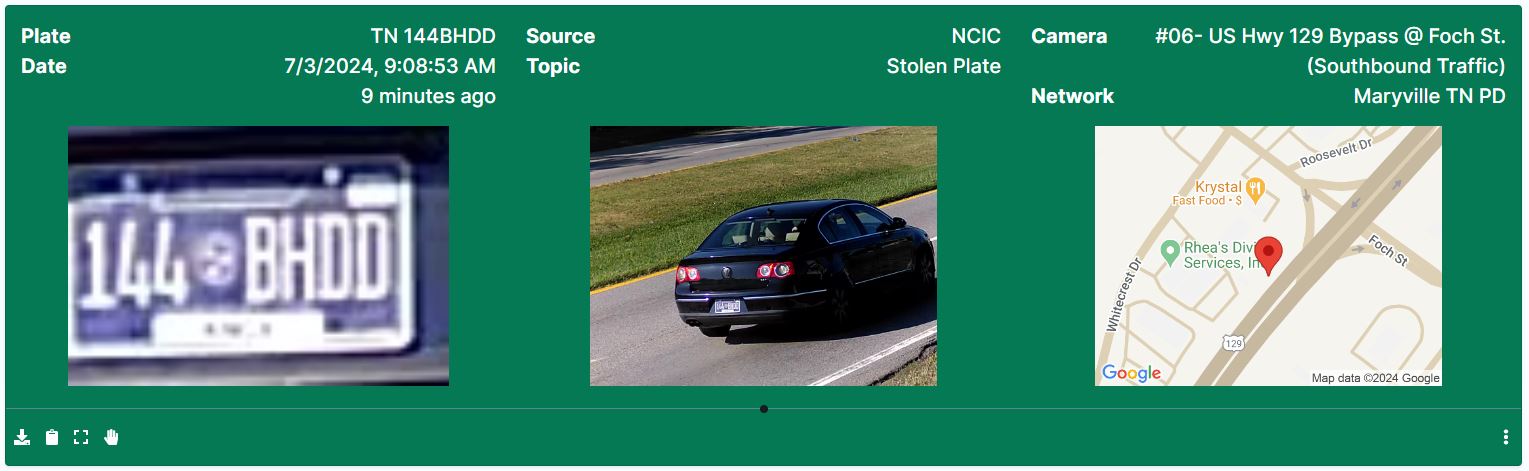
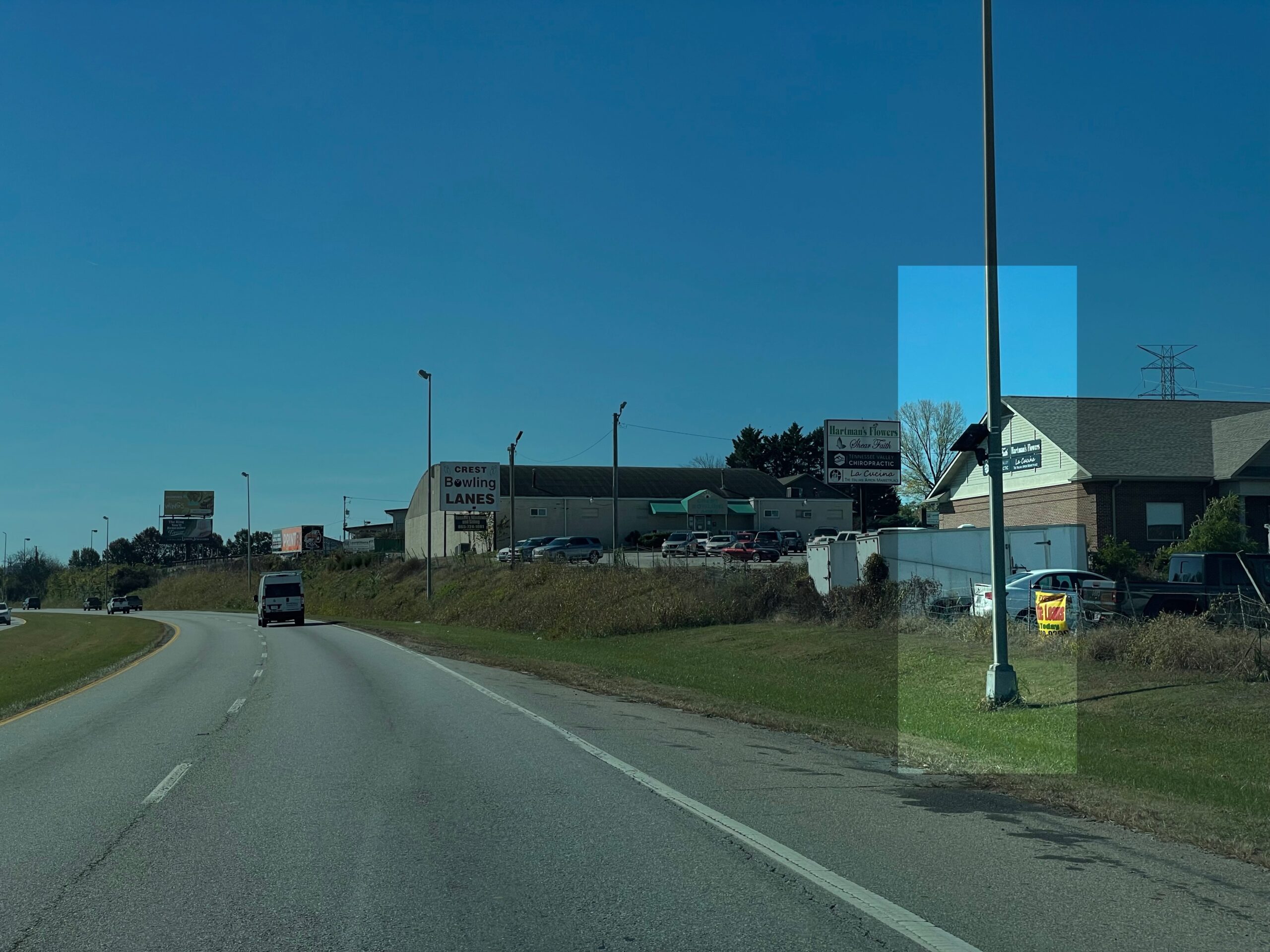
LOCAL EXAMPLE · Maryville, Tennessee
What this shows: the same real-world camera location and a TPRA-released platform view that illustrates how a capture becomes a logged record with time/location context and map display.
TPRA screenshot showing a Flock platform alert view tied to camera #06 US Hwy 129 Bypass at Foch St, with time, map panel, and vehicle image.
TPRA record screenshot: example platform view showing camera label, timestamp, vehicle image, and map panel. (Click to view larger)
Flock ALPR camera installation at US 129 Bypass and Foch Street in Maryville, Tennessee.
Camera location photo: Flock camera at US 129 Bypass & Foch St (Maryville, TN). (Click to view larger)

Note: This section documents system workflow and siting transparency. It is not an allegation about any individual driver. Purpose: illustrate how the system works (capture → record → map → alert) and why policy on retention, access, and audits matters.
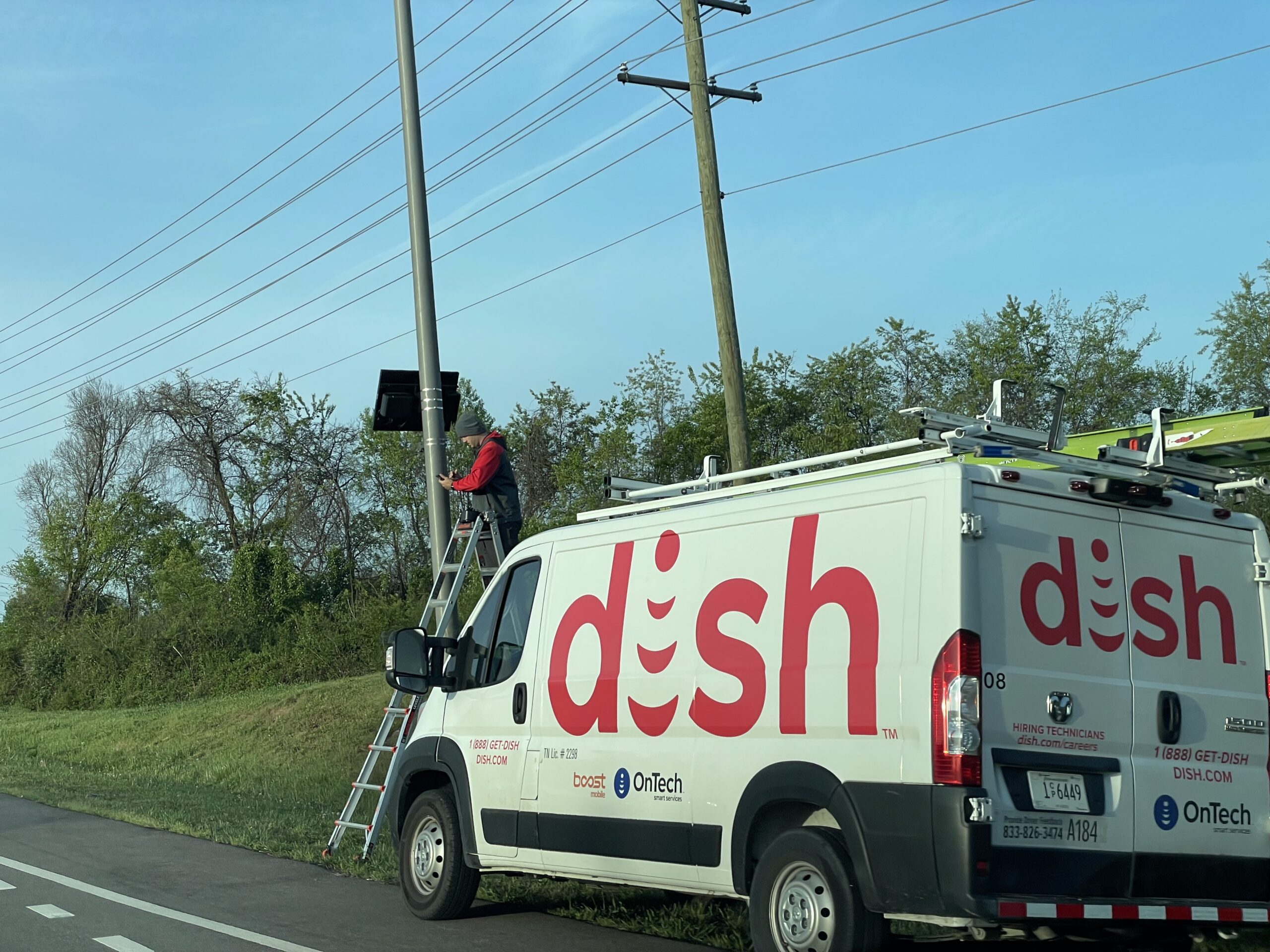
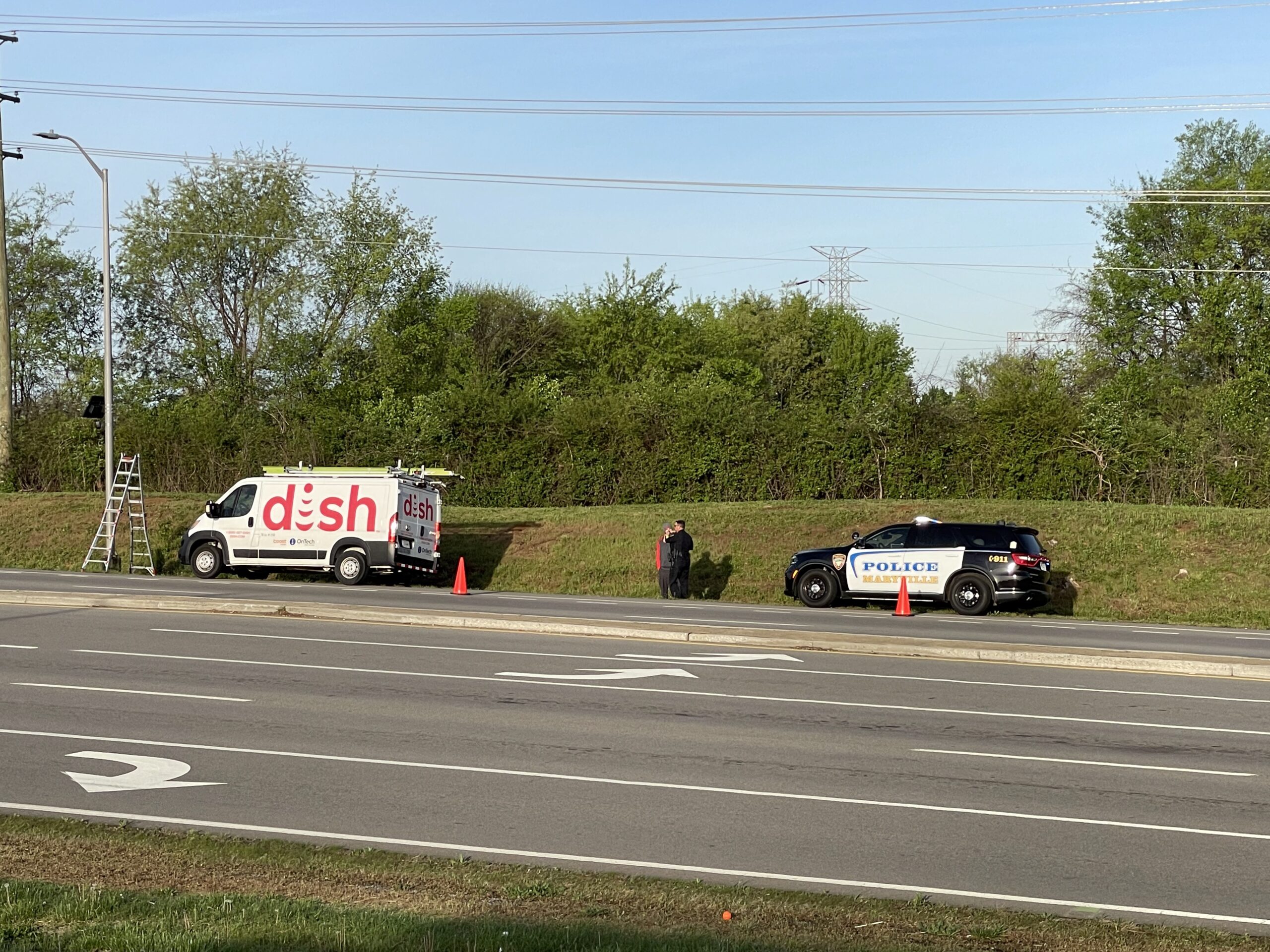
Field Documentation · April 6, 2026 · Maryville, Tennessee
🚨 Who has physical access to Maryville’s surveillance hardware?
On April 6, 2026, a Dish Network-branded service van and technician were observed and photographed working on a Flock Safety camera unit in Maryville while a Maryville Police Department vehicle was present on site. No public record has been released identifying which private companies have physical access to the city’s surveillance hardware, under what authorization, or what data access those contractors may have during service visits.
Dish Network-branded service van parked beside a pole-mounted Flock Safety surveillance camera in Maryville, Tennessee, April 6, 2026
Dish Network van beside Flock Safety camera unit, Maryville TN. April 6, 2026.
Maryville Police Department vehicle present on site during Flock Safety surveillance camera installation work, April 6, 2026
Maryville PD vehicle present during surveillance equipment work. April 6, 2026.
Questions residents can ask their city:
  • Which private contractors have been authorized to physically access Maryville’s Flock camera hardware?
  • What data access, if any, do service contractors have during maintenance visits?
  • Is contractor access logged and auditable alongside officer search logs?
  • Was this contractor arrangement disclosed in the original contract or any public document?

Transparency note: photographs were taken in public space to document contractor activity at a city surveillance infrastructure site. No individuals are identified. Purpose: accountability documentation of who has physical access to publicly funded surveillance hardware.

🌐 The roadside camera is only the beginning

A Flock camera does not operate as a stand-alone device. Each capture can become part of a much larger vendor-operated system involving cloud storage, account authentication, search tools, alerts, maps, vehicle analytics, agency sharing, investigative software, APIs, device-management systems, and third-party infrastructure.

1 · Capture
Camera + vehicle image + time/location
2 · Cloud
Upload + storage + device infrastructure
3 · Search
Plate, vehicle traits, location + history
4 · Analyze
Alerts, maps + investigative tools
5 · Share
Other agencies + approved networks
6 · Expand
APIs, Nova, video, external data + other systems

The sections below map these additional layers using Flock’s own materials, public records, technical infrastructure, investigative reporting, and independent security research.

Why this matters for taxpayers: when cameras are placed in public space, residents can reasonably ask why a private vendor is allowed to leverage public siting while the city also pays ongoing subscription costs for access to the resulting database and analytics.
SECTION 2 · Patent Record (What the System Is Designed to Do)

🧠 Flock’s patent: surveillance capabilities, not “public safety” slogans

Flock’s branding centers “public safety,” but the patent record is blunt about what the system is designed to do: collect information from cameras in public space, extract identifying attributes, store those results with time/location context, and make them searchable across a wide area. That is the definition of a surveillance platform.

The most important takeaway is not “AI” — it’s scope. A license plate reader implies “targeted” use. A patent describing distributed cameras + a cloud database implies something else: routine capture of everyday Americans going about normal life (school pickup, commuting, grocery runs), because the system must capture everyone in order to work as advertised.

Quick keyword snapshot (Patent: U.S. 11,416,545)
“surveillance” 93
Literal occurrences in patent text
“safety” 0
Literal occurrences in patent text
Note: this is a literal word-count in the patent PDF text. Patents describe capabilities and system design; they do not automatically prove every capability is enabled in every deployment.
🚨 What the patent makes clear
This is not “only about criminals.” It is a system built to collect on the general public first — then allow searching later. The city’s real responsibility is not to repeat vendor slogans, but to publish enforceable rules for: retention, who can search, what justification is required, who results can be shared with, and audit logs that can prove those rules are followed.
Bottom line: if the system’s first step is “capture everyone,” then safety claims don’t replace the need for strict limits and independent oversight.

“Public safety” is a goal, but surveillance is a capability. The patent describes capability. Residents are left to demand what should have been published from day one: written policy, public reporting, and auditable accountability.
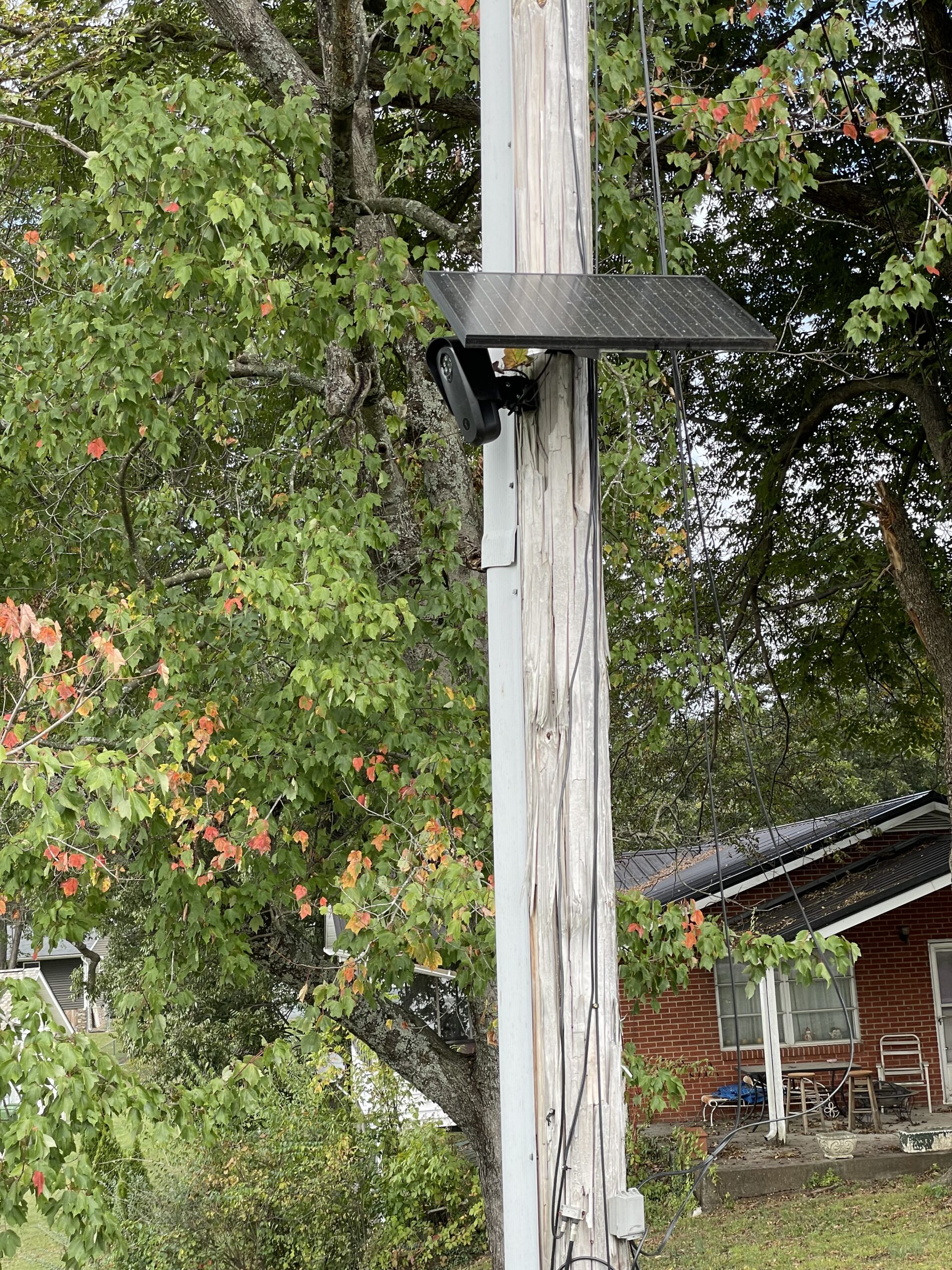
Flock Safety ALPR camera example
Camera hardware in public space (example image).
Diagram illustrating Flock AI / analytics concept
Diagram-style illustration of analytics / system concepts (context image).

Transparency note: this section cites the patent record to describe capability and scope. It does not accuse any individual resident of wrongdoing.

SECTION 2.5 · OS Investigate — Reconstructing Flock’s AI Investigation System
🔴 New Reporting + Flock First-Party Sources · 2026

🧠 From searching for a suspect to generating investigative leads

On August 19, 2026, WIRED published a reconstruction of a Flock artificial-intelligence investigation tool called OS Investigate, originally known as Nightshift.

According to WIRED, more than 450 code files associated with the product were being delivered through Flock login infrastructure. Reporters used those publicly served files to reconstruct portions of the interface, Flock-authored investigative prompts, search parameters, available tools, and client-side controls.

Maryville Privacy then compared those findings with Flock’s own public product pages, technical documentation, Trust Center statements, and engineering descriptions. Together, those sources reveal more than a new search box. They describe an expanding investigative architecture built around natural-language search, multiple data sources, vehicle association, cross-camera analysis, and AI-assisted lead generation.

Why map the public internet? The public internet contains more information about surveillance systems than the companies’ sales pages reveal. We collect those scattered public technical records, connect the pieces, and explain what they show.
Public-source methodology No Flock law-enforcement account was used for this analysis. No authentication was attempted. No access control was bypassed.

This reconstruction uses WIRED’s analysis of publicly served Flock application files, independent security research published by Nexanet, and Flock’s own publicly accessible product pages, documentation, Trust Center material, and public engineering descriptions.

Where a conclusion goes beyond what a source directly states, it is identified below as an assessment rather than an observed fact.
PRODUCT RECONSTRUCTION / OS INVESTIGATE
$ inspect –product os-investigate –source public

[PRODUCT]
public name: OS Investigate
development / former name: Nightshift

[WIRED RECONSTRUCTION]
publicly served code files: 450+
Flock-authored prompts: 69
connected tools described: 45
pattern-oriented prompts: 19
pattern prompts requiring no plate/name/description: 14

[SEARCH MODEL]
known plate: OPTIONAL
known person: OPTIONAL
location: SEARCHABLE
time: SEARCHABLE
behavior: SEARCHABLE
physical description: SEARCHABLE
natural-language prompt: EDITABLE / CUSTOM

ASSESSMENT:
The investigative starting point no longer has to be a known suspect. A location, behavior, travel pattern, association, or description can become the starting point from which software generates leads.
🚨 The important change is the order of investigation A conventional database search begins with a target and retrieves information about that target.

OS Investigate introduces another possibility: begin with a place, timeframe, behavior, travel pattern, association, or description; search a much larger dataset; and allow software to identify the vehicles or people that should receive additional investigative attention.
Traditional Search
Suspicion → Search
Pattern-Based Investigation
Search → Candidate List → Suspicion

🔎 Reconstructed investigative workflow

INVESTIGATIVE PIPELINE
$ map –workflow investigative_analysis

SEARCH INPUT
├── location / map area
├── date + time
├── behavioral pattern
├── travel pattern
├── vehicle / plate
├── person
└── physical description
    │
    ▼
DATA / TOOLS
├── ALPR observations
├── camera metadata
├── arrest records
├── case records
├── 911 / dispatch information
├── ballistics information
└── commercial identity data
    │
    ▼
ANALYSIS
├── movement patterns
├── repeated locations
├── travel patterns
├── witness candidates
├── vehicle associations
├── identity enrichment
└── physical-description filtering
    │
    ▼
OUTPUT
├── candidate vehicles
├── people
├── addresses
├── relatives
├── associated vehicles
├── contact / identity information
└── investigative leads

🎛️ What could investigators search?

WIRED’s reconstruction exposed unusually specific search parameters, thresholds, filters, and Flock-authored investigative workflows.

RECONSTRUCTED SEARCH PARAMETERS
$ enumerate –parameters os-investigate

[GEOGRAPHY]
neighborhood
city
radius around location
arbitrary map area
multiple geographic areas in sequence

[TIME]
date range
daily time window
last 14 days
repeated travel over 14 days
return trip within one week
overnight windows such as midnight–5 a.m.

[BEHAVIOR / MOVEMENT]
repeated retail locations
multiple banks
multiple gas stations
city-to-city travel and return
repeated round trips
three geographic areas in sequence
frequency within a neighborhood

[VEHICLE EXCLUSIONS]
buses
semi trucks
work vans
trailers
whitelisted vehicles in at least one workflow

[PERSON DESCRIPTION]
sex
race
ethnicity
height
weight
build
scars
marks
tattoos

🚗 Finding 01 · Vehicle proximity can become an investigative association

WIRED RECONSTRUCTION / ASSOCIATION PARAMETERS
target: one vehicle

compare: plates observed at the same cameras

default proximity window: 2 minutes
repeated co-occurrence: 3+ times
default confidence: 0.75
possible returned associates: up to 20 vehicles

[ASSESSMENT]
Repeated proximity can be transformed into an investigative relationship. Co-occurrence does not establish that two drivers know each other, but it can cause another vehicle — and potentially its owner — to receive investigative attention.
Flock now publicly markets a related capability: “Convoy Search” Flock’s Enhanced LPR / LPR Pro material publicly describes Convoy Search as identifying vehicles traveling together in order to uncover connections, possible accomplices, and patterns.

That resembles the general type of vehicle-association analysis found by WIRED inside OS Investigate. However, the available public evidence does not establish that Convoy Search and the OS Investigate association tool use the same algorithm or thresholds.

🎯 Finding 02 · Software can narrow a population into people for deeper investigation

FLOCK-AUTHORED WORKFLOW / RECONSTRUCTED BY WIRED
starting population:
people arrested more than twice within two years

exclusion:
narcotics arrests


map residential locations


retrieve calls for service associated with homes


select: top three individuals


execute: WORKUP

[ASSESSMENT]
In this workflow the software is not merely retrieving information about a person already chosen by an investigator. It participates in narrowing a larger population into individuals selected for additional investigation.

🧩 Finding 03 · Identity “workup”

IDENTITY ENRICHMENT / WORKUP
input:
name
date of birth

reported outputs include:
vehicles
prior suspect listings
relatives
phone numbers
online accounts

WIRED also reported references to commercial identity databases containing information such as dates of birth, phone numbers, email addresses, relatives, associates, and Social Security numbers.

[NOT ESTABLISHED]
which providers supply each dataset
which fields each customer can access
what data Maryville can access
whether any particular resident has received a workup

🧠 Finding 04 · Flock’s own engineering material reveals the architecture behind Nightshift

Public Flock engineering descriptions provide another window into the system. They describe Nightshift as a conversational investigative agent built around LLM tool use, multi-step reasoning, connections to Flock’s existing data platform, and infrastructure for monitoring agent behavior.

NIGHTSHIFT / FIRST-PARTY ARCHITECTURE
$ reconstruct –source flock-engineering

INVESTIGATOR


CONVERSATIONAL AGENT
├── natural-language interaction
├── conversation state
└── context management


AGENT ORCHESTRATION
├── LLM tool calling
├── multi-step reasoning
├── retrieval
├── memory
├── grounding / attribution
└── guardrails


DATA CONNECTORS
├── internal APIs
└── Flock core data services


INVESTIGATIVE WORKFLOW
├── structured tool results
├── schema validation
├── multi-step analysis
├── generated leads
└── cross-camera correlation

OBSERVABILITY / QA
├── logging
├── tracing
├── production traces
├── agent failure analysis
└── AI observability tooling
Why this matters: This first-party engineering material supports a more specific architectural interpretation of OS Investigate/Nightshift. The AI is not described merely as a chatbot answering questions. Flock describes an agent capable of calling tools, interacting with existing data services, carrying context through multiple steps, and participating in investigative workflows.

Important limitation: engineering requirements and job descriptions can include systems under development. They do not establish that every listed architecture or capability is currently active for every Flock customer.

🌐 Finding 05 · OS Investigate is emerging inside a much larger search ecosystem

Flock’s current public product pages independently document an expanding set of investigative capabilities around the same underlying categories: vehicle movement, natural-language search, video, LPR, public records, police data, and cross-jurisdiction analysis.

FLOCK / PUBLICLY MARKETED INVESTIGATIVE STACK
$ map –product-family investigate

INVESTIGATE BUNDLE

├── Traffic Analytics

├── Enhanced LPR
│ ├── Multi-GEO analysis
│ ├── related / repeat vehicles
│ ├── Convoy Search
│ └── hotlist patterns

├── FreeForm AI
│ ├── natural-language search
│ ├── video + LPR workflow
│ ├── shared-camera search
│ ├── configurable alerts
│ └── camera-zone filtering

└── Nova OSINT
├── CAD
├── RMS
├── video
├── LPR
└── public records

Independent code finding:
└── DarkData
└── hasDarkDataAccess
└── dark/getExtDarkData
└── darkDocs
Do not assume these are all the same product.

FreeForm, Enhanced LPR, Nova, and OS Investigate/Nightshift have distinct product identities and documented functions. Their appearance here together does not establish that they share the same algorithms or backend.

What it does establish is that Flock itself now publicly markets a broader investigative ecosystem capable of searching and connecting multiple categories of sensor, vehicle, video, police, and public-record data.

🕸️ Finding 05A · Flock Nova code exposes a documented “Dark Data” pipeline

In December 2025, security researcher Joshua Michael of Nexanet published an analysis of publicly accessible client-side code associated with Flock Nova. Rather than relying only on product descriptions, the research identified specific code objects, permission flags, API routes, result containers, interface elements, and search selectors associated with a data source explicitly named Dark Data.

RAW CODE IDENTIFIERS / FLOCK NOVA
$ evidence –product nova –source client-code

SEARCH TYPE
key: DarkData

ACCESS CONTROL
permission flag: hasDarkDataAccess

API / DATA ROUTE
endpoint: dark/getExtDarkData

RESULT STORAGE
result key: darkDocs

SHARED APPLICATION STATE
context: AllDataContext
documented container: darkDocs: []
DARK DATA / REPORTED SEARCH SELECTORS
SSN
email
phone
IP address
crypto wallet
credit card number
Discord handle
Telegram handle
username / user
free-form keyword
Code path: Dark Data was reportedly invoked during ordinary phone searches Nexanet reports that Nova’s phone-search code checked the permission value decoded.hasDarkDataAccess before building a Dark Data request.

When that permission was enabled, the code reportedly called:
dark/getExtDarkData
The researcher also documented a status message described as “Fetching Dark Data” during this workflow.
Dark Data was reportedly integrated into investigations Nexanet’s code analysis shows darkDocs stored alongside other application data and mapped to the user-facing label “Dark Documents.”

The researcher reports that these records could appear alongside RMS persons, signals, and other case-linked information, with code supporting addition and removal of Dark Documents from investigations.
REPORTED DARK DATA RESPONSE FIELDS
Crawl Date
Network
Leak Name
Leak Host
Download Location
Open
🔗 Examine the underlying technical evidence
The disclosure includes screenshots of the Nova search configuration, permission checks, Dark Data interface, application state, investigation mappings, and result-table fields.
⚖️ What the raw code proves — and what it does not The code identifiers provide stronger evidence than a product-description claim: a Dark Data search type, permission flag, API route, result container, user interface, and investigation mapping were reportedly present in the Nova code analyzed by Nexanet.

However, the names of those functions do not by themselves prove the provenance of every underlying record.

Established by the published code analysis: Nova contained software structures designed to request, display, retain, and incorporate a category identified internally as Dark Data.

Still unresolved: who supplied the underlying information, whether every dataset was breach-derived, which customers received access, whether the capability remained enabled in production, and whether Maryville has access.

🔍 Finding 06 · Flock now publicly documents natural-language visual search

Flock’s current FreeForm documentation says authorized users can search video and vehicle evidence using ordinary language rather than relying solely on predefined database fields.

Flock publicly documents searches involving:

vehicle color
vehicle type
visible vehicle damage
clothing
visible accessories
camera zones
natural-language descriptions
shared camera networks where authorized
configurable alerts for potentially relevant matches

Flock states that people-related FreeForm searches operate on enabled video feeds rather than its LPR cameras and says the feature does not use facial recognition or biometric person identification.
Flock source: Flock FreeForm

🛡️ Finding 07 · Flock is adding automated search controls

Flock publicly documents an automated search-filter system intended to block certain prohibited LPR searches based on law or agency policy.

FLOCK-DOCUMENTED SEARCH CONTROLS
search reason: REQUIRED / RECORDED
user identity: LOGGED
search history: REVIEWABLE
offense / case controls: AVAILABLE / EXPANDING
restricted-use filters: POLICY / JURISDICTION DEPENDENT
audit tools: AVAILABLE

Flock says some search filters can automatically prevent searches related to restricted purposes such as immigration enforcement or reproductive healthcare where applicable.

⚠️ An important product-boundary question Flock’s current Trust Center states that its ALPR system does not analyze demographic information, does not identify drivers or passengers, and does not predict crime. Flock also states that ALPR searches must relate to a specific investigation.

WIRED’s reconstruction of OS Investigate, however, describes a broader investigative product with person-description fields, behavioral-pattern prompts, association analysis, and workflows capable of identifying candidate subjects.

These statements are not necessarily mutually exclusive. Flock may be drawing a technical and policy boundary between its core ALPR system and separate investigative products that can operate across additional datasets.

That boundary is exactly what public agencies should require Flock to explain.

❓ What we still cannot see

WIRED could reconstruct portions of the interface, search fields, Flock-authored prompts, available tools, and client-side controls.

The publicly served files did not reveal:

• the hidden system instructions supplied to the AI model
• complete server-side processing logic
• every server-side validation rule
• precisely what every tool returns
• complete refusal / moderation logic
• agency-specific permissions
• the complete ranking logic behind generated candidates
• whether every reconstructed capability is currently active

Maryville Privacy has also not independently recovered the original 450-plus application files described by WIRED. The code-specific findings on this page therefore remain attributed to WIRED unless independently corroborated by Flock’s own current public material.

📍 Why this matters in Maryville

Maryville’s roadside Flock cameras are collection points connected to a software platform that continues to evolve after the cameras are installed.

Flock’s own marketing for its Investigate bundle emphasizes that agencies can receive newer investigative tools through software rather than necessarily purchasing new roadside hardware.

That means oversight cannot stop with asking what a camera could do on the day the contract was signed.

Residents should also know what new software can operate on the data, what additional datasets can be connected, which capabilities Maryville has enabled, and what written limits govern their use.
LOCAL RECORDS QUESTIONS / MARYVILLE
$ records-request –scope investigative-ai

01. Has Maryville or MPD been offered, demonstrated, licensed, enrolled in a pilot for, or provided access to OS Investigate, Nightshift, or another Flock AI investigative agent?

02. Does Maryville currently have Enhanced LPR, Convoy Search, Multi-GEO, FreeForm, Nova OSINT, or an Investigate bundle?

03. Can existing Maryville ALPR records be analyzed by these products without installation of additional roadside hardware?

04. What policy governs behavioral, association, convoy, multi-location, natural-language, or AI-assisted searches?

05. Can Safe List / whitelist status affect whether a vehicle appears in an investigative candidate or witness search?

06. What external databases, public-record systems, CAD systems, RMS systems, or commercial identity services are accessible through Maryville’s Flock environment?

07. What audit record is created for an AI-assisted investigation, including user, prompt, reason, case number, tools invoked, datasets queried, and results accessed?

08. Can an administrator determine which investigative tools were invoked by an AI agent during a multi-step query?

09. Has Flock provided Maryville training, release notes, demonstrations, emails, sales materials, or product announcements concerning automated lead generation, cross-camera correlation, or agentic investigation?

10. Does any Flock product available to Maryville expose a data source, permission, feature, or integration identified as “Dark Data,” “DarkData,” external dark data, or hasDarkDataAccess; and if so, what provider supplies that information and what categories of data are searchable?
ANALYTIC SUMMARY
$ summarize –system flock-investigative-ai

collection: ALPR + video + connected data
search: structured filters + natural language
movement: locations + travel patterns + Multi-GEO
association: proximity + Convoy Search + cross-camera correlation
identity: records + OSINT + investigative enrichment + external data
Nova code: DarkData + hasDarkDataAccess + dark/getExtDarkData + darkDocs
agent: tool calling + multi-step reasoning + context
output: matches + associations + candidate leads
oversight: reasons + logs + filters + audit tools

BOTTOM LINE
The significance of OS Investigate is not simply that Flock added AI. It is the emergence of an investigative layer capable of searching, correlating, and reasoning across information collected by a much larger surveillance and public-safety data ecosystem.

🔗 Primary sources and technical references

01 · WIRED — OS Investigate code reconstruction
Flock Has a Powerful New AI Tool for Police. We Got Its Code
02 · Flock Safety — Investigate bundle
Big City AI Tools on a Budget
03 · Flock Safety — FreeForm
Flock FreeForm
04 · Flock Safety — Natural-language search
Natural-Language Video and License Plate Reader Evidence
05 · Flock Safety — Enhanced LPR
Enhanced LPR — Multi-Geo and Convoy Search
08 · Flock Safety — Nova OSINT
Porterville PD and Flock Nova OSINT
09 · Flock Safety — Search safeguards
Search Safeguards: How Flock’s Search Filters Work
10 · Flock Safety — Testing and FreeForm moderation
Understanding Flock’s Testing and Development Program
11 · Flock Safety — Law-enforcement access
Flock Trust Center — Law Enforcement Access
12 · Flock Safety — Rights and safeguards
Flock Trust Center — Civil Liberties & Rights Safeguards
13 · Flock Safety — Compliance tools
Flock Trust Center — Compliance Tools
14 · Nexanet / Joshua Michael — Nova “Dark Data” code analysis
Technical analysis of Flock Nova “Dark Data” code →
15 · Flock Safety — Nova and dark-web data
Flock’s public statement: Nova Will Not Supply Dark Web Data →

Research status · September 2026: OS Investigate remains an evolving product. The code-specific findings above are attributed to WIRED’s August 2026 reconstruction unless Flock’s own public documentation independently supports them. Maryville Privacy has not independently recovered the original 450-plus publicly served application files described by WIRED and has not independently reproduced Nexanet’s Nova code analysis. The Nova-specific technical findings above therefore remain attributed to Nexanet and are linked to the researcher’s published evidence. Flock’s public product pages and engineering descriptions provide additional evidence about its broader investigative architecture, but product marketing, engineering plans, and job requirements do not by themselves establish that every described capability is currently deployed to every customer. Nothing in this section establishes that Maryville currently has access to OS Investigate/Nightshift, that every described function is enabled in Maryville, or that any particular resident has been searched through the product. Nothing in the Nova “Dark Data” findings establishes that Maryville has access to that capability or establishes the provenance of the underlying data.

SECTION 2.6 · Fusion Centers & Regional Flock Data
PUBLIC RECORDS + REPORTED TECHNICAL CASE STUDY

🕸️ The camera is only the bottom of the system

A Flock camera may be installed by one police department, but the information it collects does not necessarily remain inside that department. Flock supports cross-agency sharing and software integrations, while regional intelligence organizations can provide another layer above individual police departments.

One unusually well-documented example is the Northern California Regional Intelligence Center (NCRIC). Public records independently establish that NCRIC has used Flock Safety, has Flock-related network and sharing records, and participates in a regional law-enforcement information-sharing environment.

Separately, an August 2026 investigation by Patrick Quirk / Ringmast4r and ek0ms savi0r reported finding a contractor-associated GitHub repository containing technical material for an NCRIC ALPR system. Those repository-derived details are useful for understanding what a regional architecture may look like, but Maryville Privacy has not independently recovered and authenticated the original repository. Those specific findings remain labeled reported below.

Evidence labels used in this section [CONFIRMED] Independently supported by government records, official documentation, or other primary public material.
[DOCUMENTED] Described in published vendor or government documentation.
[REPORTED] Reported by an outside researcher or publication where Maryville Privacy has not independently authenticated the underlying artifact.
[ASSESSMENT] An inference drawn from the documented pieces.
[NOT ESTABLISHED] A possible connection for which Maryville Privacy has not found evidence.

✅ What can be independently established

[CONFIRMED] NCRIC is a regional intelligence / fusion-center organization serving Northern California law enforcement.

[CONFIRMED] Public-records productions concerning NCRIC include Flock Safety contracting material and records concerning Flock network auditing, shared networks, and agencies sharing Flock ALPR information with NCRIC.

[CONFIRMED] Public reporting based on agency audit records has documented NCRIC personnel conducting searches across large numbers of Flock networks.

[CONFIRMED] NCRIC access to another jurisdiction’s Flock information became a public controversy in San Francisco after audit records showed searches involving outside agencies, demonstrating that a locally collected ALPR record can become relevant beyond the agency that originally collected it.

🗺️ The documented information-sharing model

PUBLIC INFRASTRUCTURE MAP · DOCUMENTED LAYERS
$ map –regional-alpr –evidence public

PHYSICAL COLLECTION

├── roadside ALPR cameras
├── vehicle images
├── plate reads
└── location / time metadata


FLOCK CLOUD PLATFORM

├── agency accounts
├── stored ALPR records
├── search
├── hotlists / alerts
├── audit history
└── sharing controls


CROSS-AGENCY ACCESS

├── participating police departments
├── sheriff’s offices
├── other authorized networks
└── regional intelligence users


REGIONAL INTELLIGENCE LAYER

├── fusion centers
├── intelligence units
├── regional investigations
└── information-sharing workflows

[CONFIRMED CONCEPT]
Public NCRIC records demonstrate that the practical boundary of an ALPR network can extend beyond the police department that operates the roadside camera.

🔎 The reported GitHub repository goes one layer deeper

The Ringmast4r investigation describes something different from an ordinary Flock audit report. It says a contractor-associated repository exposed portions of the technical plumbing used to move Flock ALPR information into a separate regional system.

⚠️ Verification boundary Maryville Privacy has independently verified the broader NCRIC/Flock relationship through public sources.

Maryville Privacy has not independently authenticated the contractor repository described by Ringmast4r. The exact camera count, software names, database contents, cloud architecture, and repository file contents below therefore remain reported findings.
REPORTED NCRIC TECHNICAL STACK · NOT INDEPENDENTLY AUTHENTICATED
$ reconstruct –source ringmast4r –status reported

LOCAL FLOCK NETWORKS

├── reportedly 47 agency names
├── reportedly 48 networks
└── reportedly 1,183 unique cameras
    │
    ▼
FLOCK API

├── authentication
├── ALPR query
├── images
└── camera information


“FLAPPER” INGESTION WORKER

└── reportedly retrieved Flock ALPR reads through REST


CONTRACTOR / REGIONAL INFRASTRUCTURE

├── PostgreSQL
├── search / indexing
├── image / media storage
├── authentication
├── job orchestration
├── cloud infrastructure
└── regional user / organization records

[REPORTED]
Ringmast4r says these components were reconstructed from a public contractor-associated GitHub repository and database extracts.
🚨 The important finding is bigger than one GitHub repository Even if every repository-derived technical detail were removed from this case study, the public records still establish the central governance issue: Flock information can exist inside a multi-agency information-sharing environment.

The reported repository matters because it may provide a rare view of the software and cloud infrastructure underneath one such regional system.

It does not establish that every Flock customer uses the same architecture, that every fusion center receives Flock data, or that Maryville participates in the NCRIC system.
The physical camera is not necessarily the boundary of the system Residents see the roadside camera because that is the visible part.

But meaningful oversight has to continue upward through the account, cloud platform, sharing permissions, APIs, integrations, regional systems, and outside users that may have access to the resulting information.

The question is therefore not simply:

“Who owns this camera?”

It is:
“What is the complete path this camera’s information can travel?”

📍 Tennessee has its own statewide fusion center

The California case is not evidence about Maryville, but it raises a directly relevant Tennessee question because Tennessee already has a statewide law-enforcement information-sharing structure.

[CONFIRMED] The Tennessee Bureau of Investigation operates the Tennessee Fusion Center at TBI headquarters in Nashville.

TBI describes the Fusion Center as an information-sharing operation involving local, state, and federal law enforcement and says it receives, analyzes, and disseminates information concerning criminal activity.

[CONFIRMED] TBI also maintains a regional office in Knoxville.

Knoxville-area law-enforcement intelligence operations and the Tennessee Fusion Center should not automatically be treated as the same system. A fusion center, regional TBI office, police intelligence unit, task force, and real-time crime center can perform different functions and have different access.

🏠 Mapping Maryville from the camera upward

Maryville Privacy is attempting to map the entire publicly identifiable infrastructure surrounding Maryville’s ALPR system — from the roadside collection device to every documented sharing, integration, and intelligence layer above it.

MARYVILLE DATA PATH · KNOWN + OPEN QUESTIONS
$ trace –maryville –from camera –upstream

MARYVILLE ROADSIDE CAMERAS

├── plate / vehicle imagery
├── time
├── location
└── vehicle attributes


MARYVILLE FLOCK ACCOUNT / CLOUD

├── ALPR records
├── searches
├── hotlists / alerts
├── Safe Lists
├── audit records
└── sharing permissions


DOCUMENTED FLOCK NETWORK

└── outside agency access / sharing


OPEN INFRASTRUCTURE QUESTIONS

├── APIs enabled for Maryville?
├── third-party integrations?
├── regional intelligence access?
├── Tennessee Fusion Center access?
├── TBI access or referrals?
├── task-force access?
├── federal access?
└── independent downstream retention?

[NOT ESTABLISHED]
Maryville Privacy has not found public evidence establishing that Maryville Flock ALPR records currently feed the Tennessee Fusion Center or another external regional intelligence database.
Why this matters in Maryville Maryville does not need to operate its own fusion center for locally collected information to become useful somewhere else.

The relevant question is whether information can move through Flock sharing, APIs, exports, integrations, investigative referrals, task forces, or other authorized law-enforcement systems.

A meaningful surveillance map therefore has to show the entire information path — not just dots representing cameras.
MISSING PIECES · PUBLIC-RECORDS TARGETS
$ investigate –scope downstream-data

01. Identify every agency, organization, network, or system with which Maryville shares Flock ALPR information.

02. Identify every Flock API, webhook, integration, or automated export enabled for Maryville.

03. Identify any data-sharing relationship involving TBI, the Tennessee Fusion Center, Knoxville-area intelligence operations, task forces, real-time crime centers, or federal agencies.

04. Identify any external system that receives, copies, indexes, stores, or searches Maryville ALPR information.

05. Produce memoranda of understanding, data-sharing agreements, integration agreements, task-force agreements, and related policies.

06. Determine whether Maryville’s audit records identify downstream access occurring through shared networks or integrations.

07. Determine whether another recipient can retain a copy of an ALPR record after the record expires from Maryville’s own Flock retention window.
ANALYTIC SUMMARY
$ summarize –evidence-boundary

confirmed: NCRIC + Flock relationship
confirmed: regional / cross-agency Flock access
confirmed: Tennessee Fusion Center exists
reported: NCRIC contractor GitHub stack
reported: 1,183-camera technical snapshot
not established: Maryville → Tennessee Fusion Center feed

BOTTOM LINE
Public records establish that Flock can operate as part of a multi-agency information-sharing environment. A separate 2026 report may provide a rare technical view of how one regional Flock-fed system was built. The next question for Maryville is to identify every layer above its own cameras and determine exactly where local ALPR information can travel.

🔗 Evidence and source trail

01 · Ringmast4r — reported NCRIC technical architecture
A Fusion Center’s Flock Stack Landed on GitHub
Source for repository-derived technical claims. Those details are labeled reported on this page.

02 · Reported contractor repository
erhhung/ncric-alprs
Canonical repository location identified by Ringmast4r. Repository availability may change.

03 · NCRIC Flock public-records request
NCRIC Flock Safety ALPR records — MuckRock

04 · NCRIC Flock contract and audit records
Flock ALPR contract and audits — NCRIC

05 · Northern California Regional Intelligence Center
NCRIC official website

06 · Tennessee Bureau of Investigation — Tennessee Fusion Center
Tennessee Fusion Center

07 · Tennessee Bureau of Investigation — Fusion Center FAQs
Tennessee Fusion Center FAQs

08 · Flock Safety — Developer Hub
Flock Safety REST API documentation
Research status · September 2026

The broader NCRIC/Flock relationship and regional information-sharing context are supported by public records and official sources.

The contractor-repository architecture, exact camera count, named ingestion components, and related technical details remain attributed to Ringmast4r’s published analysis because Maryville Privacy has not independently authenticated the original repository.

Maryville Privacy has not found public evidence establishing that Maryville’s Flock ALPR records currently feed the Tennessee Fusion Center, NCRIC, or another specific fusion-center database.

This is an ongoing public-infrastructure mapping project. Findings are separated by evidence level so that documented connections are not confused with reported architecture, technical assessment, or unanswered local questions.
SECTION 2.7 · Public Flock Safety Infrastructure Mapping

🌐 Mapping Flock’s publicly visible infrastructure

A roadside Flock camera is only the visible edge of a much larger system. Public DNS records, TLS certificates, HTTP metadata, cloud-hosting observations, vendor documentation, API documentation, and other ordinary internet records expose pieces of the architecture behind the platform.

Taken together, those records allow portions of the Flock Safety ecosystem to be reconstructed from the outside: customer authentication, development environments, device services, ALPR APIs, video infrastructure, cloud hosting, and drone-related systems.

Why map the public internet? The public internet contains more information about surveillance systems than the companies’ sales pages reveal. We collect those scattered public technical records, connect the pieces, and explain what they show.
Public-source methodology No internal Flock account, database access, authentication bypass, or restricted system access was used to create this map. The architecture below was reconstructed from publicly visible technical signals and public documentation.

Individual findings are separated into observed evidence, documented context, and assessment so that inference is not presented as direct observation.
FLOCK SAFETY PUBLIC INFRASTRUCTURE MAP · TOP TO BOTTOM
FLOCK SAFETY PUBLIC INFRASTRUCTURE MAP
│
├── 1. PHYSICAL COLLECTION LAYER
│   │
│   ├── Falcon ALPR cameras
│   ├── Condor video cameras
│   ├── Sparrow / legacy hardware
│   ├── solar / power systems
│   ├── cellular connectivity
│   ├── Flock Fly drones
│   └── third-party cameras / integrations
│
├── 2. DEVICE / EDGE LAYER
│   │
│   ├── camera identifiers
│   ├── device registration
│   ├── device authentication
│   ├── firmware / updates
│   ├── telemetry
│   └── device-management services
│
├── 3. FLOCK CLOUD LAYER
│   │
│   ├── customer login
│   ├── user accounts
│   ├── organization accounts
│   ├── plate-read storage
│   ├── image storage
│   ├── vehicle attributes
│   ├── hotlists
│   ├── Safe Lists
│   ├── alerts
│   ├── audit logs
│   └── retention controls
│
├── 4. SEARCH / INVESTIGATIVE LAYER
│   │
│   ├── plate lookup
│   ├── vehicle-description search
│   ├── Multi-Geo
│   ├── Convoy Search
│   ├── OS Investigate / Nightshift
│   ├── FreeForm
│   ├── Nova OSINT
│   ├── identity / public-record enrichment
│   └── association / lead workflows
│
├── 5. API / INTEGRATION LAYER
│   │
│   ├── plate lookup API
│   ├── device API
│   ├── alerts webhook
│   ├── geolocation API
│   ├── CAD integration
│   ├── inbound vehicle imagery
│   ├── video API
│   └── third-party integrations
│
├── 6. AGENCY-SHARING LAYER
│   │
│   ├── local police
│   ├── sheriffs
│   ├── state agencies
│   ├── federal opt-in / access
│   ├── universities
│   ├── private customers
│   ├── HOAs
│   └── other Flock networks
│
├── 7. REGIONAL INTELLIGENCE LAYER
│   │
│   ├── fusion centers
│   ├── real-time crime centers
│   ├── intelligence units
│   ├── HIDTA / task-force systems
│   └── regional ALPR repositories
│
├── 8. EXTERNAL / CONTRACTOR LAYER
│   │
│   ├── integration contractors
│   ├── cloud infrastructure
│   ├── identity providers
│   ├── orchestration systems
│   ├── data warehouses
│   └── custom agency applications
│
└── 9. LOCAL MARYVILLE PATH
    │
    ├── Maryville roadside cameras
    ├── Maryville Flock account
    ├── shared Flock networks
    ├── enabled APIs / integrations?
    ├── outside agency access?
    ├── TBI / Tennessee Fusion Center?
    ├── Knoxville-area intelligence systems?
    ├── federal / task-force pathways?
    └── UNKNOWN → PUBLIC-RECORDS TARGET
How to read this map This is a map of the publicly identifiable layers surrounding Flock Safety — from the physical roadside device to cloud services, investigative tools, APIs, agency sharing, regional intelligence systems, and outside integrations.

Not every Flock customer necessarily uses every layer shown here.

The final Maryville branch separates what is already documented locally from questions that remain unanswered and should be resolved through public records.
infrastructure-reconstruction :: flocksafety.com
$ map –source public –scope flocksafety.com
FLOCK SAFETY ECOSYSTEM

├── EDGE COLLECTION
│   └── roadside ALPR devices

├── CUSTOMER ACCESS
│   ├── admin.flocksafety.com
│   ├── login.flocksafety.com
│   └── users.flocksafety.com

├── DEVICE SERVICES
│   ├── device-login.flocksafety.com
│   └── hpnotiq.flocksafety.com

├── INVESTIGATIVE DATA LAYER
│   ├── ALPR lookup
│   ├── hotlists
│   ├── Safe Lists
│   ├── alerts
│   └── vehicle attributes

├── INTEGRATION LAYER
│   ├── REST APIs
│   ├── CAD ingestion
│   ├── geolocation
│   └── third-party imagery

├── VIDEO LAYER
│   ├── *.video-api.flocksafety.com
│   ├── *.dev-video-api.flocksafety.com
│   ├── Kong gateway
│   └── onvif-service metadata

├── FLY / DRONE LAYER
│   ├── fly.flocksafety.com
│   ├── staging-fly.flocksafety.com
│   ├── dronetest-fly.flocksafety.com
│   └── demo-fly.flocksafety.com

└── DEVELOPMENT / CLOUD
    ├── external-bw.dev.flocksafety.com
    ├── dev-plan.flocksafety.com
    ├── dev-patrol.flocksafety.com
    ├── dev-hpnotiq.flocksafety.com
    └── dev-error.flocksafety.com
ASSESSMENT:
The roadside camera is the collection edge of a broader vendor-controlled software and cloud ecosystem.

🚁 Finding 01 · Fly and drone infrastructure

FINDING 01 / PUBLIC INFRASTRUCTURE OBSERVATION
$ inspect –cluster fly

[OBSERVED]

host: fly.flocksafety.com
environment: observed Fly service
hosting: AWS us-gov-west-1

host: staging-fly.flocksafety.com
environment: staging
hosting: AWS us-gov-west-1

host: dronetest-fly.flocksafety.com
environment: drone testing
hosting: AWS us-gov-west-1

host: demo-fly.flocksafety.com
environment: demonstration
hosting: AWS us-west-2

[DOCUMENTED CONTEXT]
Flock publicly markets Drone as First Responder (DFR) and the Flock Alpha drone system.

[ASSESSMENT]
The naming pattern supports the existence of separate production-like, staging, drone-testing, and demonstration environments associated with Flock’s Fly infrastructure.

[CONFIDENCE]
infrastructure observation: HIGH
architectural interpretation: MODERATE–HIGH

[NOT ESTABLISHED]
customer agencies
stored data
user identities
internal access controls
contents of the services
GovCloud observation The observed fly, staging-fly, and dronetest-fly services have appeared in Amazon’s us-gov-west-1 region. AWS identifies that region as AWS GovCloud (US-West), an isolated U.S. cloud environment intended for government and regulated workloads.

That infrastructure association does not establish what information Flock places in those systems.

References: Flock DFR / Flock Alpha · Flock Product Hub · AWS GovCloud (US)

🖥️ Finding 02 · Authentication, accounts, and device services

FINDING 02 / SERVICE ENUMERATION
$ enumerate –scope account_device_services

[OBSERVED / PUBLIC]

admin.flocksafety.com
role: customer dashboard / administration

login.flocksafety.com
role: authentication / SSO

users.flocksafety.com
role: user / organization management
context: Safe List / resident workflows have used this domain

dev-login.flocksafety.com
classification: development authentication hostname

device-login.flocksafety.com
classification: device-related login service

hpnotiq.flocksafety.com
classification: observed device-service hostname
internal purpose: NOT INFERRED

docs.flocksafety.com
role: official Developer Hub / REST API documentation

security.flocksafety.com
role: security center / certifications / CJIS materials

[ASSESSMENT]
Public naming and documentation show separate functional layers for customer administration, identity/authentication, user management, devices, development, API documentation, and security documentation.

[CONFIDENCE]
documented services: HIGH
undocumented hostname purpose: LIMITED

References: Flock Safety FAQ · Flock User Management · Microsoft Entra / Flock Safety SSO · Flock Security Center

🔌 Finding 03 · Documented API and integration layer

Flock’s Developer Hub documents machine-to-machine interfaces that allow other software systems to query, ingest, or exchange information with the Flock platform.

FINDING 03 / DOCUMENTED INTERFACES
$ list –source vendor_documentation api

[DOCUMENTED]

LPR Plate Lookup API
function: on-demand search of license plate reads

Custom Hotlists API
function: import / manage custom vehicle lists

LPR Hotlist Alerts Webhook
function: real-time export of hotlist alerts

Device API
function: device and location information

FlockOS Geolocation API
function: location information involving vehicles, drones, personnel, and other assets

FlockOS CAD API
function: third-party computer-aided dispatch ingestion

FlockOS Alerts API
function: ingest external alerts into FlockOS

Inbound Vehicle Images API
function: ingest third-party vehicle imagery for Flock processing

[ASSESSMENT]
The platform is architected for data exchange with other software systems. It is therefore broader than an officer manually viewing results in a standalone ALPR interface.

[CONFIDENCE]
HIGH — vendor documented
Why the API layer matters APIs make information movement automatic. They allow Flock data and functions to be incorporated into other software workflows rather than remaining confined to one Flock webpage.

Official API references: Flock Safety Developer Hub / REST API Overview · Flock API & Integration Terms · Flock: No-Cost Core APIs for Law Enforcement · Flock Partners & Integrations

🎥 Finding 04 · Video API and ONVIF-related infrastructure

FINDING 04 / TLS + HTTP METADATA
$ inspect –namespace video-api –metadata

[OBSERVED]

namespace:
*.video-api.flocksafety.com
hosting: AWS-associated services
gateway: Kong Enterprise
response metadata: onvif-service

namespace:
*.dev-video-api.flocksafety.com
environment: development
gateway pattern: Kong
response metadata: onvif-service

[DOCUMENTED CONTEXT]
ONVIF is an interoperability standard used by IP-based physical-security products, including network cameras and video-management systems.

[ASSESSMENT]
The combination of dedicated video-API namespaces, an API gateway, and ONVIF-related response metadata is consistent with infrastructure intended to integrate network-video systems.

[CONFIDENCE]
infrastructure observations: HIGH
architectural inference: MODERATE–HIGH

[NOT ESTABLISHED]
specific cameras
specific customer agencies
stored video
customer data
internal system configuration

Technical references: ONVIF · Kong Gateway · Flock Safety Product Hub

☁️ Finding 05 · Additional cloud and development environments

FINDING 05 / CLOUD SERVICE ENUMERATION
$ enumerate –observed cloud_environments

[OBSERVED]

host: external-bw.flocksafety.com
context: observed primary service
hosting: AWS / us-east-1

host: external-bw.dev.flocksafety.com
environment: development
hosting: AWS / us-east-1

host: dev-plan.flocksafety.com
environment: development
edge: Cloudflare-fronted

host: dev-patrol.flocksafety.com
environment: development
edge: Cloudflare-fronted

host: dev-hpnotiq.flocksafety.com
environment: development
edge: Cloudflare-fronted

host: dev-error.flocksafety.com
environment: development
edge: Cloudflare-fronted

[ASSESSMENT]
Public naming patterns indicate distinct development services and multiple externally visible deployment environments.

[CONFIDENCE]
hostname / hosting observation: HIGH
internal purpose beyond naming: NOT ASSESSED
Why this map emphasizes hostnames instead of IP addresses AWS load balancers, Cloudflare, and other cloud infrastructure can rotate public addresses or place many services behind shared network edges. Individual IP addresses may therefore be temporary or misleading.

The hostname, namespace, certificate identity, service naming, hosting provider, region, and response metadata are generally more durable architectural indicators.
ANALYTIC SUMMARY
$ summarize –confidence assessed

collection edge: roadside ALPR hardware
platform: vendor-operated cloud + software
identity layer: customer / user / SSO services
integration layer: documented REST APIs + external systems
video layer: dedicated API namespaces + ONVIF-related metadata
drone layer: Fly / staging / dronetest / demo environments
development layer: multiple externally visible dev hostnames

BOTTOM LINE
Public infrastructure alone shows that the physical ALPR camera represents only one component of a significantly larger technical ecosystem.
Why this matters in Maryville When Maryville subscribes to a Flock camera, the camera itself is only the collection endpoint residents see beside the road. The subscription connects that device to a vendor platform capable of supporting ALPR records, user accounts, sharing, hotlists, Safe Lists, APIs, alerts, device information, investigative tools, and other integrations.

Understanding that broader architecture is part of understanding what taxpayers are funding, how information can move between systems, and what residents are being asked to trust.

Last reviewed: September 2026. Cloud infrastructure changes frequently. Hostnames, namespaces, hosting observations, and service descriptions are presented as publicly observed or publicly documented technical indicators. This is not a complete inventory of Flock Safety infrastructure and should not be interpreted as evidence of unauthorized access or vulnerability.

SECTION 2.8 · Security Research — Mapping Exposure Inside the Flock Platform
RESPONSIBLE-DISCLOSURE RESEARCH · PUBLIC TECHNICAL EVIDENCE

🔐 What security research reveals about the infrastructure behind Flock

Public security research provides another way to understand Flock Safety’s architecture. Instead of describing what the platform is supposed to do, responsible-disclosure reports can expose actual application objects, credentials, permissions, map layers, JavaScript bundles, service names, and access-control structures used by the system.

The findings below focus primarily on research published by Joshua Michael / Nexanet. Flock disputes broader claims that its cloud platform has been hacked or that customer information has been leaked. Both the technical findings and Flock’s responses are linked below.

Evidence labels [DOCUMENTED] Directly visible in published code, metadata, vendor material, government records, or official documentation.
[RESEARCHER-DOCUMENTED] Published by an identified security researcher with technical artifacts and responsible-disclosure history.
[ASSESSMENT] Interpretation drawn from those artifacts.
[NOT ESTABLISHED] A conclusion the available evidence does not prove.

🗺️ Finding 01 · A Flock ArcGIS credential was embedded in public-facing code

On January 9, 2026, Nexanet published a responsible-disclosure report concerning a Flock Safety ArcGIS API credential embedded in publicly accessible JavaScript bundles.

RESPONSIBLE DISCLOSURE / ARCGIS CREDENTIAL
$ inspect –finding arcgis-credential

[VULNERABILITY]
type: Hardcoded API Key Exposure
classification: CWE-798

[REPORTED SCOPE]
public-facing occurrences: 53
private ArcGIS item privileges: 50

[CREDENTIAL METADATA]
appTitle: Default API Key

[REPORTED RESTRICTIONS]
referrer restriction: none reported
IP restriction: none reported
origin restriction: none reported

[STATUS]
researcher reports: remediated / credential rotated

The actual credential is intentionally not reproduced here.
NON-FUNCTIONAL EXAMPLE · NOT THE EXPOSED FLOCK CREDENTIAL
esriMapsApiKey: "AAPK_EXAMPLE_REDACTED_7f3a••••••••••••••••"

Synthetic example only. This value cannot authenticate to any real service.

This synthetic example illustrates the type of client-side credential researchers reported finding. The documented identifiers and metadata above are real research artifacts; the credential value shown here is intentionally fabricated.

🔑 Finding 02 · The published metadata referenced access to private ArcGIS items

ARCGIS PRIVILEGE STRUCTURE
$ enumerate –credential-metadata privileges

reported privilege pattern:
portal:app:access:item:<private-item-id>

total private-item privileges observed:
50

ArcGIS item types can include:
hosted feature services
web maps
web scenes
tile layers
other private portal content

[IMPORTANT LIMIT]
Nexanet states that it did not actively query and inventory every one of the 50 private items.

🧩 Finding 03 · FlockOS code shows a unified mapping-layer architecture

Nexanet published a FlockOS map-component signature showing the Esri key passed into the same application component as multiple map-layer types.

FLOCKOS / MAP COMPONENT IDENTIFIERS
$ inspect –component flockos-map

esriMapsApiKey
baseLayers
dynamicLayers
featureLayers
markerLayers
nonClusteredMarkerLayers
clusteredMarkerLayers
heatmapLayers
focusedMarkers
selectedLayers
setSelectedLayers
onBaseLayerChange
onCustomMapLayerSelectionChange
What this code structure shows The public component structure places the Esri mapping credential alongside multiple classes of map data, including dynamic layers, feature layers, markers, clustered objects, heatmaps, focused objects, and selected layers.

It demonstrates that FlockOS is designed around a multi-layer geographic interface rather than a single standalone license-plate display.

🎛️ Finding 04 · Public FlockOS code exposes product permission names

PUBLIC CLIENT CODE / PERMISSION FLAGS
$ grep –permission-flags flockos

canUseFlockOS911
canUseCAD
canDispatchDrone
canManageIntegrations

Permission names establish that corresponding capability controls existed in the analyzed application code. They do not establish that every customer had those permissions enabled.

🛰️ Finding 05 · Reported FlockOS / ArcGIS layer categories

RESEARCHER-DOCUMENTED DATA / MAP CATEGORIES
surveillance infrastructure:
├── camera deployments
├── Wing Gateway / third-party devices
├── Raven sensors
└── drone assets

law-enforcement location layers:
├── patrol-vehicle GPS
├── body-camera locations
├── officer mobile-device locations
├── trailers / GPS trackers
└── CAD event layers

investigative layers:
├── people-detection alerts
├── people searches
├── vehicle alerts
├── vehicle searches
├── audio alerts
├── hotlist detections
├── saved search filters
└── geographic search footprints

registrant / asset records:
├── names
├── email addresses
├── phone numbers
├── location type
├── postal address
├── camera counts
├── device serial numbers
├── uptime
└── operational status
Evidentiary boundary These categories are reported by Nexanet from the analyzed application, screenshots, exposed datasets, and surrounding ArcGIS architecture.

The existence of 50 private-item privileges does not by itself prove that every category listed above existed inside every one of those 50 private items.

☎️ Finding 06 · Flock911 objects appeared in the same mapping architecture

REPORTED FLOCK911 MAP OBJECTS
incident locations
call identifiers
transcript-access objects
per-word transcript timing
audio scrub / playback state
incident classification
active incident identifiers
selected incident identifiers

🚁 Finding 07 · Drone and device state values were visible in application code

REPORTED DEVICE-STATUS ENUMERATION
Docked
Buffering
Recording
Inactive
Offline
Off
ON
ONLINE
ACTIVE
Charging
Uploading

📦 Finding 08 · Example public JavaScript bundle names

Nexanet reports finding the same ArcGIS credential across dozens of publicly served front-end bundles. Hostnames and the credential itself were redacted in the disclosure, but numerous bundle filenames were published.

PUBLISHED BUNDLE FILENAMES / EXAMPLES
flock-DzA9VKXM.js
index-slKO6jum.js
index-BBRurSLX.js
index-BPxp6hzB.js
subjectMessageExpireWorker-BoZI8MYY.js
notificationExpireWorker-_11bsRZ0.js
notificationAnalyticsTracker-NGZrpZsD.js
visualSearchExpiringWorker-na0tVtmO.js
prepared911ExpireWorker-BpcA2uVs.js
visualSearchExpireWorker-DLZtzWUN.js

Representative published filenames only; not a complete list of the 53 reported occurrences.

🔄 Finding 09 · Nexanet reported a separate production-token path

The ArcGIS API-key finding was not the only credential issue described in the disclosure. Nexanet separately reported an unauthenticated token-minting path in a development environment that could issue ArcGIS tokens associated with Flock’s production mapping environment.

RESPONSIBLE-DISCLOSURE TIMELINE / SECOND CREDENTIAL PATH
2025-11-13
initial disclosure reportedly sent to Flock

2025-11-14
first follow-up

2025-11-19
researcher reports Flock acknowledged receipt

2026-01-07
researcher reported issue still unresolved at that time

token label reported by researcher:
Flock Safety Prod

reported capability:
ArcGIS production mapping / camera-network geographic access

Technical exploitation details and token values are intentionally omitted.

⚖️ Flock’s public security position and the researcher findings

Flock’s position Flock states that its cloud platform has not been hacked and disputes characterizations that customer information has been leaked or exfiltrated by an attacker.

Flock says vulnerabilities are handled through security testing, responsible disclosure, monitoring, and remediation.
Researcher findings Nexanet documented publicly exposed credential material and associated permissions that the researcher says created technical pathways into portions of Flock’s ArcGIS infrastructure.

Responsible security research that discovers an exposure is not automatically equivalent to a malicious attacker compromising the platform.

👤 Finding 10 · Separate congressional concern: stolen Flock customer credentials

Separate from Nexanet’s ArcGIS research, Senator Ron Wyden and Representative Raja Krishnamoorthi asked the Federal Trade Commission in November 2025 to investigate Flock’s cybersecurity practices.

CONGRESSIONAL LETTER / ACCOUNT SECURITY
date: 2025-11-03

reported Flock customer accounts with stolen passwords:
at least 35

cited source for credential-theft finding:
Hudson Rock infostealer-data service

congressional concern:
mandatory MFA
phishing-resistant MFA
credential theft
unauthorized account access

This is a separate issue from the ArcGIS credential disclosure. A stolen customer password concerns account authentication; the Nexanet findings concern exposed infrastructure credentials and application architecture.

✅ What the published evidence establishes • Flock application code used an esriMapsApiKey object.
• A Flock ArcGIS credential was reportedly embedded in public-facing code.
• Nexanet classified the exposure as CWE-798.
• The researcher documented 53 public-facing occurrences.
• Credential metadata reportedly listed 50 private-item privileges.
• Published FlockOS code contains multiple geographic layer classes.
• Published code exposes permissions for FlockOS911, CAD, drone dispatch, and integration management.
• Nexanet reports the Default API Key exposure was remediated.
• Congress separately documented reports of stolen passwords associated with at least 35 Flock customer accounts.
❌ What the available evidence does not establish • that a malicious actor exploited the ArcGIS credential
• that all 50 private items contained every data category described above
• that all Flock customers shared data into the same ArcGIS layers
• that every Flock product used the same credential
• that every Flock customer account was vulnerable or compromised
• that Maryville’s Flock account was accessed
• that Maryville ALPR records were exposed through these findings
• that a foreign government or criminal organization used these pathways

🌐 The architecture visible through the security research

SECURITY RESEARCH / SYSTEM VIEW
$ map –system-view –source security-research

FLOCKOS

├── ArcGIS / Esri mapping
│ ├── esriMapsApiKey
│ ├── featureLayers
│ ├── dynamicLayers
│ ├── markerLayers
│ ├── clusteredMarkerLayers
│ └── heatmapLayers

├── PUBLIC APPLICATION CODE
│ ├── JavaScript bundles
│ ├── worker bundles
│ ├── product permissions
│ └── client-side configuration

├── PRODUCT / ACCESS FLAGS
│ ├── canUseFlockOS911
│ ├── canUseCAD
│ ├── canDispatchDrone
│ └── canManageIntegrations

├── MAPPED DATA CATEGORIES
│ ├── cameras
│ ├── mobile units
│ ├── alerts
│ ├── searches
│ ├── hotlists
│ ├── CAD
│ ├── Raven
│ ├── drones
│ └── Flock911

└── AUTHENTICATION / ACCESS
├── customer accounts
├── user permissions
├── infrastructure credentials
└── MFA / account-security controls
MARYVILLE SECURITY / PUBLIC-RECORDS QUESTIONS
$ records-request –scope flock-security

01. Was Maryville notified of the ArcGIS API-key exposure or any related Flock security issue?

02. Were any Maryville devices, map layers, accounts, or integrations within the potentially affected infrastructure?

03. Does Maryville use FlockOS ArcGIS layers or share GIS layers with Flock?

04. Are all Maryville Flock accounts now protected by mandatory MFA?

05. Does Maryville require phishing-resistant MFA for administrators or investigators?

06. What logs identify bulk exports, unusual searches, new-device logins, unusual geographic access, or anomalous API activity?

07. What contractual requirement obligates Flock to notify Maryville of a vulnerability, unauthorized access, credential exposure, or security incident?

08. Has Maryville received Flock penetration-test results, security assessments, remediation notices, SOC reports, or vulnerability reports?

09. Can Maryville independently determine whether its data was accessed through an infrastructure credential rather than a named user account?

🔗 Technical evidence and responses

01 · Nexanet / Joshua Michael — ArcGIS credential disclosure
53 Times Flock Safety Hardcoded the Password for America’s Surveillance Infrastructure →
03 · Flock Safety — Has Flock Been Hacked?
Flock’s direct response to public security and breach claims →
04 · U.S. Senator Ron Wyden — FTC investigation request
Wyden, Krishnamoorthi Urge FTC to Investigate Flock Safety →
Research status · September 2026

The code identifiers, permission names, bundle filenames, ArcGIS privilege structure, and exposure counts in this section are attributed to Nexanet’s published responsible-disclosure research unless independently supported by another cited source.

Maryville Privacy has not attempted to use the exposed credentials, reproduce access to restricted Flock infrastructure, or query the private ArcGIS items described in the research.

The exposed API key itself, token values, private item identifiers, and unpublished exploitation details are intentionally not reproduced here. Any credential example shown above is synthetic and non-functional.

Nothing in this section establishes that Maryville’s ALPR records or accounts were accessed through these vulnerabilities.
SECTION 3 · Key Public Documents

🧾 Staunton, Virginia: CEO email + police chief response

Staunton published a document showing an unsolicited email from Flock’s CEO framing criticism and records requests as a “coordinated attack,” and a police chief response explaining that citizen concerns and questions are “democracy in action.”

Public document (PDF) Staunton email exchange: “Fact Check: No Hack. We will never stop fighting for you.”
Why it matters: this exchange shows how a private vendor tries to frame public criticism — and how a veteran police chief distinguishes citizen oversight from “attacks.”
What residents should notice in the CEO’s framing
  • It frames critics as activist groups who want to “defund the police,” and characterizes public-records activity as a “weapon.”
  • It positions Flock and police as a single team (“fighting this fight for you”).
  • It uses emotional language (“tough every day waking up to stories online…”) rather than sticking strictly to verifiable facts and contract terms.
Interpretation prompt: When a vendor selling a taxpayer-funded surveillance system frames oversight as “attack,” residents can ask: is this about safety — or about protecting a business model from scrutiny?
Staunton Police Chief’s response (why it’s important)

The chief describes citizen concerns about surveillance and data use as democracy in action, not an “attack.” That distinction matters: asking questions about a private mass-surveillance vendor is not anti-police.

SECTION 4 · Startup Expansion & Compliance Disputes

🏗️ A startup scaling into public infrastructure

Flock scaled quickly from a startup model into public infrastructure deployments (public right-of-way, utility/pole siting, and roadside installations).

When a private company’s hardware ends up on taxpayer-maintained infrastructure, residents can reasonably ask to see permits, right-of-way agreements, liability coverage, and data-use limits — in writing.

Why this mattersPermit/rule compliance isn’t “red tape.” It’s how cities manage public space, safety, liability, maintenance access, and accountability.

📌 Reported examples: permitting / approval disputes (non-exhaustive)

  • Fort Worth, Texas (public right-of-way / permits): Investigation reporting described cameras placed on public property without approvals/permits and the city’s response. Source (KERA)
  • Florida (state right-of-way / DOT permitting): Investigation reporting described installations in state right-of-way without required permits and related enforcement actions. Source (Action News Jax I-Team)
  • Cambridge, Massachusetts (unauthorized installs): The City’s own statement described a trust/material breach involving additional cameras installed without the City’s awareness. Source (City of Cambridge)
  • Cambridge, Massachusetts (local reporting context): Local reporting discussed unapproved camera issues and city response. Source (Cambridge Day)
  • Evanston, Illinois (policy / legal controversy context): Local reporting described public controversy and legal/policy questions around access and compliance. Source (Evanston RoundTable)
  • Virginia (Fourth Amendment — court ruling, June 2024): A Norfolk Circuit Court judge ruled that collecting location data from 172 Flock ALPR cameras constitutes a Fourth Amendment search and cannot be used as evidence without a warrant. This ruling directly implicates mass collection and travel-history tools. Commonwealth v. Moore
Important clarification: These examples document recurring public-governance issues: permitting, right-of-way rules, approvals, safety/liability, and accountability expectations. Linking sources here is not an allegation of intent — it’s a prompt for public oversight.

✅ Minimum baseline residents can demand

  • Proof of permission to occupy public space: permits + right-of-way agreements (PDF copies).
  • Liability clarity: insurance, indemnification, who pays if equipment is moved/damaged or interferes with public utilities/maintenance.
  • Written rules: retention limits, sharing rules, search justification standards, audit logs, misuse penalties.
  • Procurement transparency: contract, renewals, add-ons, analytics modules, and any private-camera partnership terms.
  • Vendor contact transparency: who met with the vendor, when, and what expansions were discussed (ALPR → drones → radar, etc.).
SECTION 5 · Communities Pushing Back

📉 The pushback is no longer isolated

Communities across the country are ending, defunding, or refusing to renew automated license plate reader programs. And some of the strongest recent pushback is happening right here in Tennessee.

NATIONAL TREND
140+
ALPR contract cancellations — and counting

The Institute for Justice now maintains a nationwide database tracking governments that have canceled, terminated, defunded, or declined to renew ALPR contracts since 2025.

IJ does not count jurisdictions that merely pause their systems, making the database a conservative measure of communities actually walking away from ALPR programs.

EAST TENNESSEE
The map is changing.
One community after another is reconsidering whether mass location surveillance belongs on its streets.
SULLIVAN COUNTY Contract not renewed County commissioners voted 18–0 against renewal.
ROCKY TOP Cameras leaving Police chief says the city’s cameras will go away when the contract expires.
KINGSTON Contract ending City officials decided not to renew the Flock agreement.
LOUDON COUNTY Expansion stalled Proposed countywide expansion stalled after overwhelming public opposition.
LATEST LOCAL WIN · AUG. 31, 2026
KNOX COUNTY Fixed ALPRs banned Knox County Commission voted unanimously to prohibit fixed license plate reader surveillance.
?
MARYVILLE / BLOUNT COUNTY What happens here is still a public choice.
WHO WILL BE NEXT
TO DEFEND OUR CONSTITUTION?
East Tennessee communities are pushing back. Will Maryville and Blount County be next?

Communities are pushing back over privacy, cost, oversight, and effectiveness. One thing is clear: ALPR surveillance is a policy choice, not an inevitability.

SECTION 5.5 · National Investigative Report (May 18, 2026)
🔴 New National Report

“Who’s watching the watchers?” — InvestigateTV (Gray TV) national report on Flock Safety

Published May 18, 2026. Reporting and video by national investigative reporter Brendan Keefe (Peabody Award, two National Emmys, DuPont‑Columbia Silver Baton). Carried locally on WVLT-8 Knoxville. The report documents Flock employees accessing private cameras inside a Jewish Community Center, family members of Flock employees speaking in favor of Flock contracts at city council meetings without disclosing the relationship, an innocent driver wrongly charged based on Flock images, and audit-log costs that residents call transparency theater.

Video sources: WVLT-8 Knoxville broadcast page · YouTube · Atlanta News First full text

🔑 Five findings residents should know

1. Flock employees viewed cameras inside a Jewish Community Center, including children’s spaces. Public records obtained by Dunwoody, Georgia resident Jason Hunyar show Flock business development manager Randy Gluck viewed cameras labeled “Gym Mendel – 1” and “Main Pool Right” on July 23, 2025. Flock Vice President of Strategic Relations and Business Development Bob Carter accessed a camera labeled “Gymnastics” on September 30, 2025. Flock used the access for sales demonstrations to potential customers. Flock CEO Garrett Langley later apologized for what he described as poor judgement, and Dunwoody renewed Flock’s contract anyway.
2. Family members of Flock employees have spoken in favor of Flock contracts at city council meetings without disclosing the relationship. On camera, Flock Chief Communications Officer Josh Thomas told the reporter he was not aware of this practice. Asked whether family members of employees should disclose the relationship when advocating for contract renewals, Thomas called it “a fair request.” After the interview, a Flock public relations manager issued a statement defending the practice, saying private citizens, including family members of employees, do not speak on behalf of the company when participating in local civic processes.
Why this matters in Maryville and East Tennessee: if a publicly funded surveillance vendor’s revenue depends on contract renewals, the public has a legitimate interest in knowing whether speakers at council meetings have a financial relationship with that vendor. Residents can ask the City of Maryville to adopt a simple disclosure rule for vendor-affiliated speakers (employees, family members, paid consultants) on any surveillance-related agenda item.
3. An innocent driver was charged with a crime based on Flock images of the wrong vehicle. The report opens with the case of Chrisanna Elser in Colorado, who was charged with stealing a package after a police officer arrived at her door holding time-stamped Flock images of her truck. The case was eventually dropped after Elser spent weeks gathering exculpatory evidence including her own dashcam video and a neighbor’s doorbell footage. The reporting frames this as a system that effectively shifted the burden of proof onto an innocent resident.
Pairs directly with: the June 2024 Norfolk Circuit Court ruling in Commonwealth v. Moore that mass collection of location data from 172 Flock cameras constitutes a Fourth Amendment search.
4. The scale of network sharing is far beyond what residents are typically told. Per Hunyar’s audit-log analysis cited in the report, Dunwoody’s Flock data is shared with more than 1,000 external agencies, and more than 11.7 million external searches of Dunwoody’s data occurred in a single year. The report also notes records showing two external agencies labeled “Delete – Do Not Use” still appeared to retain access.
Question for Maryville residents to ask the City and MPD: exactly how many external agencies (and which ones) have access to Maryville’s Flock data, and what is the annual external-search count against Maryville-captured plates?
5. “Immutable audit logs” do not equal accessible audit logs. Flock’s CCO told the reporter every search in the system is catalogued in an immutable audit log, providing public accountability. In practice, Dunwoody quoted Hunyar more than $500,000 to access one month of audit data and more than $5,000,000 for one year. Flock also recently launched what it describes as an AI-driven “audit assistance” tool that flags suspicious searches automatically.
Why it matters: if records that exist cannot be reviewed except at prohibitive cost, “transparency” becomes nominal. Residents can demand that audit logs be released in machine-readable form, at actual cost, with personally identifying information appropriately redacted, on a published schedule.

📍 Why this matters locally

The same vendor, the same contract model, and the same audit-log architecture described in the InvestigateTV report are deployed in Maryville and across East Tennessee. None of the findings above are theoretical — they are documented in another city’s public records and confirmed on camera by Flock’s own Chief Communications Officer.
Questions Maryville residents can ask now:
  • Has any Flock employee accessed Maryville cameras for sales demonstrations, training, R&D, or any non-investigative purpose? If yes, with what authorization?
  • Will the City and MPD release Maryville’s external-sharing list and external-search counts?
  • Will the City adopt a disclosure rule requiring vendor-affiliated speakers (employees, family, paid consultants) to disclose the relationship at council meetings on surveillance items?
  • What is the actual cost, in writing, to release one month and one year of Maryville’s Flock audit logs?

Sources: InvestigateTV / Gray TV reporting by Brendan Keefe (May 18, 2026); Atlanta News First; Axios Atlanta; Appen Media; Rough Draft Atlanta; AtlPress Collective; public records obtained by Dunwoody, GA resident Jason Hunyar. This section summarizes published reporting and primary-source records and does not allege any specific conduct by any individual not named in those public sources.

SECTION 6 · Local Accountability — Who Approved Flock in Maryville?

🧾 Who brought Flock to Maryville, TN? (Officials recorded in the July 2, 2024 approval)

According to the official July 2, 2024 City of Maryville Council minutes and meeting packet, the City Council unanimously adopted a resolution titled “A RESOLUTION APPROVING THE INSTALLATION OF LPR/CAMERAS IN MARYVILLE, TN FOR THE PURPOSE OF PUBLIC SAFETY.”

The officials below are listed in the public record in connection with that vote and related implementation. Where an official is publicly associated with a business or professional firm, links are included so residents can evaluate potential incentives and demand written safeguards (without assuming wrongdoing).

  • Andy White — Mayor. Presided over the July 2, 2024 meeting and declared the LPR/camera resolution adopted after a unanimous roll call vote.
    Questions residents can ask: Were privacy safeguards and oversight requirements made public before adoption? What written limits exist on retention, sharing, and vendor access?
  • Fred Metz — Councilmember / Vice Mayor. Made the motion to adopt the LPR/camera resolution.
    Questions residents can ask: Did the motion include enforceable guardrails (audit logs, retention limits, sharing restrictions), or was it a blanket approval? Were cost/renewal and data-use terms fully disclosed to the public prior to the vote?
  • Tommy Hunt — Councilmember. Seconded the motion to adopt the LPR/camera resolution.
    Questions residents can ask: Do officials whose businesses rely on distributed retail locations support surveillance expansion that may also benefit their industry? Were community privacy impacts evaluated in writing before approval?
  • Drew Miles — Councilmember. Present at the July 2, 2024 meeting and part of the City Council that voted unanimously.
    Questions residents can ask: Could any private-sector industry (including insurance or risk analytics) benefit from expanded surveillance or ALPR-derived analytics? What written limits prevent sharing or repurposing beyond public safety?
  • Sarah Herron — Councilmember. Listed in the minutes as absent from the July 2, 2024 meeting and therefore did not participate in the vote.
    Questions residents can ask: Were later decisions (budget, renewals, policy changes) made with clear public notice and published safeguards?
  • Greg McClain — City Manager. Listed as present at the July 2, 2024 Council meeting.
  • Sherri Phillips — City Recorder. Listed as present; resolution text identifies the Recorder’s role transmitting certified copies to TDOT.
  • Melanie Davis — City Attorney. Listed as present; resolution form includes “Approved as to form” signature line.
    Questions residents can ask: Were enforceable privacy safeguards and data-use limits written into policy/contract (not just informal practice)? Are those safeguards publicly accessible and auditable?
  • Tony Jay Crisp — Chief of Police / Director of Public Safety. Public records/agenda background state the department has “for numerous years operated LPR/Cameras,” and Flock-related correspondence is addressed to or from his office regarding meetings and implementation details.
    Vendor influence / relationship transparency issue (documented)
    A vendor email to Chief Crisp includes: “Thank you for the hospitality last week. It was a blast!” That matters because the same vendor is soliciting public funding for expanded surveillance (here: a regional drone proposal listing stated costs of $300k (year 1) and $450k (year 2)).
    Document summary: Vendor-to-chief sales email proposing a regional “Flock Drones” rollout (launch stations + radar), including pricing and vendor-provided FAA waiver/pilot support.
    Questions residents can ask: What is the department’s written policy on vendor meals/hospitality/gifts? Were vendor meetings logged and disclosed? Was there an RFP or competitive process for expansions (including drones), and are all quotes/contracts published?
  • Lt. Rod M. Fernandez — Maryville Police Department. Email correspondence shows he served as a primary point of contact with Flock Safety, including arranging a March 20, 2024 meeting with a Flock representative and drafting a May 31, 2024 letter to the Electric Department to secure permission needed for camera installation. Public records also show Lt. Fernandez approved plates on the Flock Safe List with no written policy governing the decision.
✅ What residents should demand (minimum safeguards)
  • Published written policy: who can search, required justification, retention limits, sharing rules, and audit logging.
  • Independent oversight: periodic audits + public reporting (search counts, reasons, hits, sharing, misuse findings).
  • Strict limits: retention caps, purpose limitation, and bans on repurposing beyond stated uses.
  • Procurement transparency: full contract, total costs, renewals, and add-on analytics products.
  • Vendor influence safeguards: written gift/hospitality rules + disclosure of vendor meetings/communications (especially for expansions like drones).

Source: City of Maryville City Council Meeting Minutes, July 2, 2024, agenda background materials, and TPRA-released email records. Business/professional links and “questions residents can ask” are included for accountability and do not allege wrongdoing.

SECTION 7 · This Is Not Anti-Law Enforcement

🛡️ Oversight is pro-community — and pro-constitutional policing

MaryvillePrivacy.org is not “anti-police.” It is pro-accountability. Our core position is simple: if a private company is selling a mass-surveillance platform to government, residents have the right to ask how it works, how it’s governed, and how it can be misused.

Important distinction: “Public space” does not mean “no rules.” Oversight questions aren’t about whether a single camera can see you — they’re about what happens when everyone is recorded, retained, searched, shared, and analyzed at scale.

Why vendors blur the line

A vendor benefits when it can equate criticism of the company with criticism of law enforcement. But a private company is not “the police.” A taxpayer has every right to question a private vendor’s claims, contract language, auditability, and business incentives.

SECTION 8 · What Residents Should Demand

✅ What residents should demand before/after any ALPR rollout

  • Written policy published publicly: who can search, what justification is required, retention limits, sharing rules, and audit logging.
  • Independent oversight: periodic audits + public reporting (counts, reasons, hits, sharing, misuse findings).
  • Strict limits: retention caps, purpose limitation, and clear bans on repurposing beyond stated uses.
  • Procurement transparency: full contract, total costs, renewals, and any add-on analytics products.
  • Vendor influence safeguards: clear gift/hospitality rules + disclosure of vendor meetings and communications (especially for expansions like drones).
  • Community consent: hearings before expansion, not after equipment is already in the field.
One sentence test: If officials cannot explain — in writing — retention, sharing, audit logs, and search justification, the system is not ready for deployment.
SECTION 9 · Video Explainers

🎥 Video explainers + primary source

If you’re new to Flock, start with these short explainers — then review the primary source email below.

Video: “Who is Flock Safety?”

Video link: youtu.be/vU1-uiUlHTo

Video: “How the Flock data pipeline works”

Video link: youtu.be/hwbE5ks7dFg

Primary source: vendor-wide customer email (Dec 19, 2025) Download PDF: “Standing With You — Momentum, Progress, and What’s Ahead” (Chris Colwell, SVP Customer Experience)
Notable: the email describes changes framed as “privacy protections,” including redactions in “Network Audit,” plus new “opt-in” capabilities.
SECTION 10 · Q&A

❓ Common questions

Did Flock employees view cameras inside a Jewish Community Center?
Yes. Public reporting in May 2026 said Flock employees accessed cameras associated with sensitive locations in Dunwoody, Georgia, including the Marcus Jewish Community Center of Atlanta, during what Flock described as authorized sales demonstrations or demo-partner activity. Reported camera labels included areas such as gymnastics, gym, and pool locations.
Is questioning Flock “anti-law enforcement”?
No. Oversight is about governance: retention, sharing, audit logs, procurement, vendor access, and written limits. Asking for public documents is normal democratic accountability. The Staunton police chief described exactly this as “democracy in action.”
What does “Flock sells your data” mean?
In plain language: the system captures public movement (images + metadata) and the company sells paid access to the platform and optional analytics products built from those captures.
Why do permits and right-of-way approvals matter?
Because public infrastructure is governed by safety rules, liability, maintenance access, and local authority. If a vendor installs first and “sorts it out later,” residents can demand documentation and accountability.
What should my city publish before any ALPR rollout?
At minimum: contract + costs, written policy, retention/sharing limits, audit log rules, approved siting/permits, and public reporting on usage and oversight.
Where can I read the Staunton CEO email exchange?
Staunton published it here: PDF document.
Has any court ruled ALPR mass collection violates the Fourth Amendment?
Yes. A Norfolk, Virginia Circuit Court judge ruled in June 2024 that collecting location data from 172 Flock ALPR cameras constitutes a Fourth Amendment search and cannot be used as evidence without a warrant. The case is Commonwealth v. Moore. This ruling directly implicates mass collection and travel-history tools like Multi-Geo Search.
📂 Other Investigations — MaryvillePrivacy.org
📡
Tennessee training records show officers taught to build cross-city travel histories and flag vehicles traveling together — and one case example claiming probable cause from travel pattern alone.
Read →
🚗
Public records show three non-city plates on Maryville’s Flock Safe List — approved by Lt. Fernandez with no written policy and “Never” expiration.
Read →
🚁
Flock pitched a countywide drone program at $300K–$600K/year. The sales email to Chief Crisp began: “Thank you for the hospitality last week. It was a blast!”
Read →
🗺️
Maps the broader East TN network — which departments are connected and how data flows between agencies across the region.
Read →

Sources / primary documents: Staunton email exchange PDF: https://www.ci.staunton.va.us/home/showpublisheddocument/13448 · Staunton termination: https://www.ci.staunton.va.us/Home/Components/News/News/2564/71 · Cambridge termination: https://www.cambridgema.gov/news/2025/12/statementontheflocksafetyalprcontracttermination · CEO LinkedIn: https://www.linkedin.com/in/glangley/ · Patent: https://patents.google.com/patent/US11416545B1/en · Permitting dispute reporting: KERA / Action News Jax / Cambridge Day / Evanston RoundTable (see Section 4 links)

MaryvillePrivacy.org informational page about Flock Safety, an automatic license plate reader (ALPR) and surveillance camera vendor providing cloud-based search, alerts, and analytics. This page discusses public oversight, public records, data retention and sharing, audit logs, right-of-way permitting, and examples of city contract terminations (Staunton, Virginia; Cambridge, Massachusetts). It also provides local accountability context for Maryville, Tennessee including the July 2, 2024 LPR/camera approval vote and questions residents can ask about governance, procurement transparency, and vendor influence safeguards.This page also documents publicly visible Flock Safety internet infrastructure associated with Flock Fly, Flock drone testing, AWS GovCloud, Safe List administration, account authentication, development systems, and cloud-hosted surveillance services.

✉️ Contact Us

🔐 PGP Public Key (click to reveal)

Fingerprint:
2646 AEFF CB70 577D E964 08AC A4E7 3145 48A3 54F6


-----BEGIN PGP PUBLIC KEY BLOCK-----

xsFNBGkh1AIBEADTOnwUJuvRJDMV9+eXdaEUN2SQKj9Ro15G8eaNVBW5pDEPAMuG
SCm62Jsllobj5f5HAn1eu3wXkpIXqJRqCJ0Qg+OX92FAyB5TAIdPf5eqQKzhgS1J
XsoGBULbA1z1uz9NMCZNcJ8EBToGIJpA4NlJG4h+T4tcXmgscX5wAeJX1A+Mq8fb
lISV4kn8kRNmjKOs9pTSMkvkrQZc5ZW9h383yILhV7etc60xksDq+4Fqkr9K51s9
TB1vLru0sKlpwH+ToortntBClPK8SK6fzvj6vWjDe0o1JZ0sJkW3wmYygK1XkXf3
I4d7HHj7fg8pJtoQJI4zwUvQmB4k1ePM3yk5P02+huW1Pt9ToqFk7hFt8G/6JhsC
HKJs6p1HSBDE6FxQMcBUwB/74A/nKQ0OEg+89pHmp2y17dKuiiOvJ100+xruCqMJ
LEXEaKyie05QH4jW9e3ackzPrjwYCxU5blIv94w3Bs2/w6teeYy5VSv0FbKVvK+k
uKMMf6Hbqyflk8Ln7K6sQE1BXbj9+sgJUSZi4KEGtZsxn5ej2poNTsMqYWaJ0yvH
CZP5zVzEVx9XpEN/Lk1kOGw8RsDdiegqHAGWx++lmou9/4QXz+Miq4gT5/iiEN7Z
LhPKTNf1gkTJyd4/9DSuBKpZp8+VGaieuOdVjvqXZihpuUh59/UiesVTkQARAQAB
zRwgPGluZm9AbWFyeXZpbGxlcHJpdmFjeS5vcmc+wsGNBBMBCAA3FiEEJkau/8tw
V33pZAispOcxRUijVPYFAmkh1AMFCQWjmoACGwMECwkIBwUVCAkKCwUWAgMBAAAK
CRCk5zFFSKNU9tVGD/9c31LhK3bRKX24adq8e3uE97BVRzehtZR4Kwb7jy2QIQRu
cdMEBe4NHrmD1l6BQSRaeGhJIRbzXiNlVAqw7rFKhyuFcea7CuJ6f//EKUXyVSBV
71TA3UBf0Pzul6DMRjZgBnl8RhrjW/41cjf+OCJ2JbQmokR4td6C+7c4XcXgBXEa
2FUwEqVsqjQrYJ0UhLwXCBRzA6PR6jYn7Fjt+e7+JwaT5qNQPvvf6U+8XbErTzmJ
0gYfJ+IXIomCUMxuiCI/B9zYOgzFlO1Z1LDsj42EtDK69ITuHVnx4aeMYLuDPFSG
twSm0TxvUPCMcWoULq3pW1Tax2QvXwd3oBoJxkRKz4sWdiEO55QUPG/0NHwLcSoN
5JVImYZr81l4GBhZCqpnkzxRHiNbpmpwJhwFeEy/w3DdUWTuP4sy7RJfDbWlriII
nvGOGaS8eQBjjWEceLZhQwCItOrddmOwnWpRQ09C32HqhT0sKWRD9sNXk152oM/R
GiTM64zGmCFR3C8QEAkq+4GFTfNk/P2Q1yYlMW7YqlMFaP1EkjyANOOyqX9Tsa8s
vgc1eggw8+yE6GdC48gNheexBFbnZ5yAkgTtAnAHvEXn3nxo6XeoqKaGrKuxXqA/
y6trtYmr5UFAUeXjcmeVzUx4nM2h7BLxX6/r7rCnLV3SqLamUdNYmWXmBohrqs7B
TQRpIdQDARAAxtgmivuRMKH5LP93d1hl1vXmohWMVdLRnEjJY0yUi/0tz9SOjbOj
jRu4AwkqNn+wvLv6AVqY4rdcTHlX1+gRc1ZgtzYKIkfTucIXMFmVH1i7dA4rPxzp
m0uOtTHL7zDsS+NCx1kLDq59Uy3ZXduusn/4b3WEXouVTcTbFJXHPDTNAk7HxiLn
cPjIOojwwNJUCElY7suC46kvEaxTRHQOjQd105YFSpIcIpOsqp85mWx16P96zYcB
3jbwibkkr9Q7JNm9GMVPS8BTRrjBtkSxseTcRE1KErgITtTOKibauuiQnSk1wln6
XSfYh+ZHs3C8kkEikLM6uFP1bEX6WN+R+DpwY07KdD5TVkF8fUEnC4Slux74Nk6U
ae58awlJMoxHRE6ekOOTIKaKOGttclb2WG8axAAE0aob2m0/9fJNnkl+XnsREnLz
5XnIHkzOWaGOhjoLgCDSVzdDYJOOVBYwLLxrT7TGk9Bq5yIpT/QdBakmq5MEmZFv
/NgaiFulCK3UAOumRKTqb5WuSsoyT+zl8IJBasZmtchUxH3TAiZpQonPYugHkSTH
CHH5jQMkN3mmvNYEVhdlqRcM8Df07HwyZlSs6xPy8J13t2OZSwYJ3glCkvP+IS3N
RYhsVovqJfnS8ivPdOAE3zL2IgyNIOImIKtJV2PnjPz4axMfsrrIrnkAEQEAAcLB
fAQYAQgAJhYhBCZGrv/LcFd96WQIrKTnMUVIo1T2BQJpIdQEBQkFo5qAAhsMAAoJ
EKTnMUVIo1T2sHgQAIbBaYZyFQ/adAq983iD04+NVP30DvrATTQrdNZm8NlP106E
1K+pqpOiWzwGQ65LNpY0ZW4wf7KhSQVZqtn2D+kRRTQbsyhYXnzS3MoEE7Xhx+pz
8XoiGfkIxcyqC+AfNJEFQ4gCbyJK+GaUSMmTpwM/PaAvI5SCMf7V6W1WYIsmF11A
vvikPU/dtvaRs+UPDYsRt3hbtyGlheq+g9vvheXbyhEIhq3UsHQVkI/oRDsCIq1d
BUIzMPrkzepWf9TNcwlHPHABQIWwRU+jYb1FCHwB2OqB6S6aM29736QTXMSX6NCP
Br5ha++mMjgqaFver0iqW5gnafDUcKf9v/rkhzecPfxaJ9AVXQ4F4UL1Vvtniv7H
MDQ0drYsB9yN8vOXPRO6wbe7A5Ji3+Pc9ntFUOmJ86cQU6FCERc6M96P63WcXVaz
32cMs9RqE1S8Msusd5XEWd3tpvlVoO5IRsh9gQQ+lzxk5Fd3OK/lBW8pzv4ATKn0
P0GqpMHcIw748MKKwZ9MRZFMZaYbmKfEq/EfQ3b478rIuw1BCHSsdZV2tX65MrJY
bDzZ/VvAm6G4wOS/DrhsupuldtaSgrOZiHSC2xNtKAtxbyHVF7rzObqKRdawnmJq
YF2yUbM9NzbBn7Y5zlCkKrPAPspC8r36JgzN1E/uynh3hN/yUb4SZP9vItPI
=M2Hg

-----END PGP PUBLIC KEY BLOCK-----
        

📨 How to Send an Encrypted Email

  1. Import the PGP key above into your email program (Thunderbird, Mailvelope, ProtonMail, etc.).
  2. Select info@maryvilleprivacy.org as the recipient.
  3. Your mail client will automatically encrypt the message.
  4. Send your email normally — only we will be able to decrypt it.

For best results, we recommend Thunderbird (desktop) or ProtonMail (web or mobile).

This archive provides publicly obtained records for academic, journalistic, and public-interest research.

© MaryvillePrivacy.org — Community Open Records Initiative