Who Is Axon?
An investigation into the largest policing-technology company in the United States: TASER energy weapons, body-worn cameras, in-car video, a digital evidence cloud, real-time crime centers, AI report writing, drones, and its own fixed ALPR cameras. This page follows the platform from the officer’s belt through the cloud, the private cameras it now reaches into, and the agencies it connects.
This investigation documents the larger system behind those products: corporate conduct, the Flock Safety relationship, digital evidence infrastructure, mobile and fixed ALPR, agency-to-agency sharing, drones, real-time crime centers, private camera integration, public contracts, and local oversight.
|
95%+
U.S. Agencies
State & local law enforcement using Axon products (per Axon investor reports)
|
NO POLE
Needed To Scan You
Fleet 3 patrol cars are mobile ALPR — the collection point moves through your neighborhood
|
|
YOUR CAMERAS
Pulled Into The Network
Ring doorbells and resident-purchased fususCORE devices feed private video to police
|
ONE PLATFORM
More Centralized
Body cams, ALPR, drones, 911, and private cameras unified in a single vendor system
|

🔗 Axon was a financial investor in Flock Safety — and their systems were deeply integrated
Most people think of Axon and Flock Safety as separate vendors. They are now competitors. But for years, they were tightly linked — and that linkage has direct implications for what has been happening with data in Maryville, Tennessee.
|
Apr 2020 |
Axon announced a commercial partnership with Flock Safety and made a minority, non-controlling financial investment in Flock. Axon’s sales team would help sell Flock cameras to police departments. The deal gave Axon warrants to invest more capital based on performance metrics. |
|
Jun 2021 |
Axon Fleet 3 in-car cameras launched with a two-way Flock integration. Footage from Fleet 3 mobile ALPR cameras appeared alongside Flock’s fixed cameras inside the Flock Lookup Experience — one search portal covering both systems. Officers could search where a plate had traveled using both fixed Flock cameras and Axon in-car cameras in a single query. |
|
~2023 |
Axon and Flock parted ways when Axon launched its own competing ALPR product line. The partnership dissolved publicly. Flock posted a blog explaining the former arrangement — confirming Flock processed Fleet 3 footage and applied Vehicle Fingerprint technology, making it searchable inside Flock. |
|
Now |
Axon and Flock compete for the same police contracts. Denver famously fired Flock and moved to Axon in early 2026. But the integration history means: any agency running Axon Fleet 3 in-car cameras during the partnership period was feeding data into Flock’s platform. |
Flock itself confirmed the integration in its public blog post: the partnership allowed “Flock to process Fleet 3 footage from Axon, applying our patented Vehicle Fingerprint technology and making it available for customers to search inside Flock.” This was not a minor technical link — it unified the search experience across both vendors’ camera networks.
⚠️ Axon’s record: what public reporting and court documents show
This section documents publicly reported conduct — not allegations, but reported and in many cases confirmed events — that inform how residents should evaluate Axon’s self-described commitment to ethics and responsible innovation.
Reuters investigative reporting found that “excited delirium” — a controversial diagnosis used to explain deaths in police custody — was actively promoted and funded by Axon (then Taser International) as a legal shield. The diagnosis appeared in autopsy reports, court records, or other sources in at least 276 deaths following Taser use since 2000.
Reported conduct included:
- Funding research used to argue Taser shocks could not cause death
- Paying expert witnesses who repeatedly diagnosed “excited delirium” in Taser-death cases
- Sending company representatives to coroner offices hours after deaths and lobbying for favorable cause-of-death findings
- Distributing pre-written press releases for police departments to release after Taser-related deaths
- Suing medical examiners who attributed deaths to Taser shocks — a Harvard Civil Rights-Civil Liberties Law Review analysis found this created a documented chilling effect: a 2011 survey found 14% of medical examiners had modified diagnostic findings out of fear of litigation by the company
In 2023, the American College of Emergency Physicians formally withdrew its 2009 white paper that had provided the main medical legitimacy for the diagnosis. The American Psychiatric Association, the American Medical Association, the World Health Organization, and the National Association of Medical Examiners do not recognize it as a valid cause of death. The diagnosis disproportionately appeared in the deaths of Black men in police custody.
In June 2022, 9 of 12 members of Axon’s own AI Ethics Board resigned after the company announced it was building Taser-equipped drones for deployment in schools — bypassing the board entirely. The board had voted 8–4 against proceeding just weeks earlier.
The resigning members — experts in AI, computer science, privacy, law enforcement, and civil liberties — said they had “lost faith in Axon’s ability to be a responsible partner.” Their statement noted Axon had ignored years of warnings against real-time, persistent surveillance; had “traded on the tragedy” of the Uvalde shooting to rush the announcement; and had given the board almost no notice before going public.
Axon halted the drone plan — but then quietly acquired a military drone manufacturer (Dedrone) months later. The Markup later found that the original AI Ethics Board’s work and public recommendations had been scrubbed from Axon’s website. Axon replaced the board with a new advisory council led by an Axon executive vice president — not independent — whose public reports are not published on the company’s site.
In 2020, the Federal Trade Commission — with all five commissioners voting — challenged Axon’s 2018 acquisition of VieVu (its largest body-camera competitor) as anticompetitive. The FTC alleged the merger “created a monopoly and harmed both police departments and communities who fund them.”
Rather than defend on the merits, Axon challenged the FTC’s constitutional authority to hold administrative proceedings at all — a case that reached the U.S. Supreme Court. After years of delay caused by Axon’s constitutional litigation, the FTC dropped the administrative case in 2023 (not on the merits, but because delays made timely resolution unlikely).
In November 2023, three municipalities — Howell, NJ; Baltimore, MD; and Augusta, ME — filed a consolidated class-action complaint alleging Axon used the merger to unlawfully gain monopoly power and charge inflated prices for body cameras and Tasers. As of early 2025, a federal judge allowed those damages claims to proceed.
After the ethics board resigned, The Markup investigated and found that mentions of the former AI ethics board were removed from Axon’s website — including the board’s once-public recommendations and reports. The page axon.com/ethics, where the board’s principles were hosted, was replaced with a letter from CEO Rick Smith announcing the drone pause.
The replacement body — the Ethics and Equity Advisory Council — is led by an Axon executive vice president, and does not publish public reports or its operating principles on the company’s website.
🧩 How the Axon ecosystem can scale — and why governance matters at every step
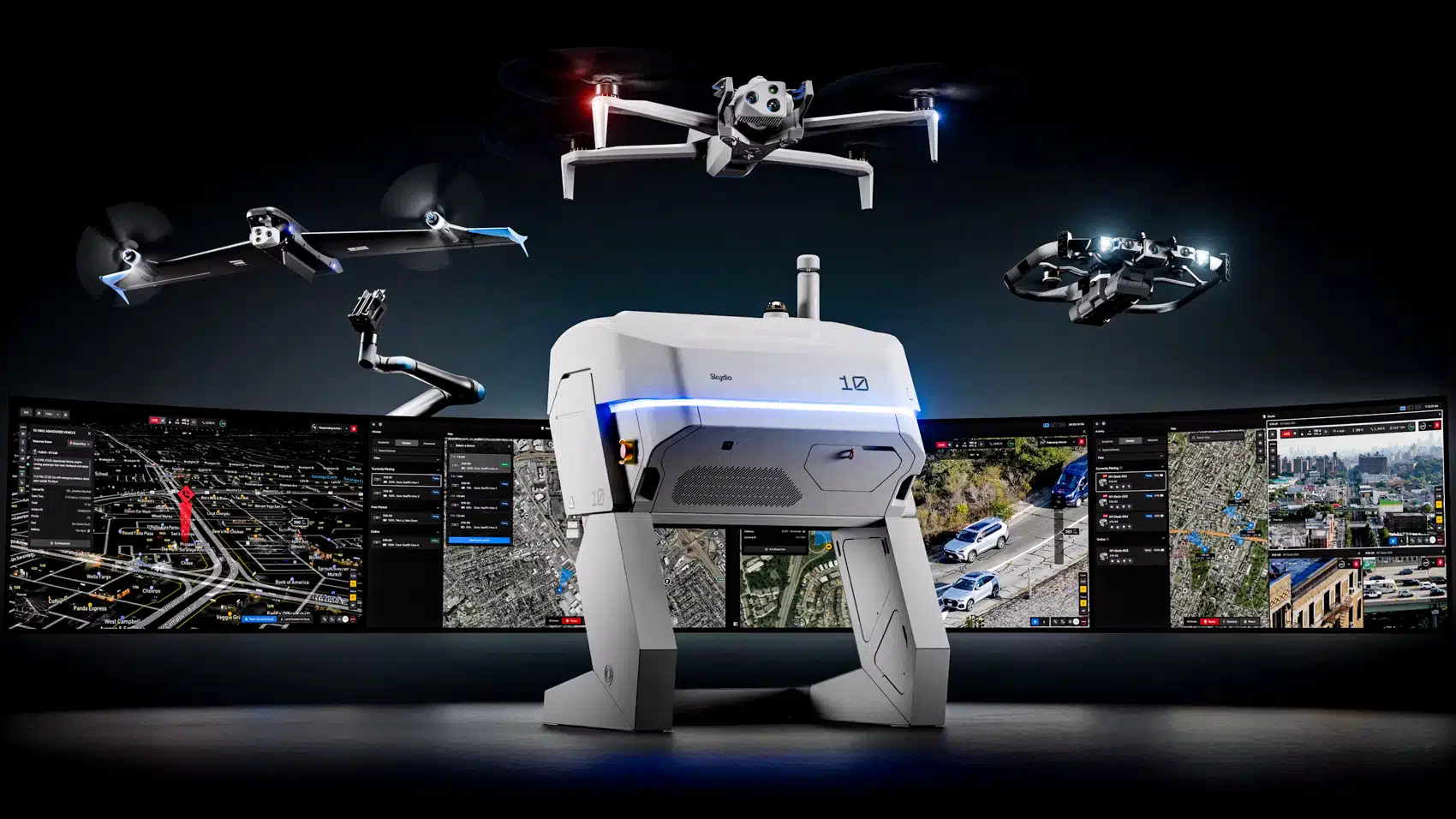
Axon is not a single product. It is a platform strategy: each new sensor adds value to the cloud, and the cloud makes every sensor more powerful. Agencies that start with body cameras often add in-car video, then evidence management, then real-time operations, then ALPR, then drones.
| Product / Layer | What it adds to the surveillance picture |
| TASER devices | Weapons; control of physical interaction; embedded accountability records |
| Body-worn cameras | First-person video of encounters; audio; cloud upload |
| Fleet 3 in-car video + ALPR | Mobile plate reads; dashcam video; location telemetry — was integrated into Flock’s Lookup |
| Evidence.com (cloud) | Centralized storage, search, and sharing of all evidence across the platform |
| Fusus (RTCC) | Real-time operating picture; ingests public + private cameras; maps; alerts |
| Outpost + Lightpost (fixed ALPR) | New fixed ALPR cameras to replace Flock Safety — feed directly into Fusus |
| Axon Air (drones) | Aerial surveillance; acquired Dedrone (anti-drone / drone detection) 2022–2023 |
| AI Draft One (report writing) | AI-generated police reports from body cam audio; accountability risk if not audited |
| Ring partnership (2025–) | Police can request private doorbell footage from Ring users; routed through Axon Evidence |
| fususCORE (private cameras) | Resident-purchased device that links private home / business camera feeds into the police platform; sold via “Connect” programs (see Section 5B) |
🌐 Mapping Axon’s publicly visible infrastructure
Axon’s public-safety ecosystem extends far beyond body cameras. Public DNS, TLS certificates, HTTP redirects, robots files, hosting metadata, and vendor documentation expose portions of an architecture spanning identity, digital evidence, media ingestion and playback, citizen submissions, community camera registration, mobile and fixed ALPR, real-time operations, drones, regional sharing, and cloud infrastructure.
Taken together, these public signals allow portions of the Axon ecosystem to be reconstructed from the outside and compared with what Axon and its partners publicly document.
Findings were assembled from Certificate Transparency records, public DNS, TLS certificate metadata, HTTP response and redirect metadata, robots files, public hosting information, and Axon and Skydio documentation.
Individual findings distinguish between observed infrastructure, vendor-documented capabilities, local public statements, and analytic assessment.
References: Axon Community Request · Community Request Help
References: Axon Fusus Map Guide · Fusus Community Integration · Community Connect FAQ
Axon references: Fleet 3 ALPR Introduction · Fleet 3 ALPR Technical FAQ · Fusus ALPR Experience · Fusus ALPR Search · Axon Vehicle Intelligence · ALPR Public Policy Documentation
References: Axon Fusus ALPR Sharing
References: Skydio DFR Command · Skydio Transparency Dashboard
📬 Records Request Starters
Public infrastructure shows what the platform can support. An agency’s contracts, licenses, configuration, and records establish what that agency actually operates.
- Evidence platform. Please provide the current Axon Evidence master service agreement or most recent order form and confirm the Department’s Evidence.com agency subdomain.
- Mobile ALPR / Fleet 3. Please provide the number of Department vehicles on which Axon Fleet 3 ALPR is currently enabled, the activation date for the Fleet 3 ALPR subscription, and the current ALPR retention setting.
- Fixed ALPR. Please identify any Axon Outpost, Lightpost, or other Axon-compatible fixed ALPR devices currently licensed, ordered, deployed, or accessible to the Department.
- ALPR sharing. Please provide the current list or system report identifying every agency with which the Department has an active Axon Fusus ALPR-sharing relationship, including the sharing start date and whether each relationship is limited to alerts, limited by device, or permits broader ALPR-data sharing.
- Body-worn-camera plate recognition. Please identify all Axon products, licenses, software features, or services available to the Department that are capable of detecting, recognizing, extracting, searching, or indexing license plate information from video or still imagery captured by Axon body-worn cameras, including processing performed on-device, after upload to Axon Evidence, or through Axon Fusus or another Axon service.
-
ALPR transparency.
Please provide the Department’s current ALPR policy and most recent usage
summary and confirm whether its public Evidence.com ALPR policy page at
/alpr/public/policyis enabled. - Community Request. Please provide a list of Community Request public portals created since January 1, 2023, showing portal title, identifier, and creation date, and confirm whether public citizen evidence submission is enabled.
- Fusus / Community Connect. Please provide the total current number of cameras registered in Fusus and the number of those cameras configured for integrated live access.
- Drone as First Responder. Please provide the Department’s DFR documentation, including any Skydio, Axon Fusus, or Axon Evidence integration records and the address of any public flight-transparency dashboard.
Last reviewed: September 2026. Vendor infrastructure and software features change over time. Hostnames, certificate identities, redirects, public paths, product capabilities, and hosting observations are presented as publicly observed or vendor documented indicators. They do not establish that any particular agency uses every capability shown here and should not be interpreted as evidence of unauthorized system access.
🔔 Axon + Ring: police can now request footage from your doorbell
In 2025, Axon and Amazon’s Ring announced a partnership allowing law enforcement agencies to request video footage from Ring doorbell camera owners — routed through Axon’s evidence management system. The move reinstated a feature Ring had previously dismantled in 2024 after backlash over privacy concerns.
- Police departments submit a request through Axon; Ring notifies doorbell owners in a geographic area
- Users who consent share footage, which flows into Axon’s Evidence.com for storage and case use
- Participation is optional — but residents may not understand the full implications of opting in
- Ring previously settled an FTC investigation for $5.8 million over employee hacking of customer footage and privacy violations
- Axon holds multiple contracts with the Department of Homeland Security
Note: Amazon’s Ring canceled a separate planned partnership with Flock Safety in February 2026 following public backlash. The Axon–Ring partnership remains active.
📍 Knoxville chose Axon — switching vendors does not switch away from surveillance risk
Knoxville, Tennessee — 16 miles from Maryville — approved a major multi-year Axon contract in January 2025. Local reporting described the deal as including a Real Time Information Center concept: a centralized monitoring hub designed to unify feeds and workflows, including public and private camera sources.
This is the expansion pathway Axon sells: start with body cameras and Tasers, add in-car video, then build toward a real-time operating picture that can aggregate ALPR reads, fixed cameras, private camera feeds, and analytics into one platform.
Knoxville and Blount County agencies share data in regional ALPR networks. If Knoxville builds a centralized Axon platform with expanded camera coverage, Maryville’s Flock data may connect to — or be visible alongside — that network depending on sharing settings.
Whether the cameras say “Flock Safety” or “Axon,” the Fourth Amendment concern is the same: long-term location history + low-friction searches + cross-jurisdiction sharing, without strict written limits, public reporting, and independent audits.
- What is the retention period for ALPR non-hit scans, hits, video, metadata, and audit logs?
- Can the system run travel history / location history queries? What written standard is required, and what is forbidden?
- Are private cameras (Ring, business, HOA) ingested into the platform? What policy governs access?
- What sharing settings exist — regional networks, federal access (including DHS), third parties?
- Does Axon’s DHS contracts create any path for federal access to Knoxville or Maryville data?
- What independent audit process exists, and when are results published publicly?
Reference: WVLT reported on Knoxville City Council’s approval of the multi-year Axon deal including a Real Time Information Center concept in January 2025. See Sources below.
🏠 “Connect Knoxville”: residents are being asked to buy an Axon device and plug it into their own camera systems
In 2026, a website called connectknoxvilletn.org began promoting a program asking Knoxville residents and businesses to connect their private security cameras to the Knoxville Police Department. It is presented as a community safety program. The site itself tells a more specific story.
Despite the civic-sounding .org name, the site’s footer reads “Powered by Axon” and “©2026 Axon Enterprise, Inc.” The contact email is connect@fusus.com, a corporate address, listed alongside KPD’s Real Time Information Center (kpdrtic@knoxvilletn.gov). The shop sells Axon fususCORE hardware directly to residents.
In plain language: this is a vendor-operated storefront styled as a public program. Residents are asked to pay for the hardware that extends the police camera network onto their own property.
How the program works, per the site’s own pages
| Level | What it does |
| Level 1: Registry | Camera locations are added to a KPD map so investigators can request footage. No live access at this level. The FAQ states this registry data is “classified as protected non-public data” and not subject to public records disclosure. That means a database of citizen camera locations, held in connection with a private vendor, that the public cannot inspect. |
| Level 2: Integration (fususCORE) | A purchased fususCORE device plugs into the owner’s camera system and gives KPD direct access to live camera feeds under owner-set “conditional access” settings, including a panic-button app that activates live streaming. Feeds route via an outbound encrypted connection to AWS GovCloud and into FususONE, the platform behind KPD’s Real Time Information Center. |
| CORE Elite AI | The site markets AI-enabled CORE devices that come “pre-loaded with dozens of search and analysis variables and profiles,” triggering automatic alerts when a match appears on any camera in a designated area of interest. The FAQ says AI use excludes facial recognition but may recognize “weapons, vehicles of interest, etc.” |
MaryvillePrivacy.org’s editorial position, stated plainly: no resident or business should install a third-party surveillance vendor’s device inside a private network. A fususCORE is a remotely managed computer that you did not build, do not control, and cannot independently audit, placed on the trusted side of your firewall next to your family’s phones, laptops, doorbells, and smart devices. Its capabilities are defined by firmware the vendor can update and terms the vendor can change. No promotional FAQ changes that underlying fact.
The settings page you control today is a policy, not a boundary. The boundary is the device itself, and the device belongs to Axon’s ecosystem, not to you.
The Fourth Amendment protects you against unreasonable government searches. It does not protect what you volunteer. Footage you consent to share with police requires no warrant, no probable cause, and no judge. And once your video sits in a vendor’s cloud instead of on your own hardware, legal process can be directed at the vendor rather than at you. You may never be told your footage was pulled, searched by AI, or shared onward.
Most people who connect a camera intend to help catch a package thief or a burglar. Intention does not limit the system. The same footage, the same live access, and the same preloaded AI search tools are equally available if an investigation ever turns toward you, your family, your tenants, your employees, or a guest who parked in your driveway. There is no version of this system where your cameras only ever point at other people.
This is an editorial position grounded in the documented program materials cited below. It is not legal advice; residents with specific legal questions should consult an attorney.
The site’s Privacy FAQ makes strong promises: owners control access, settings cannot be overridden, no facial recognition, registry data stays private. Every one of those promises is company policy or program policy, not statute, not ordinance, and not contract language the public can read and enforce. Policies can change with an acquisition, a product update, or a revised terms-of-service. Fusus itself was acquired by Axon in February 2024; promises made under one owner now belong to another.
The Electronic Frontier Foundation has documented this model nationally and called for enforceable minimums: reasonable-suspicion standards before police access private footage, strict retention limits, and mandatory audit trails. None of those appear as published, binding rules on the Connect Knoxville site.
A fususCORE is an internet-connected computer installed inside a home or business network. The site says it works “without impacting your network,” but no independent audit of the device’s firmware, telemetry, or network behavior has been published. Anyone considering one deserves written answers to:
- What data does the device transmit beyond camera video: device logs, network diagnostics, information about other devices on the network, metadata?
- Can Axon push remote firmware updates that change the device’s capabilities after installation? Is there any owner notice or approval step?
- Is the device’s network traffic independently auditable by the owner? Is there a published third-party security assessment?
- What happens to stored footage and account data if the owner unsubscribes, or if the program’s terms change?
- What subpoena, warrant, or emergency-request standards govern access to footage once it sits in AWS GovCloud, outside the owner’s possession?
The honest framing: once footage leaves your hardware for a vendor cloud, the meaningful control is no longer your settings page. It is the vendor’s policies, the police department’s policies, and the legal-process standards that apply to cloud-held data. None of those are published as enforceable documents on this program’s site.
⚖️ The Fourth Amendment concern: scale changes the constitutional picture
The constitutional debate is not about whether police can use cameras. It is about whether modern integrated systems enable long-term, searchable reconstruction of everyone’s movement — and whether that becomes a Fourth Amendment problem at scale, without strict safeguards.
- Retention: days vs. months vs. years — and whether it applies to both “hits” and routine scans
- Searchability: instant travel history queries and cross-jurisdiction lookup
- Aggregation: ALPR + video + private feeds (Ring, fususCORE) + maps + AI analytics
- Sharing: regional networks, federal access, third-party integrations
- Audit: whether misuse can be detected, proven, and corrected
✅ Minimum safeguards — for Axon and any other surveillance vendor
- Full contract disclosure: published contract, add-ons, integrations, and total cost of ownership — including any prior relationship with Flock Safety and current data-sharing arrangements.
- Retention caps by data type: ALPR hits, non-hits, video, metadata, Ring footage, private-camera (fususCORE) footage, and audit logs — with specific day limits, not vague policies.
- Sharing restrictions: explicit written limits on regional networks, federal access (including DHS), and Ring/private camera requests. No federal access without a warrant and public notice.
- Purpose limits: written prohibition on using the system for immigration enforcement, tracking protected activity (worship, protests, medical visits), or any purpose not listed in the policy.
- Audit logs: tamper-resistant, complete, kept long enough to detect misuse; independently reviewed on a published schedule.
- Public reporting: search counts, sharing events, policy violations, and audit findings — published annually at minimum.
- No stealth expansion: new sensors, new integrations (Ring, fususCORE, drones, AI analytics), and new data sources require public notice and city council approval before activation.
- No vendor-run “community” programs without public process: any program asking residents to buy hardware that connects private cameras to police must first be approved in an open meeting, with published terms, retention rules, and access standards.
|
|
|||
|
|||
|
|||
|
Sources & primary documents: • Axon homepage: https://www.axon.com/ • Axon–Flock partnership announcement (2020): https://investor.axon.com/2020-04-02-Axon-Partners-with-Flock-Safety • Flock on the integration history: https://www.flocksafety.com/blog/what-does-open-really-mean-public-safety-wins-when-the-industry-works-together • Ethics board resignation statement (Policing Project, June 2022): https://www.policingproject.org/statement-of-resigning-axon-ai-ethics-board-members • The Markup on ethics board scrubbing (Sept. 2023): https://themarkup.org/2023/09/08/axons-ethics-board-resigned-over-taser-armed-drones-then-the-company-bought-a-military-drone-maker • FTC antitrust case / cities lawsuit: https://www.cohenmilstein.com/case-study/in-re-axon-vievu-antitrust-litigation/ • Reuters / “Excited Delirium” investigation: multiple publications 2017 • PHR report on excited delirium: https://phr.org/news/excited-delirium-often-cited-as-cause-of-death-in-fatal-police-encounters-is-scientifically-meaningless-phr-report/ • Harvard CRCL on excited delirium: https://journals.law.harvard.edu/crcl/police-call-it-excited-delirium-civil-rights-groups-call-it-a-sham/ • Axon–Ring partnership (2025): https://www.axon.com/blog/building-safer-communities-together-axon-and-ring • Denver fires Flock, moves to Axon (Feb. 2026): https://www.9news.com/article/news/local/denver-removing-flock-cameras-new-axon-contract • Knoxville Axon/RTIC contract (WVLT, Jan. 2025): https://www.wvlt.tv/2025/01/08/city-council-approves-multi-million-dollar-contract-knoxville-police-department-after-fiery-meeting/ • Axon new ALPR cameras + Ring integration announcement: https://www.axon.com/newsroom/press-releases/axon-announces-new-fixed-ALPR-camera-solutions-and-next-gen-AI-advancements-to-expand-real-time-public-safety-ecosystem • Connect Knoxville program site (Axon-operated): https://connectknoxvilletn.org/ • Connect Knoxville camera integration / fususCORE: https://connectknoxvilletn.org/camera-integration/ • Connect Knoxville Privacy FAQs: https://connectknoxvilletn.org/privacy-faqs/ • Connect Knoxville shop (fususCORE devices): https://connectknoxvilletn.org/shop/ • EFF on Fusus and private camera networks (May 2023): https://www.eff.org/deeplinks/2023/05/neighborhood-watch-out-cops-are-incorporating-private-cameras-their-real-time
MaryvillePrivacy.org investigation page on Axon Enterprise, Inc. — a public safety technology vendor operating in Maryville, Tennessee and Knoxville, Tennessee. This page documents Axon’s relationship with Flock Safety (investor partnership, Fleet 3 in-car camera integration with Flock’s ALPR Lookup system), Axon’s corporate conduct record (AI ethics board resignation, “excited delirium” pseudoscience funding, FTC antitrust challenge, ethics record erasure), the Axon–Ring doorbell partnership, the Knoxville Real Time Information Center contract, the Connect Knoxville program and Axon fususCORE private camera integration devices, constitutional concerns about mass location tracking and consent-based waiver of Fourth Amendment protections for shared footage, and what Tennessee residents should demand in written governance policies. Related: automatic license plate reader (ALPR) governance, Fourth Amendment, public oversight of policing technology, data retention, data sharing, Fusus RTCC, FususONE, Axon Evidence.com, Axon Fleet 3, Axon Outpost, Axon Lightpost, Blount County surveillance.