Flock Safety ALPR · Maryville, Alcoa, and Blount County, Tennessee
Travel History as Probable Cause: Flock’s Multi-Geo and Convoy Search
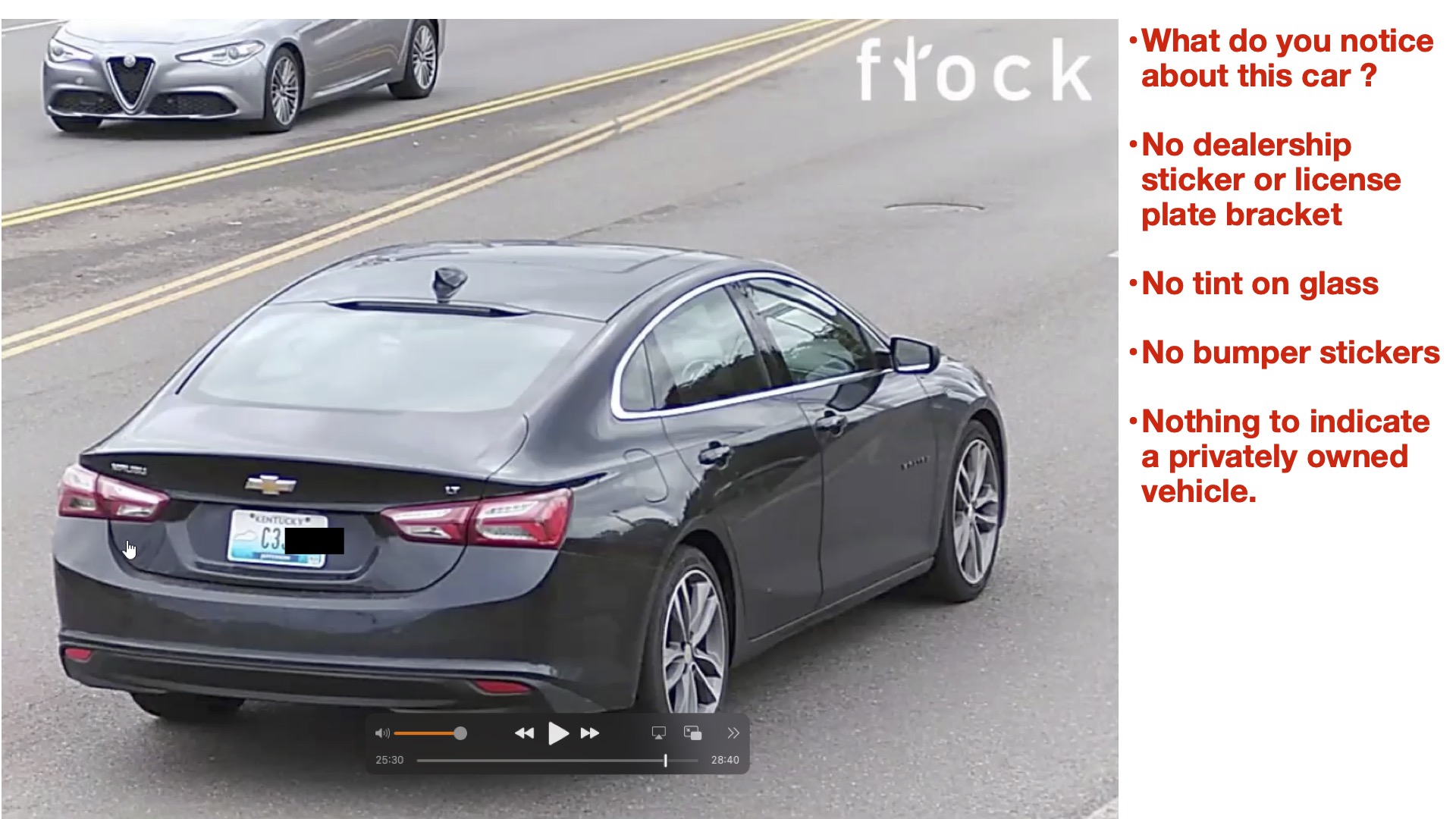
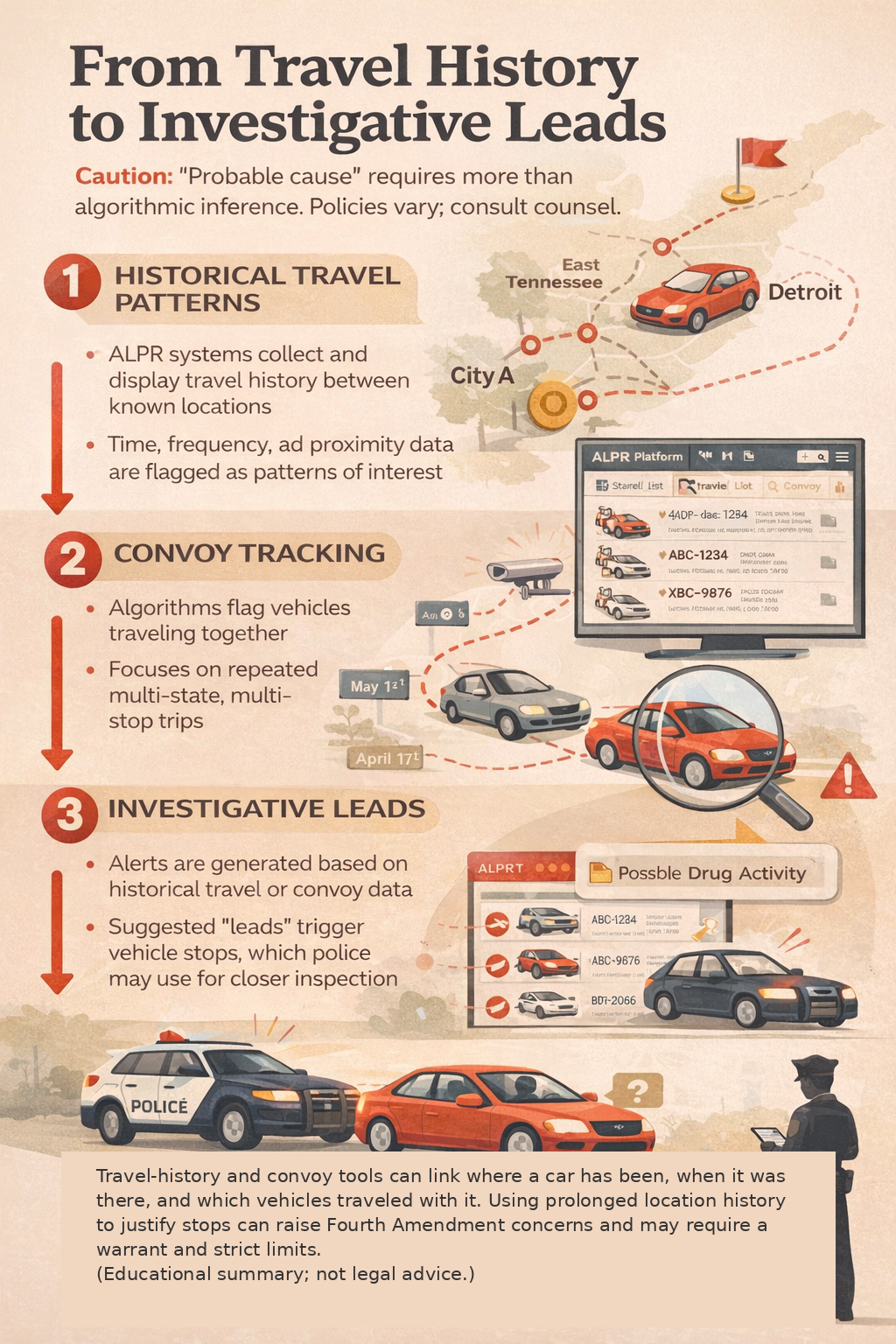
A Tennessee training document released under the public records act shows officers reviewing a vehicle’s Flock travel history and then describing having probable cause for a stop. The two tools that make that possible, Multi-Geo Search and Convoy Search, are not experimental. They are sold, trained, and now advertised as core Flock platform features.
Network scale figure is Flock Safety’s own public marketing claim and is reported here as the vendor’s statement, not as an independently verified count. The policy line reflects records produced to MaryvillePrivacy.org to date and will be updated if the City produces a written policy.
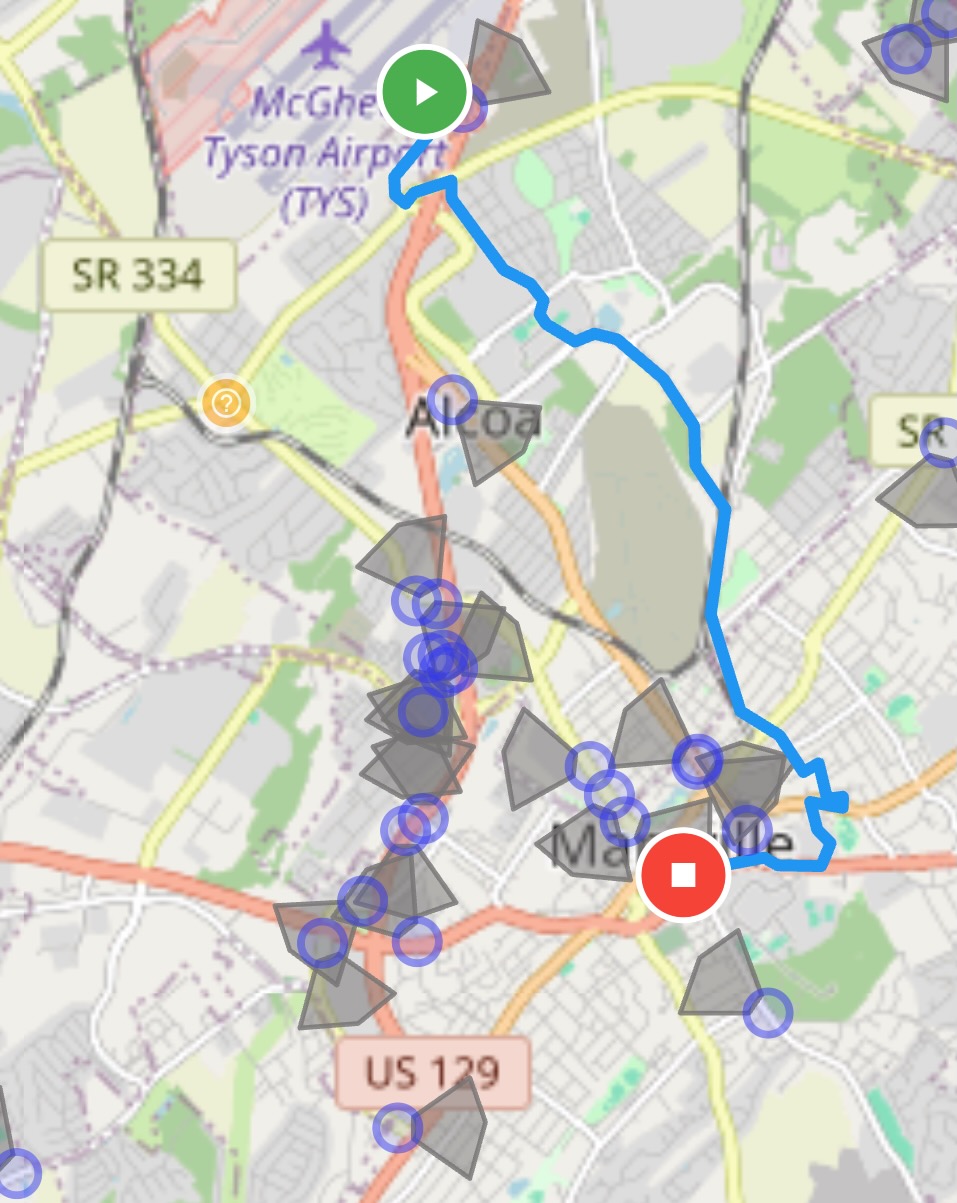
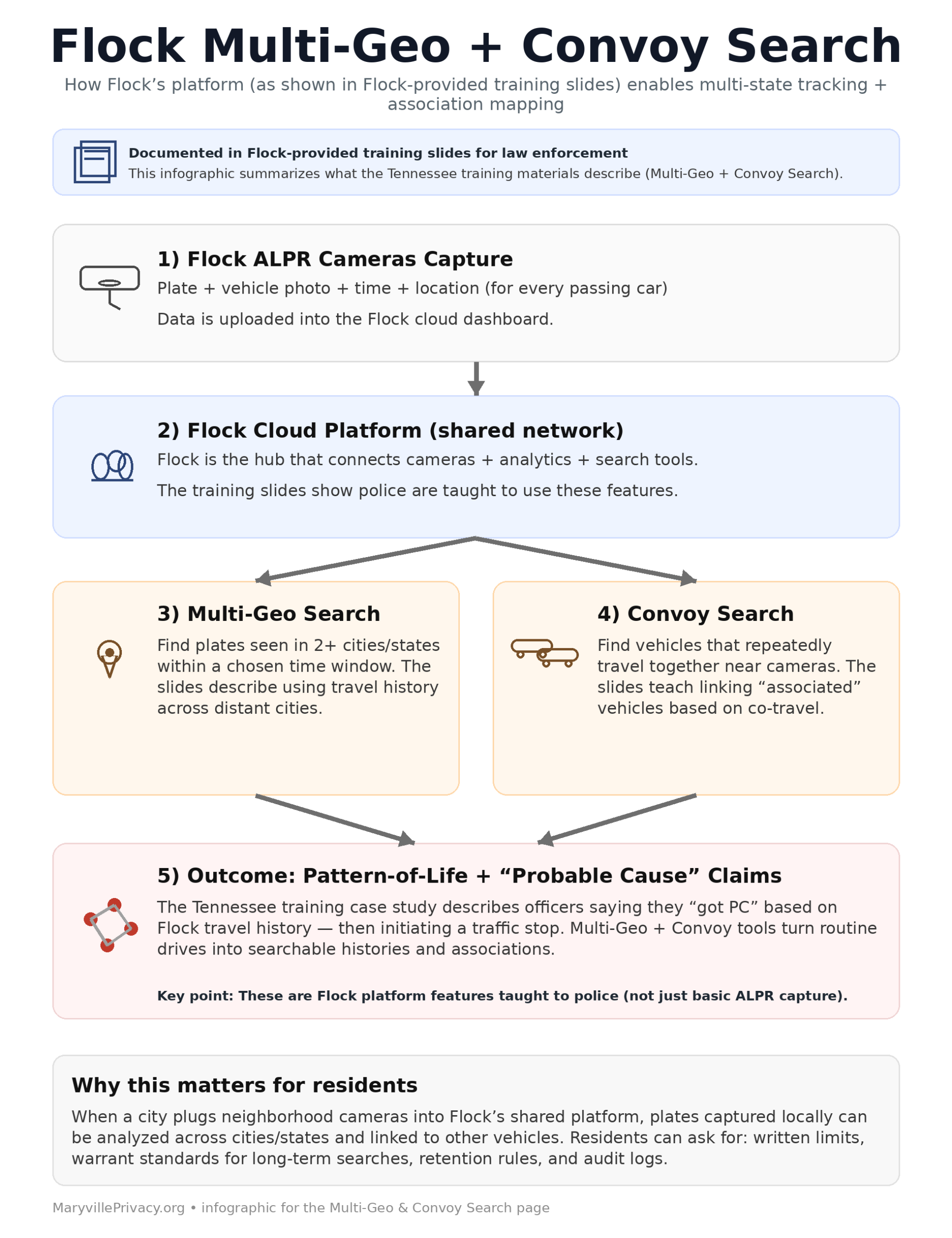
Flock’s Multi-Geo Search finds vehicles that appear in two or more selected places inside a time window. Convoy Search finds vehicles repeatedly seen near each other and treats that co-occurrence as an association. Together they convert a pile of individual camera reads into a reconstructed travel history and a map of who a driver moves with.
A Tennessee training document released under the Tennessee Public Records Act includes a case example in which officers reviewed a vehicle’s Flock history across two cities and then described having probable cause for a stop. In that example the pattern of travel is doing the work that observed criminal conduct normally does.
What changed in 2026: this capability is no longer buried in a paid add-on. Flock’s own platform marketing now lists convoy detection alongside plate swaps and hotspot alerts as proactive insights, and reporting on the company’s newer AI investigation product describes searches that can begin with a place, a time window, or a behavior instead of a plate or a name.
The Travel Pattern Was the Predicate
A case summary inside the Tennessee training document describes officers reviewing Flock ALPR history for a vehicle that had been scanned repeatedly in both Detroit and Knoxville. The notes then record that the officers had probable cause, and the account moves to a stop.
Read that sequence carefully, because the order is the whole issue.
The vehicle was not observed committing an offense. The database was queried first. The route it returned became the reason to look closer. In a traditional investigation, suspicion precedes the search of records. Here the search of records produced the suspicion.
Driving between two cities is not a crime. Doing it more than once is not a crime. Every element of the pattern described in that example is conduct that hundreds of thousands of ordinary Tennesseans engage in every week. What made it actionable was not the conduct. It was the existence of a searchable record of the conduct, held by a private vendor, queryable after the fact, with no warrant and no notice.
Why this reaches Maryville, Alcoa, and Blount County
- Local cameras feed the same national vendor network these tools query. A read captured on a Blount County road does not stay in Blount County.
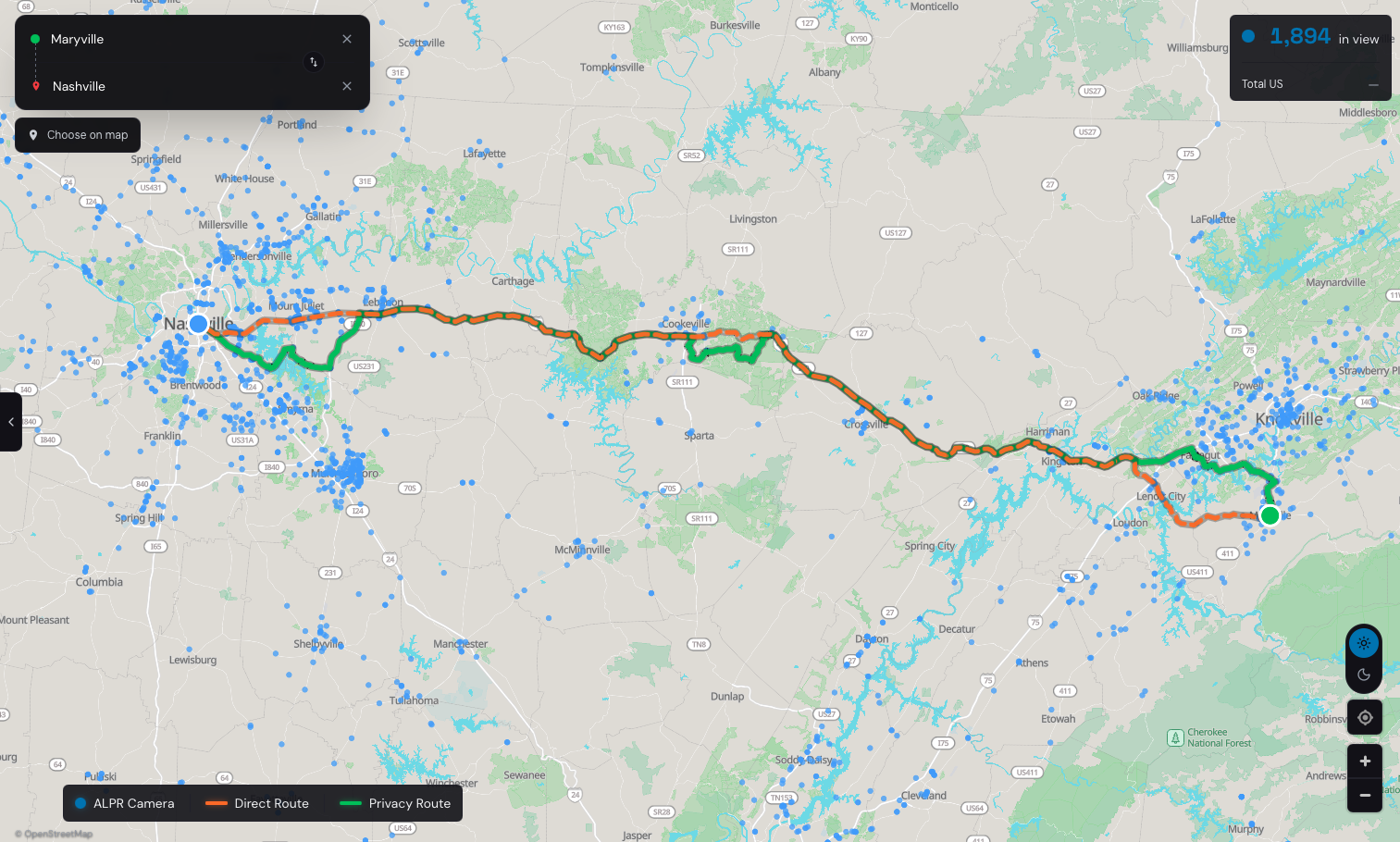
- Routine trips to Knoxville, Nashville, Atlanta, or across a state line are exactly the sort of movement pattern a multi-location query is built to surface.
- No written local policy has been produced that limits when these particular searches may be run, who approves them, or how they are audited afterward.
- A resident is never told that their travel history was queried, or that it became the basis for someone taking a closer look at them.
MaryvillePrivacy.org does not assert that the stop described in the training example was unlawful, and no court has ruled on it. The point of publishing it is narrower and, we think, harder to dispute: this is the vendor’s own training material teaching officers to treat a movement pattern as an investigative predicate. The full document is linked in Section 10 so readers can check the summary against the source.
From Individual Reads to a Reconstructed Pattern
A single automated plate read is one photograph, one timestamp, one location. On its own it is close to meaningless. The capability that matters is what happens after thousands of those reads accumulate in one searchable database. These two tools are the search interfaces built for exactly that.
Multi-Geo Search
Flock’s own description, as it appears in public procurement records filed with local governments, is that Multi Geo Search lets a user perform single and multi-location-based searches to link a vehicle to one or multiple scenes. In practice the operator selects two or more places, sets a time range, and receives the vehicles that appear at all of them.
| What the operator supplies | Two or more locations and a time window. Not necessarily a plate, a name, or a reported offense. |
| What the system returns | A candidate list of vehicles whose reads satisfy the pattern, drawn from whatever cameras the agency’s sharing settings reach. |
| Who is in the result set | Anyone whose ordinary travel happens to match the shape of the query. Commuters, delivery drivers, sales reps, and families visiting relatives all produce repeatable multi-city patterns. |
| Geographic reach | Determined by network sharing configuration rather than by city limits. Sharing settings have proven to be a recurring source of surprise for the cities that set them. |
In plain terms: if you drive to Knoxville for work and back home to Maryville several times a week, that round trip is a pattern in the database. It is retrievable by any agency whose access reaches these cameras, without your knowledge, without a warrant, and without any Tennessee law requiring that you ever be told.
Convoy Search
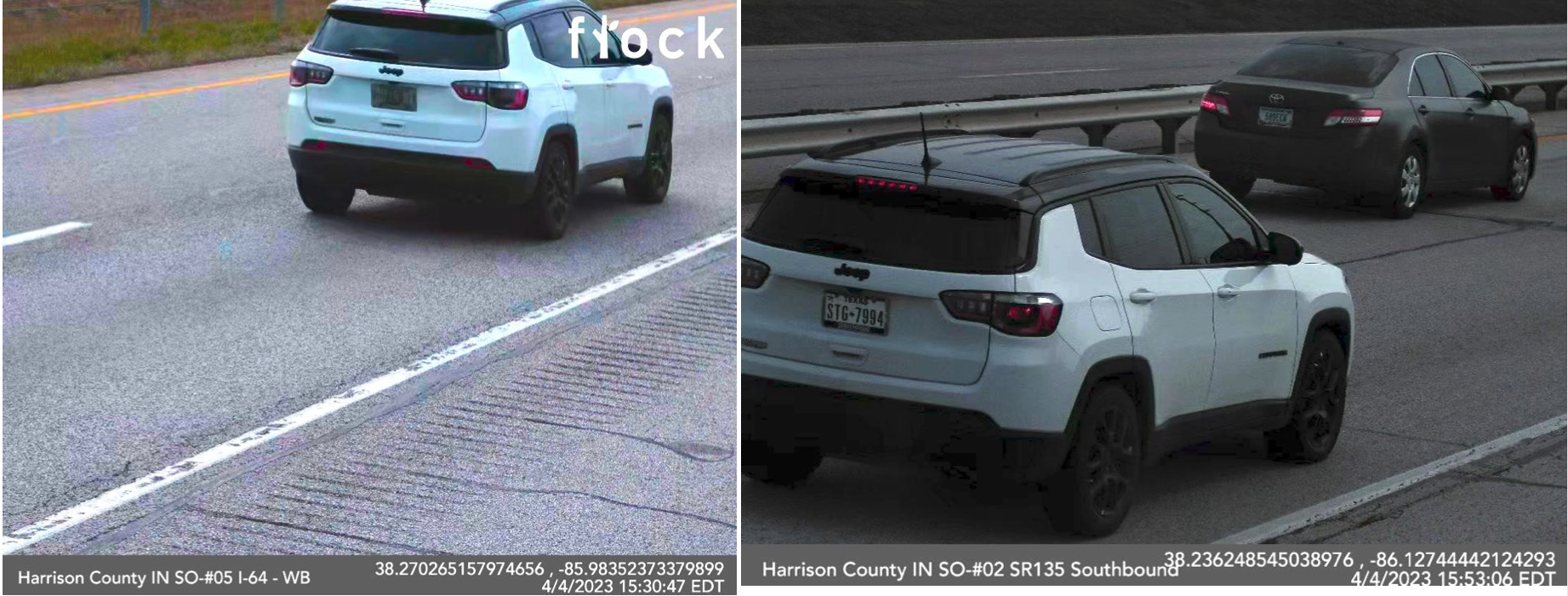
The same procurement records describe Convoy Search as a way to identify vehicles that have been seen together so an investigator can verify a potential accomplice and getaway car. The example use case given in the vendor’s material is a string of vehicle thefts, phrased roughly as asking the system to show vehicles seen near a specific car multiple times.
Strip out the framing and what remains is a co-occurrence engine. It measures how often two plates appear at the same cameras at roughly the same times, and it treats a high enough score as a relationship. That is a reasonable technique when applied to a documented criminal enterprise. It is a very different thing when applied to a general population database.
| What it actually measures | Repeated physical proximity in time and place. Correlation, not communication, intent, or relationship. |
| What ordinary life produces | Carpools. Two vehicles from the same household. Coworkers on the same shift leaving the same lot. Congregations leaving the same service. Neighbors on the same street at the same hour. |
| What the output looks like | A list of associated plates attached to a subject vehicle. An association graph assembled without anyone being charged, notified, or given a way to contest it. |
| The First Amendment edge | Association mapping built from attendance at churches, union halls, gun shows, clinics, or political events touches interests beyond the Fourth Amendment alone. |
In plain terms: Multi-Geo answers where you went. Convoy answers who you were with. A tool that answers both, over months, about people who have not been accused of anything, is not a camera. It is a relationship database that happens to be fed by cameras.
The Capability Stopped Being a Secret and Became a Selling Point
When residents first raised concerns about pattern searching, a common response was that this was speculation about what the technology might someday do. That response no longer survives contact with the vendor’s own marketing.
Flock Safety’s public platform product page describes proactive insights available to customers and lists, among them, plate swaps, convoy detection, and hotspot alerts. Convoy detection is not a leaked internal capability or an investigative theory. It is a bullet point on a sales page. Source: flocksafety.com/products/flock-safety-platform.
Independent pricing and procurement analysis describes Convoy Analysis, Multi Geo Search, Visual Search, and Flock Nova as carrying their own subscriptions, which is consistent with the statements of work that appear in city council packets around the country. The plain implication is that pattern and association searching is a revenue line, and revenue lines get promoted rather than restrained.
The Next Layer: OS Investigate
On August 19, 2026, WIRED published a reconstruction of a Flock artificial intelligence investigation product called OS Investigate, previously named Nightshift, assembled from application code files that were reachable through Flock’s own login infrastructure. Reporters Dhruv Mehrotra and Dell Cameron described a system shipping with 69 prewritten investigative prompts.
The detail that matters for ordinary drivers is the starting point. According to that reporting, 19 of the prompts focus on movement patterns, and 14 of them require no license plate, no name, and no physical description to begin. An operator can start with a neighborhood, a time window, or a behavior, and receive candidate vehicles and people to look at more closely. Reported examples include surfacing the vehicles most often seen in a given neighborhood over the past two weeks, and flagging vehicles that visited three or more shops within three days.
| Traditional order | A suspected offense produces a suspect. The suspect produces a records search. The records are checked against the suspect. |
| Pattern-first order | A pattern query produces a candidate list. The candidate list produces the person to examine. The offense, if any, is looked for afterward. |
This is the same move as the Tennessee training example, industrialized.
The training document shows a human officer doing pattern-to-predicate reasoning manually across two cities. The newer product does that reasoning at machine speed, across an entire network, from a plain-language prompt. Multi-Geo and Convoy are not a historical curiosity. They are the earlier, simpler version of the thing being built on top of the same local camera reads.
Chad Marlow, an attorney with the American Civil Liberties Union, has publicly criticized the absence of limits on those prompts, describing an arrangement in which police can effectively steer the system toward the answer they want. Coverage of the same product has also noted that nothing in the query interface itself requires probable cause at the front end.
Two accuracy notes belong here. First, these are code-level findings reported by journalists, presented on this page as that reporting rather than as independently verified fact. Second, the product has been described as in limited testing with a small group of agencies, and MaryvillePrivacy.org has no record indicating that any Blount County agency has access to it. That is precisely why it is worth asking now rather than later.
Related on this site
OS Investigate: reconstructing Flock’s AI investigation system
The prompt inventory, the connected tools, the pattern-based search model, and the identity workup, with primary sources.
Who Is Flock Safety?
Background on the private company that owns the cameras, hosts the database, and sells the search tools back to government.
This is an illustrative example and not a specific person. Each step reflects capability that is documented in vendor materials, procurement records, or published reporting cited on this page. Nothing here alleges that any Blount County agency has run such a search.
A Perfectly Ordinary Week, Rendered as a Query Result
Consider a Maryville resident with an entirely unremarkable life. Works a trade. Two kids in the county schools. Coaches a rec league. Attends the same church most Sundays. Has never been arrested, never been charged, never been served a warrant. Here is what one week of that life deposits into a private vendor database.
|
Monday through Friday
He commutes to a job site in Knox County and comes home. Ten reads a day is a conservative estimate on that corridor. By Friday his plate has produced a clean, repeating, machine-readable Maryville to Knoxville signature.
|
|
Wednesday evening
He carpools to practice with a neighbor. Their two plates are now read at the same cameras within the same minute, repeatedly, over a season. Convoy logic does not know it is looking at youth sports. It knows the two vehicles keep showing up together.
|
|
Saturday
He stops at a firearms retailer, then a hardware store, then a pharmacy. Three businesses in one afternoon. A prompt looking for vehicles that visited three or more shops in three days does not distinguish that itinerary from any other.
|
|
Sunday
He drives to church, parks in the same lot with the same eighty vehicles he parks with every week, and drives home. The lot produces a dense weekly association cluster that any co-occurrence engine will register as a durable group.
|
|
The following month
Somewhere on the network, an investigator with no connection to Blount County runs a multi-location query with a time window that happens to fit his commute. His plate lands in a candidate list. A convoy query attached to that plate returns his neighbor, his wife’s car, and a dozen people from the church lot. None of them are notified. None of them have been accused of anything. None of them will ever know the list exists.
|
What actually went wrong here
Nothing in that week was unlawful, unusual, or even interesting. The problem is structural. A pattern query does not evaluate innocence, it evaluates shape. Commuting, carpooling, running errands, and attending a weekly service produce exactly the sort of repeatable, multi-location, multi-vehicle signature these tools are designed to surface. The innocent are not filtered out at the front of the process. They are collected first and sorted afterward, if they are sorted at all.
This is why a written policy is not bureaucratic housekeeping. In the absence of a rule about who may run these searches, on what basis, with what approval, and subject to what audit, the only thing standing between an ordinary resident and a candidate list is the individual judgment of whoever happens to be at the keyboard. The 2026 misuse record in Section 7 is a fair measure of how well that has worked elsewhere.
You did not commit a crime this week. You still generated a travel history.
You went to work. You picked up a prescription. You dropped a kid somewhere. You drove the same roads you have driven for years. Every one of those trips that passed a camera on this network is now a timestamped row in a private company’s database, and it will sit there whether or not anyone ever has a reason to look at it.
The question this page is really asking is not whether police should investigate crime. Obviously they should. The question is this:
Why is it acceptable that the ordinary route you drove today can be reassembled later, on request, by an agency you have never heard of, in a state you have never visited, using a tool the vendor advertises on its website, with no warrant, no notice, no local written policy governing the search, and no way for you to ever find out that it happened?
The defense usually offered is that anyone could see your car on a public road. That is true and it is beside the point. Anyone could also have watched your house from the street in 1970. What nobody could do in 1970 was retrieve a complete, searchable, sortable record of every road you took for the last month, cross-referenced against everyone who happened to be driving near you, in under a minute, from a laptop.
That is the difference between observation and infrastructure. A camera watches. A network remembers, correlates, and produces lists.
You have not been accused of anything. You are still in the database. Both of those things are true right now, and only one of them requires your consent.
Safeguards Assume a Suspect Exists Before the Search Begins
“The right of the people to be secure in their persons, houses, papers, and effects, against unreasonable searches and seizures, shall not be violated, and no Warrants shall issue, but upon probable cause, supported by Oath or affirmation, and particularly describing the place to be searched, and the persons or things to be seized.”
Fourth Amendment to the United States Constitution
The warrant clause is built around particularity. It contemplates a government that already knows what it is looking for and must justify the intrusion in advance. Network-scale pattern search inverts that structure. The collection happens first, universally and automatically, and the question of who is worth examining is answered later, out of the accumulated record.
The concern is not that a camera saw your car.
It is that a lawful pattern of travel, assembled after the fact from thousands of routine detections, can become the reason someone takes an interest in you. A resident may drive to a gun store, a range, a church, a doctor, an attorney’s office, a political meeting, or across a state line with very different laws. None of those trips is suspicious. Aggregated, sorted, and queried, they can be made to look like something.
Unsettled, Actively Litigated, and Not Yet Decided in Tennessee’s Favor or Against It
Accuracy matters more than a strong headline here, so this section states the current posture plainly, including the parts that cut against the argument this site makes. An earlier version of this page overstated one of these rulings. It has been corrected.
| Carpenter v. United States U.S. Supreme Court, 2018 |
Held that acquiring long-term cell site location records is a Fourth Amendment search requiring a warrant, because that data reveals an all-encompassing record of a person’s movements. This is the anchor precedent for every ALPR argument that follows. |
| Schmidt v. City of Norfolk E.D. Va., February 2025 |
Chief Judge Mark Davis denied the city’s motion to dismiss, writing that a reasonable person could believe the expectations described in Carpenter were being violated by the Norfolk Flock system. This was a ruling that the case could proceed, not a ruling that the system was unconstitutional. |
| Schmidt v. City of Norfolk E.D. Va., January 27, 2026 |
The same judge granted summary judgment for the city in a 51 page opinion, finding that Norfolk’s roughly 176 cameras in about 75 clusters, with a 21 day retention window, could not reconstruct the whole of a person’s movements. The opinion also warned that ALPR surveillance could become too intrusive at some point, and that the answer in Norfolk was, in the court’s words, not today. |
| Fourth Circuit appeal No. 26-1227, pending |
The Institute for Justice appealed. The ACLU, ACLU of Virginia, and the Electronic Frontier Foundation filed a joint amicus brief on April 20, 2026 arguing that networked ALPR databases enable retrospective, cross-jurisdiction searches. Sixteen states and the District of Columbia filed in support of Norfolk. A decision was still pending as of this writing. |
| Chatrie v. United States U.S. Supreme Court, 2026 |
Decided after the Norfolk district court ruling. It addressed government acquisition of location data held by a third party and is widely read as strengthening the argument that the third party holding the data does not remove Fourth Amendment protection. Its effect on ALPR networks specifically has not been resolved by any appellate court. |
Why the Norfolk reasoning matters here rather than helping the vendor’s case.
The district court’s holding rested on scale and duration. It reasoned that a fixed set of camera clusters holding data for 21 days does not capture the whole of a person’s movements. Multi-Geo and Convoy are precisely the features that attack that limit, because they let an operator reach beyond one city’s cameras into a shared network and correlate across it. A ruling premised on a system being too small to matter provides very little comfort about a product line whose entire selling point is reach.
Tennessee has its own layer on top of this. State law addresses ALPR data in some respects, and local practice varies considerably between agencies. That variation is exactly why a written local policy, rather than a general assurance that everything is lawful, is the thing residents should be asking for.
Correction note. A previous version of this page stated that a Virginia court ruled in 2024 that mass ALPR collection constitutes a Fourth Amendment search. That was wrong and has been removed. The 2025 ruling denied a motion to dismiss, and the January 2026 merits ruling went against the plaintiffs. Overstating a case does not strengthen an argument. It hands the other side a reason to dismiss everything else on the page.
The Oversight Question Stopped Being Hypothetical
Every argument for expanded search capability rests on an unstated assumption: that the people with access will use it only as intended, and that departments will notice if they do not. During 2026 that assumption was tested publicly and repeatedly.
- In an investigation published in August 2026, The Washington Post reviewed police and court records and identified at least 50 law enforcement officers accused, charged, or convicted of using license plate reader technology for unauthorized purposes. Flock’s system appeared in 46 of those cases. In 26, investigators said the targets were wives, girlfriends, former partners, those partners’ new partners, or women the officers wanted to meet.
- The Post also reported that its own reporting, rather than internal oversight, led to discipline in cases where departments had not performed basic auditing.
- The Institute for Justice, which maintains a public database of ALPR abuse, has cataloged more than 100 total incidents, including stalking and wrongful traffic stops.
- Individual cases reported through 2026 include a Kentucky officer accused of running more than 2,000 searches on vehicles registered to his child’s mother, an Illinois part-time officer charged after nearly 250 alleged unauthorized searches, a Milwaukee officer charged after audit data showed a single person’s plate searched over 100 times, and a Georgia police chief alleged to have searched a former partner and her teenage daughter roughly 600 times.
- Separately, the City of Mountain View, California suspended its program after an audit found a nationwide search setting had been enabled and outside agencies had accessed its data. Sharing configuration, not just search discipline, turned out to be a live failure mode.
Connect that record to this page’s subject.
Nearly all of those documented abuses involved the simplest capability in the product: typing in a plate. Multi-Geo and Convoy are considerably more powerful than that, and pattern-first search is more powerful still. The oversight regime that failed to catch thousands of single-plate lookups is the same regime that would be responsible for governing association mapping across a multi-state network.
In fairness to the vendor, Flock has publicly pointed to newer auditing tools as evidence that misuse is being surfaced, and its chief legal officer has characterized the growing number of detected cases as a sign the accountability features work. Its chief executive has also publicly apologized for instances of misuse by law enforcement customers. Residents can weigh that against the fact that much of the detection in 2026 came from journalists and from a third party website that lets people check whether their own plate was searched.
MaryvillePrivacy.org has no evidence of misuse by any Blount County agency and makes no such allegation. The national record is presented here for one reason: it is the empirical answer to the question of whether written policies, access limits, and independent audits are necessary or merely nice to have.
This Was Regional Training, Not a National Marketing Deck
The Tennessee document names East Tennessee agencies and personnel, which is what separates it from generic vendor promotional material. Identified in the production:
- Knox County Sheriff’s Office, Knoxville, Tennessee
- Detective Marcus Parton, listed in the materials in a task force, narcotics, and SWAT context
- Regional narcotics and task force work tied to East Tennessee, referenced throughout the slides
Naming these agencies is not an accusation. It is the reason the record is locally relevant rather than abstract. Task forces operate across county lines by design, and Blount County sits inside the same regional operating picture.
The Local Picture
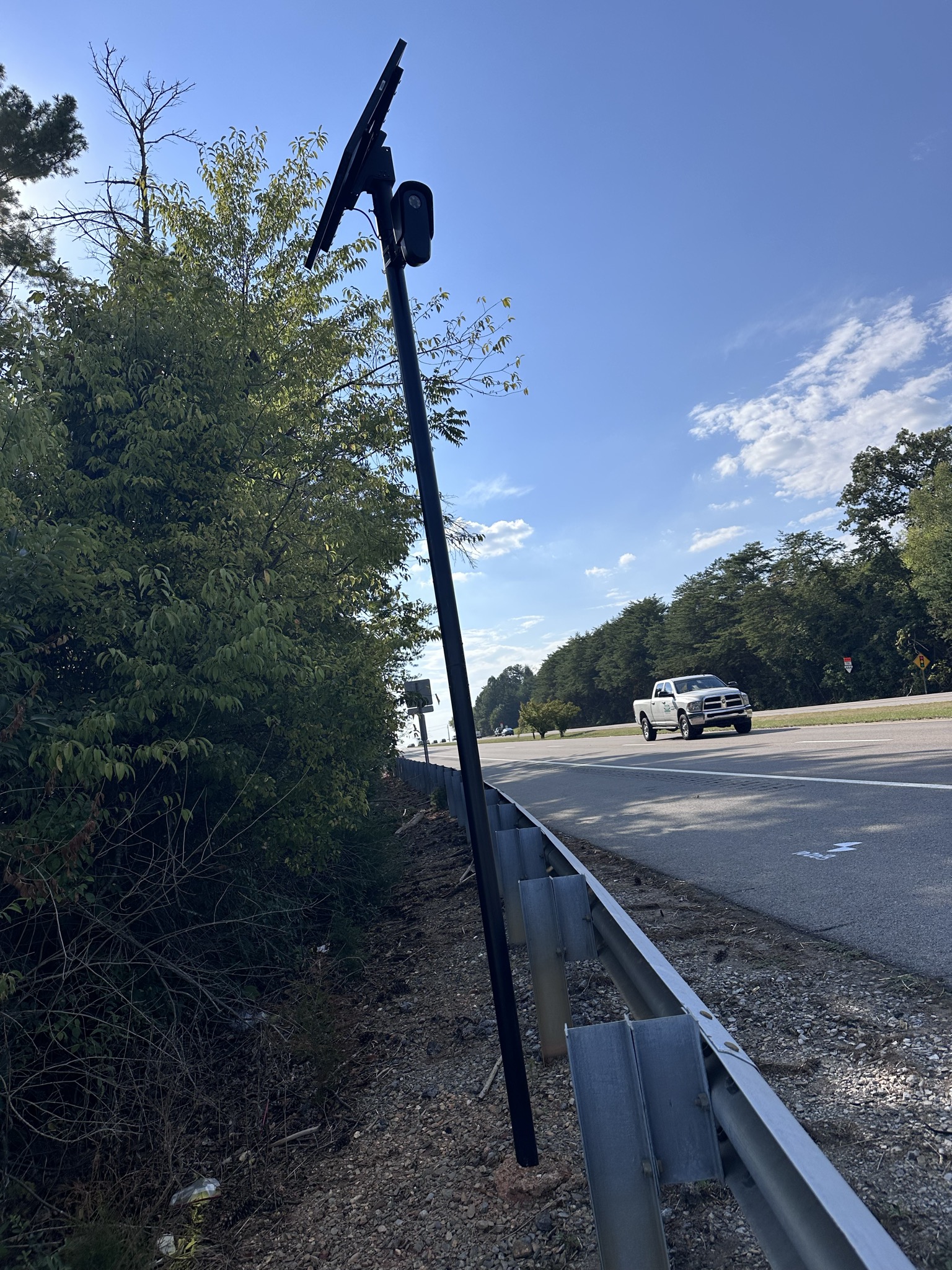
Maryville:
roadside Flock camera on West Lamar Alexander Parkway.
|
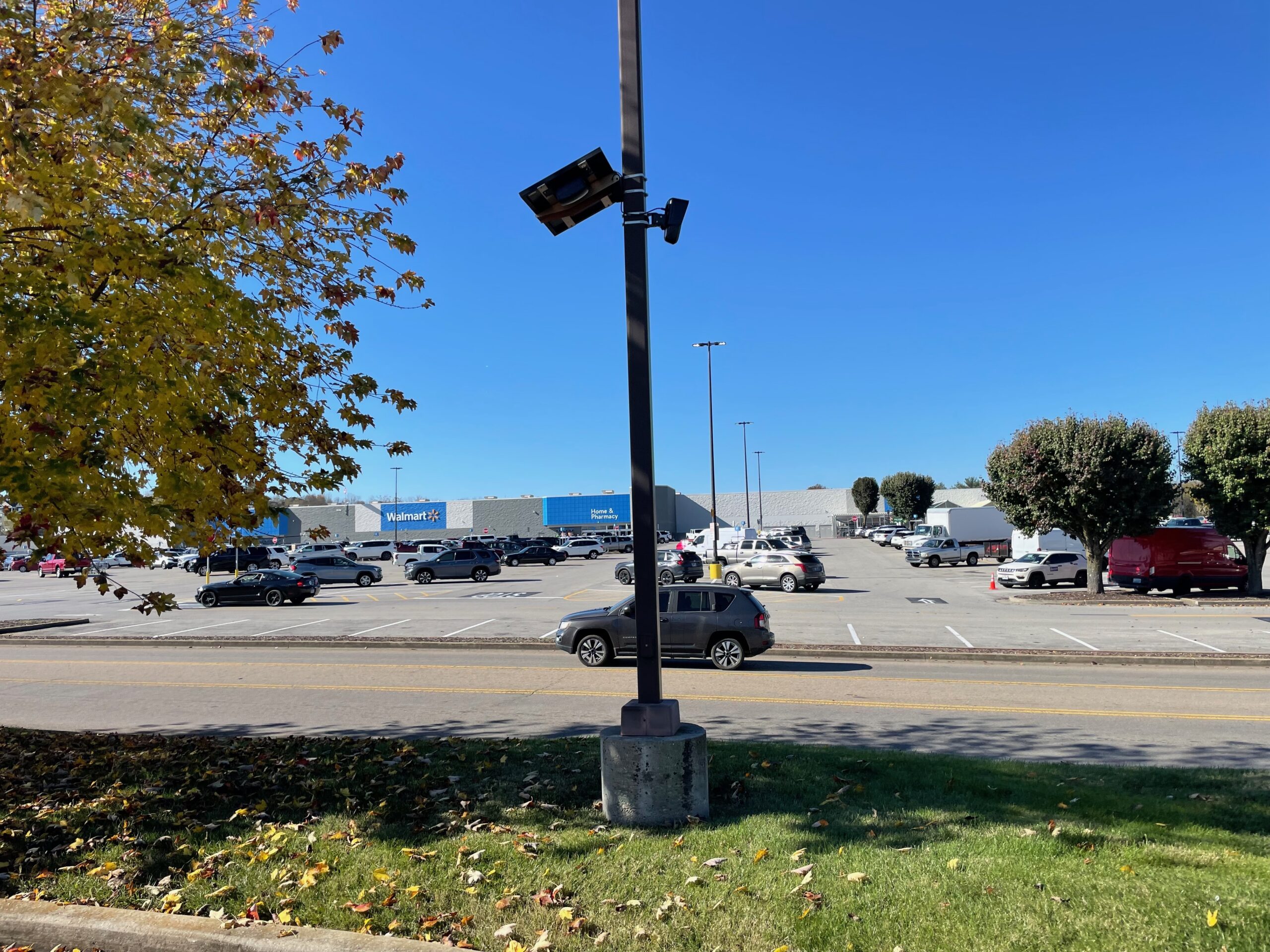
Alcoa:
ALPR camera near Walmart at Hunters Crossing.
|
| Reach beyond the city | Multi-Geo connects local camera reads to out of city and out of state travel history. The relevant boundary is the network’s sharing configuration, not the city limit sign. |
| Association, not just location | Convoy maps who a resident travels near. In a county this size that can include families, coworkers, carpools, and people traveling to the same recurring locations. |
| The predicate problem | The Tennessee training example describes officers reviewing a vehicle’s travel history and then stating that they had probable cause before moving toward a stop. That makes the rules governing retrospective travel-history searches especially important. |
| The governance gap | No written Maryville policy has been produced covering the use of Multi-Geo or Convoy searches, including search justification, supervisor approval, and limits on multi-jurisdiction searching. |
| No notice to the driver | A driver generally would not know from the roadside camera itself whether a detection was later included in a travel-history or association search. |
The cameras pictured above are easy to see. The consequential part is largely invisible: how their detections can later be searched, combined, shared, and correlated. Once those capabilities exist, written rules governing access, justification, auditing, retention, and sharing become as important as the cameras themselves.
Read the Multi-Geo and Convoy Training Records Yourself
Everything on this page about the training material is checkable against the document below. This Tennessee public records release includes interface screenshots, training material, and the case examples described in Section 1. Readers are encouraged to verify the summary rather than take it on trust.
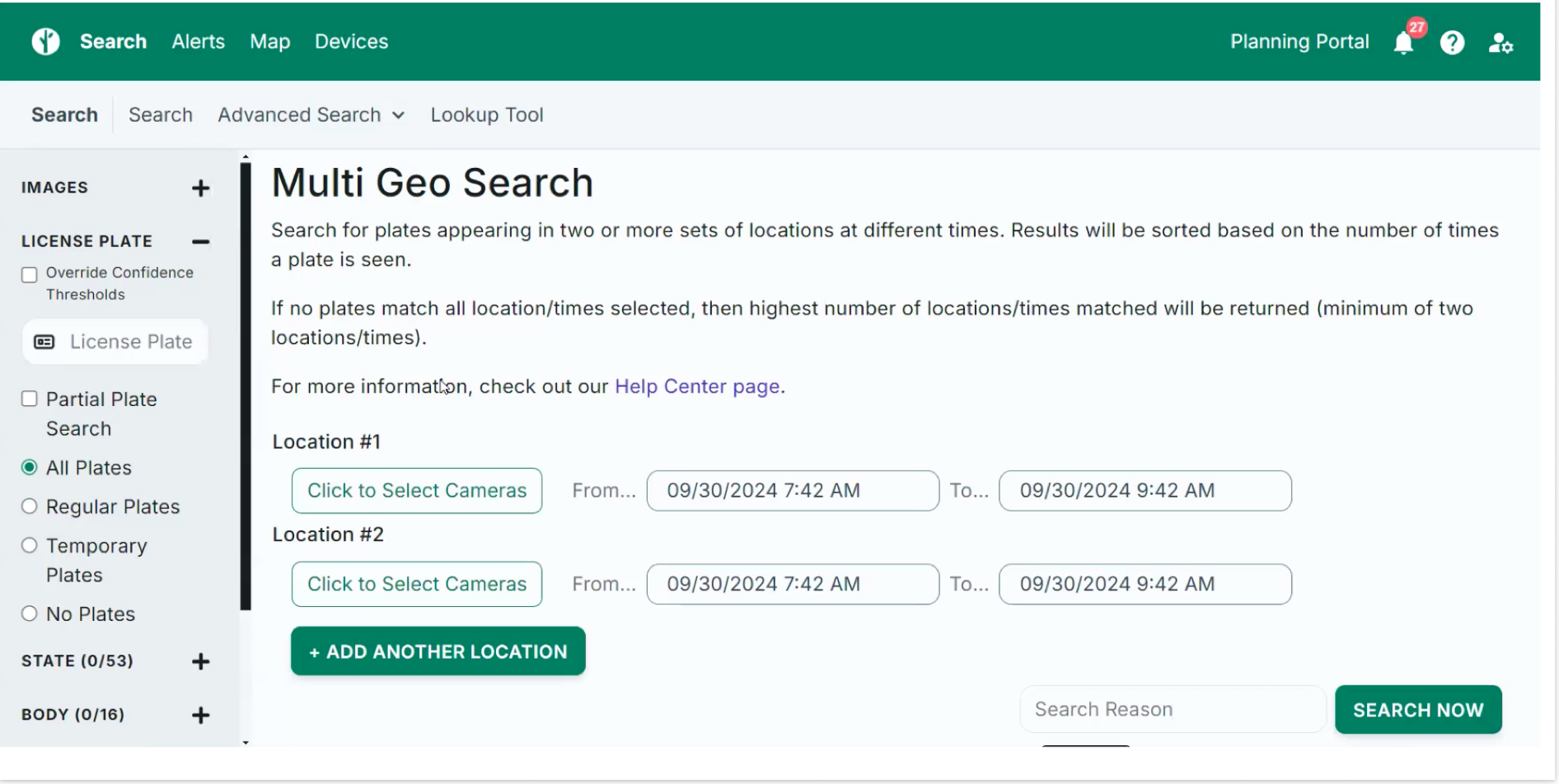
Supporting exhibits
Associated Press: Vehicle Location Databases and Cross Jurisdiction Tracking
An Associated Press investigation describes how government agencies have used nationwide vehicle location databases to follow drivers far beyond the places where individual plate scans were collected. Those systems combine records from networks of plate readers and let investigators search vehicle travel across large geographic areas.
- Mass collection creates searchable records of vehicle movement across many locations.
- Travel patterns are used to generate investigative leads.
- Data sharing extends access well beyond the jurisdiction where a plate was originally recorded.
- Public policies differ sharply on retention, auditing, and access limits, which is where local decisions actually bite.
Why it matters locally: once vehicle detections from Maryville, Alcoa, or anywhere else in East Tennessee enter a shared network, they become useful to investigators who have no connection to the place the camera sits. That is the entire mechanism this page is about, and it is why sharing settings, retention, auditing, and search access are local decisions with non local consequences.
Ask in Writing, and Ask for the Answer in Writing
Verbal reassurance at a council meeting is not a policy and cannot be audited. These are the specific, answerable questions worth putting to the City of Maryville, the City of Alcoa, and Blount County.
| Access | Does the agency have Multi Geo Search, Convoy Analysis, or any pattern based search capability, and which specific personnel can run those searches? |
| Written policy | Publish the written policy covering search justification, supervisor approval, retention, sharing, and warrant standards. If none exists, say so plainly and give a date by which one will. |
| Sharing settings | Which outside agencies can currently query local reads, is any nationwide sharing setting enabled, and who has authority to change that setting? |
| Audit | Who reviews the search logs, how often, and has any independent review ever been performed by someone outside the department? |
| Transparency reporting | Publish periodic counts of searches run, searches by outside agencies, policy violations found, and outcomes. |
| Before expansion | Hold a noticed public meeting before adding new cameras, new search products, or new AI investigative features to the existing contract. |
Asking for rules, audits, and limits is not opposition to law enforcement. It is the ordinary expectation that a government capability of this reach should be written down, bounded, and reviewable. Officers benefit from a clear written standard as much as residents do, because a documented policy is what protects a good faith search from later being characterized as something else.
Common Questions About Multi-Geo and Convoy Search
Is this not just about catching criminals?
These tools run against a database built by photographing everyone who drives past a camera. Residents, commuters, churchgoers, students, and visitors are collected on the same terms as anyone else. In the Tennessee training example, the sequence began with a database query rather than with observed criminal conduct. That distinction is the entire subject of this page.
Have courts said a warrant is required?
Not settled, and honesty requires saying so. In Schmidt v. City of Norfolk, a federal district court denied the city’s motion to dismiss in February 2025, then granted summary judgment for the city on January 27, 2026, finding that Norfolk’s system did not capture enough of a person’s movements to be a Fourth Amendment search. That ruling is on appeal to the Fourth Circuit, with ACLU and EFF amicus support. Carpenter v. United States (2018) and the more recent Chatrie decision both cut toward protection for aggregated location data. The law is unsettled and moving. Local written policy does not have to wait for it.
Does Maryville use Multi-Geo or Convoy Search?
The records published here are regional training materials, not Maryville’s own audit logs, and this page does not assert that any specific local search has been run. Because local cameras feed the same network, residents can reasonably ask the City directly whether those tools are licensed and available, and request that answer in writing. Section 12 lists the specific questions.
Is convoy detection actually a real advertised feature?
Yes. Flock Safety’s own platform product page lists convoy detection alongside plate swaps and hotspot alerts among the proactive insights offered to customers. Convoy Analysis and Multi Geo Search have also appeared for years as separately priced add-on packages in public procurement records filed with city councils. This is documented vendor capability, not inference.
Why is being in an association list a problem if nothing happens?
Because you cannot see it, cannot correct it, and cannot know when it is consulted. An association assembled from parking lot co-occurrence carries no context about why two vehicles were near each other. It carries only the fact that they were. Later, in a different investigation, that fact is available to whoever queries it, stripped of the innocent explanation that produced it.
What specifically should residents ask for?
A published written policy, a warrant standard for retrospective pattern searches, documented supervisor approval, defined retention limits, disclosed sharing settings, independent audit of search logs, and regular public transparency reporting that covers multi-location and convoy searching specifically rather than plate lookups in general. Section 12 puts these in a form you can hand to an official.
|
Public records show non city plates added to a Flock Safe List, exempting them from alerts, with no written policy governing who gets added or why.
|
|
A countywide drone as first responder program pitched at 300,000 to 600,000 dollars per year, layered on top of the existing camera network.
|
|
Which departments are connected across the region, how data moves between agencies, and what the regional surveillance footprint looks like.
|
|
Background on the private company that owns the hardware, hosts the database, and sells search access back to government, including the OS Investigate breakdown.
|
|
The full picture, including the procurement sequence, oversight gap analysis, Fourth Amendment context, and how to take action locally.
|
Primary Sources and Related References
- Tennessee training document: Multi-Geo and Convoy training materials released under the Tennessee Public Records Act. Full PDF.
- Flock Safety platform product page: lists convoy detection alongside plate swaps and hotspot alerts among proactive insights. flocksafety.com/products/flock-safety-platform.
- Vendor descriptions of Multi Geo Search and Convoy Search: statements of work filed in public city council packets, including the Flock Group statement of work in the Town of Prosper, Texas agenda materials.
- WIRED on OS Investigate, formerly Nightshift: Dhruv Mehrotra and Dell Cameron, August 19, 2026, reporting 69 prewritten prompts, 19 pattern focused, and 14 requiring no plate, name, or physical description. WIRED. Full breakdown on the Who Is Flock Safety? page.
- Washington Post investigation into ALPR misuse: August 2026, identifying at least 50 officers accused, charged, or convicted of unauthorized license plate reader use, with Flock’s system appearing in 46 of those cases. Washington Post.
- Institute for Justice ALPR abuse database: more than 100 catalogued incidents nationwide, including stalking and wrongful stops.
- Schmidt v. City of Norfolk, E.D. Va.: motion to dismiss denied February 2025; summary judgment for the city January 27, 2026; on appeal to the Fourth Circuit as No. 26-1227. ACLU case page and joint ACLU, ACLU of Virginia, and EFF amicus brief filed April 20, 2026. ACLU case page; Institute for Justice.
- Associated Press investigation into vehicle location databases: AP.
- ACLU overview of Flock expansion concerns: ACLU, October 17, 2025.
- Regional camera documentation: DeFlock.org and the interactive map at maps.deflock.org.
- Constitutional cases: Carpenter v. United States, 585 U.S. 296 (2018); United States v. Jones, 565 U.S. 400 (2012); Chatrie v. United States (2026).