Flock Camera Placement, Easements & Roadside Safety
A field investigation into the physical infrastructure behind Flock Safety cameras: where poles are placed, what property rights, permits, licenses, or easements authorize them, whether roadside installations use the safety hardware shown in approved plans, and who installs and maintains the equipment. Photographs from multiple locations can be examined together to identify patterns and the records needed to verify them.
☰ Jump to
The Camera Is Also Physical Infrastructure
Most debate about automated license plate readers focuses on what the cameras collect, how long records are retained, and who can search the resulting database. Those are important questions, but they are not the subject of this investigation.
A Flock camera also has to physically exist somewhere. It needs a pole, foundation or mounting point, access to land, installation work, ongoing maintenance, and legal authority to occupy that location.
FLOCK CAMERA
│
├── needs a physical location
│
├── needs authority to use that location
│   ├── public right-of-way?
│   ├── utility easement?
│   ├── private property?
│   ├── permit?
│   ├── license?
│   └── other agreement?
│
├── needs physical hardware
│   ├── pole
│   ├── base / foundation
│   ├── camera
│   ├── solar / power equipment
│   └── communications equipment
│
├── needs installation
│
└── needs maintenance
    │
    ▼
PHYSICAL INFRASTRUCTURE
COMES BEFORE THE DATA
Different Sites, Different Installations, the Same Questions
Field documentation now shows several different ways local ALPR equipment has been physically installed around Maryville. Some cameras use dedicated standalone poles. One documented installation sits in shopping-center landscaping. Another is mounted to existing fixed infrastructure.
Those differences make site-specific records especially important. For each location, the questions are the same: where does the equipment physically sit, who controls the property or infrastructure, what authorizes the installation, what hardware was specified, and what was actually installed?
Site A · Foothills Mall Drive
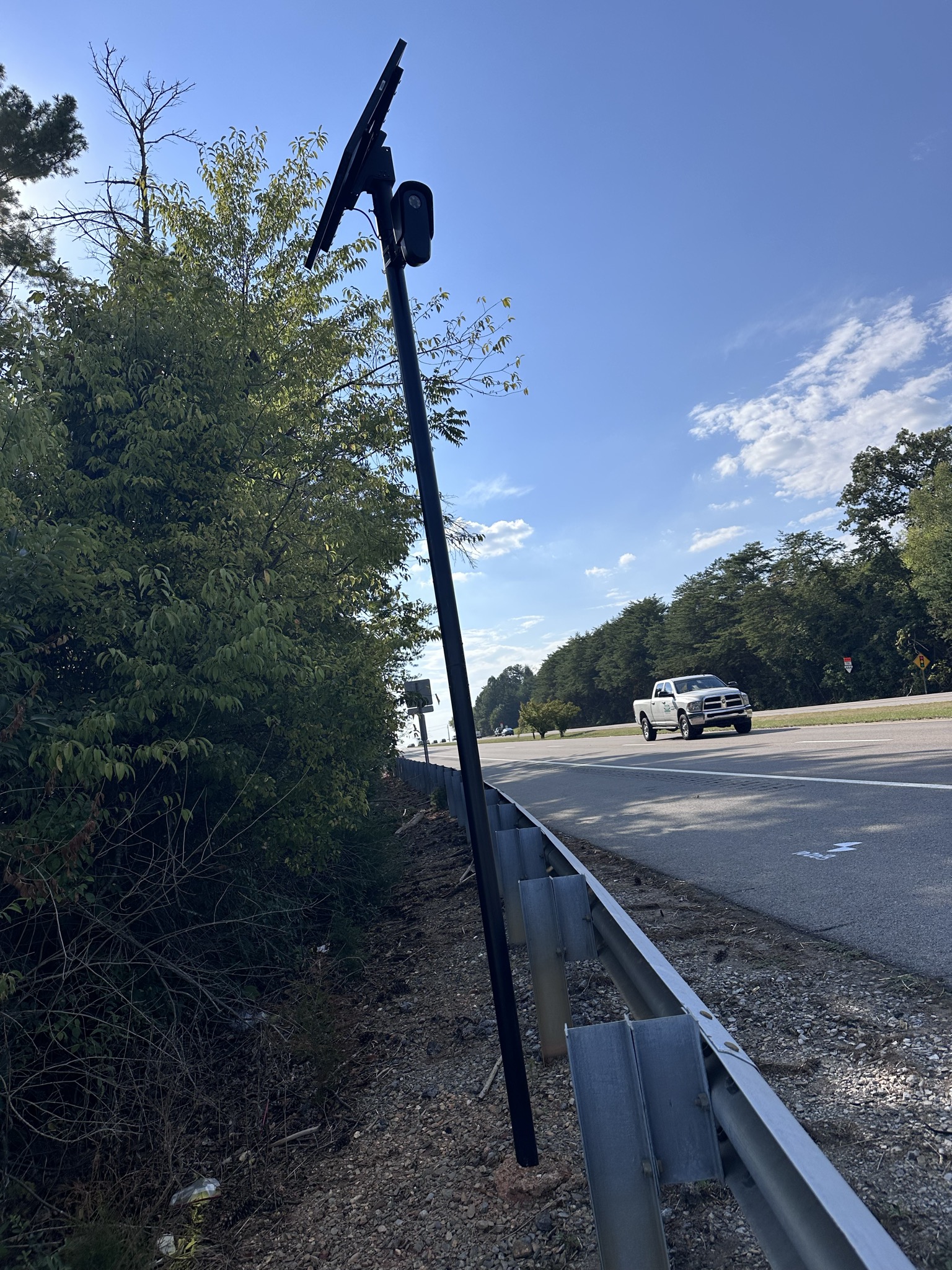
A Flock Safety pole was photographed during the week of June 8, 2026 near 955 to 977 Foothills Mall Drive, Maryville, Tennessee 37801, at approximately 35.7526294, -83.9957305. The photographs preserve the visible installation condition at the time the site was documented.
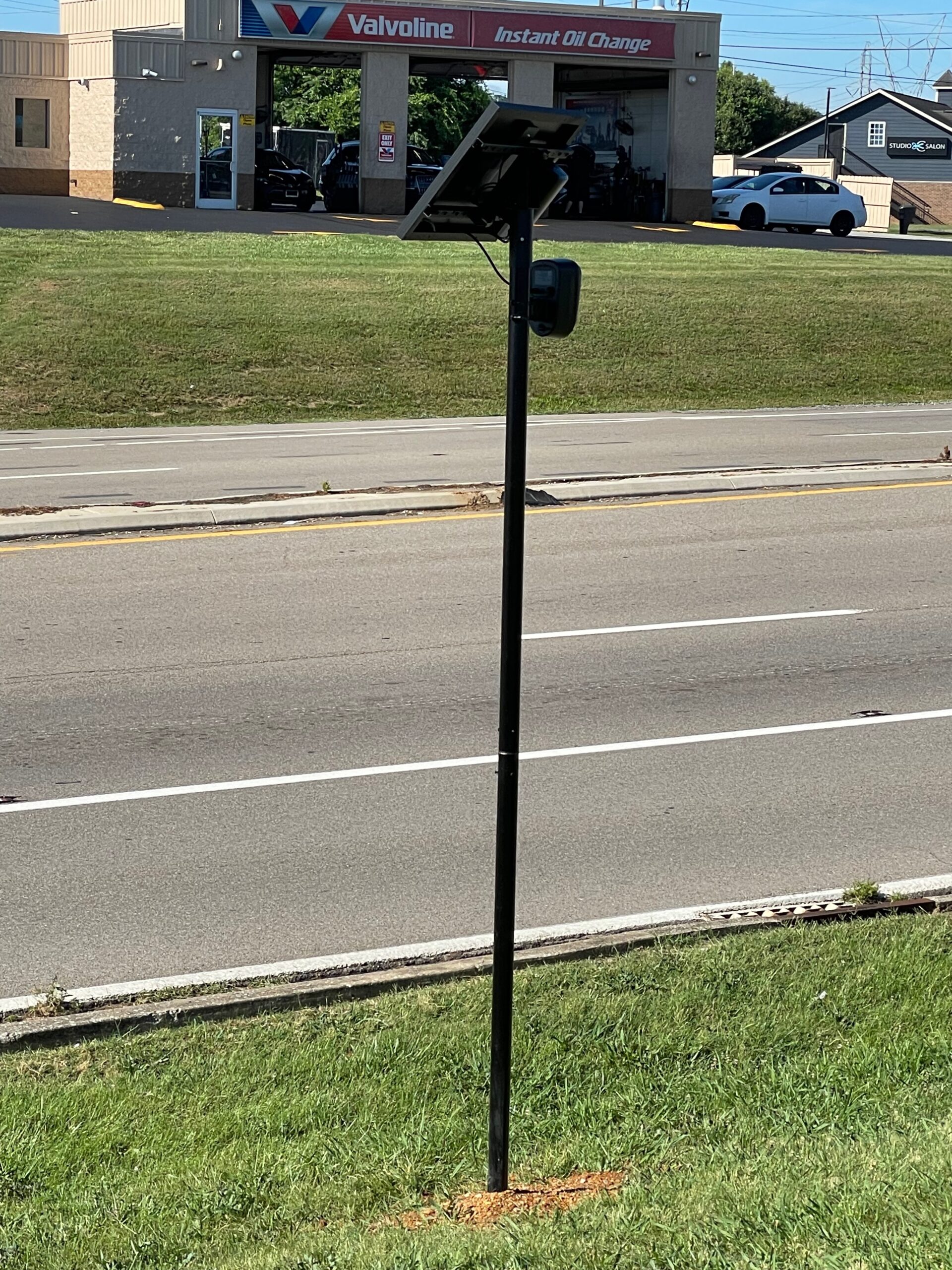
Camera, roadside pole, and solar assembly as documented in the field.
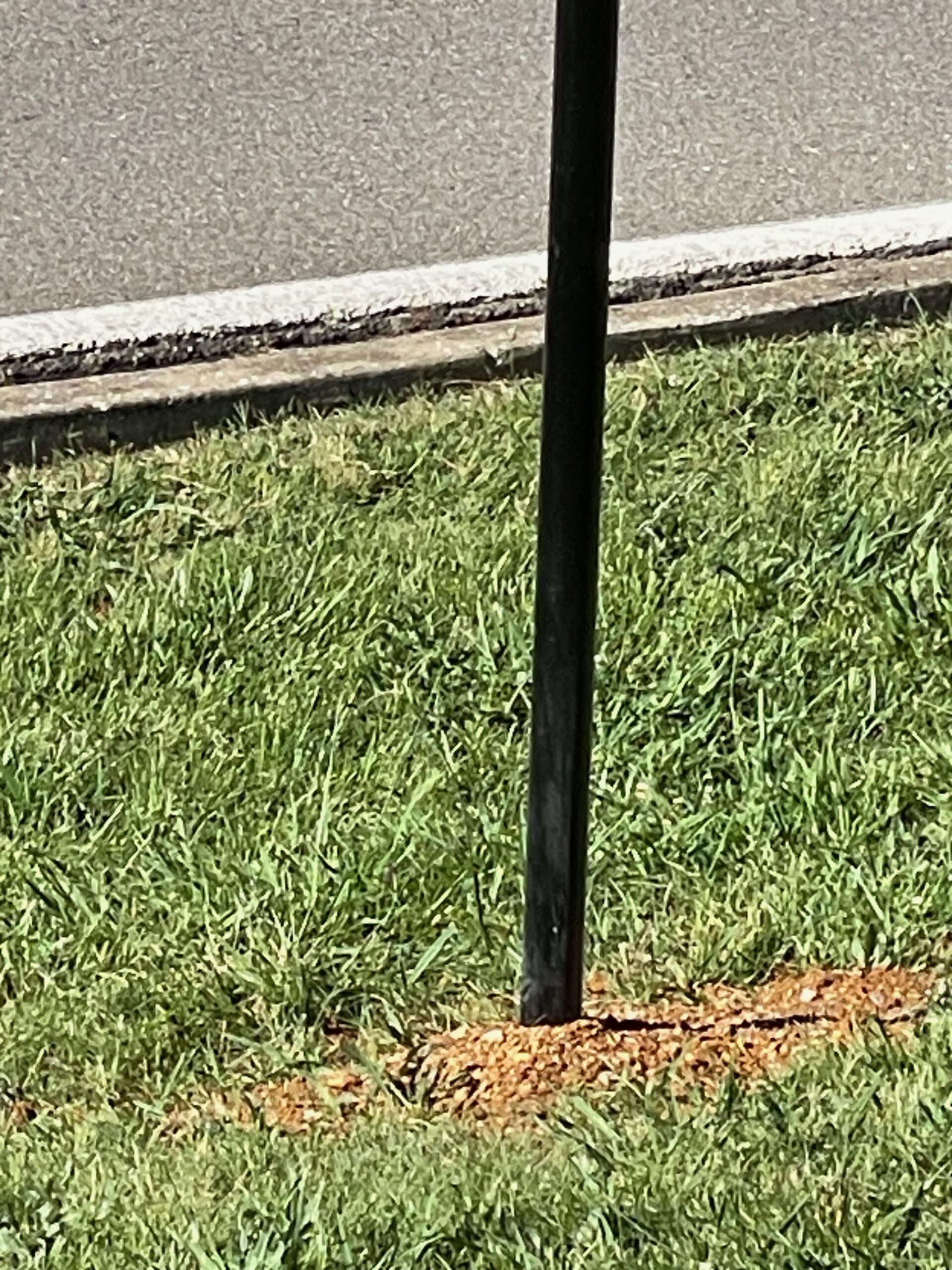
Close view of the portion of the pole and base visible when photographed.
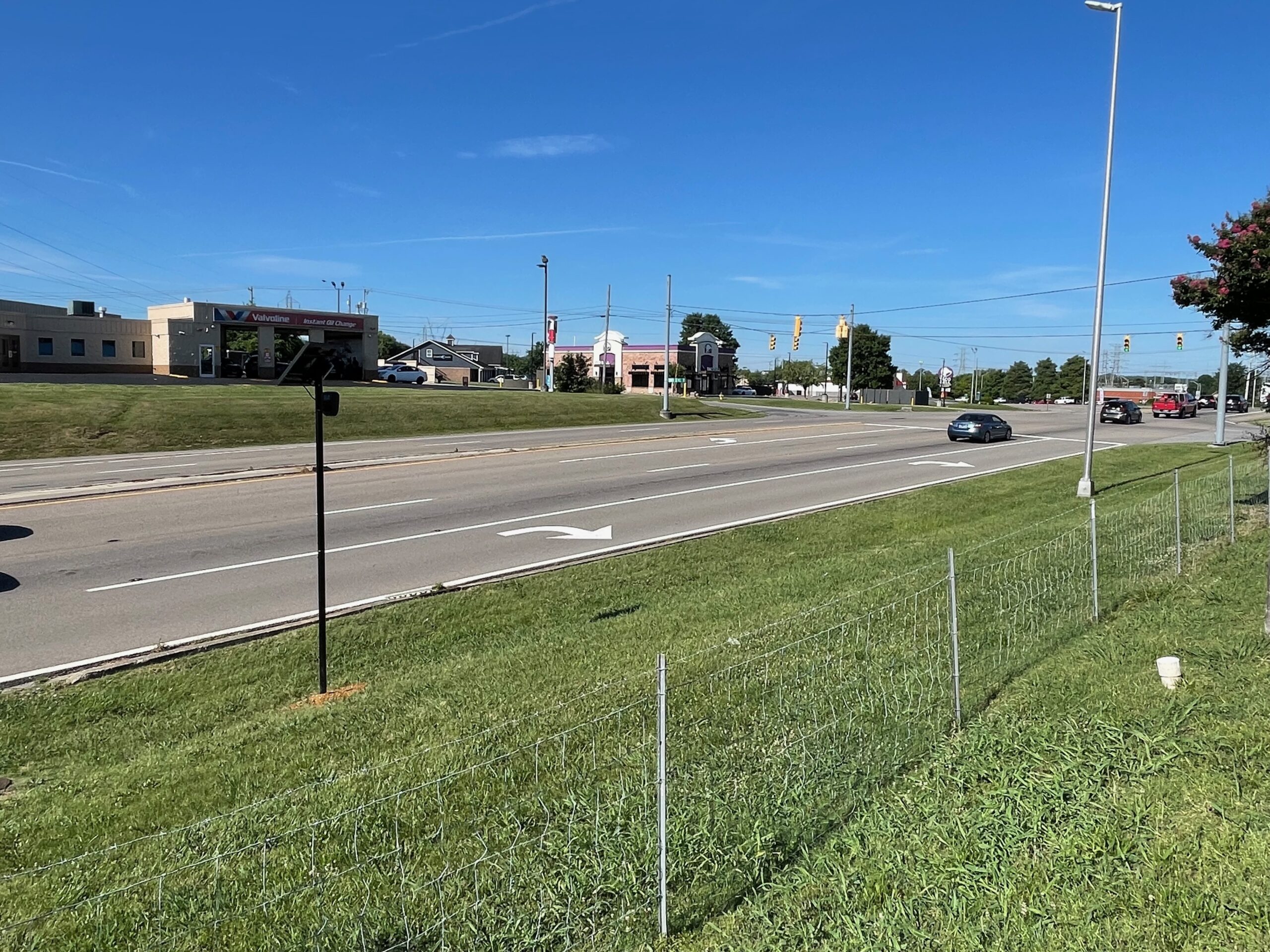
Wider view documenting the pole’s position relative to the roadway.
Site B · Maryville Commons
A separate ALPR installation has been documented at Maryville Commons, 700–742 Watkins Rd, Maryville, TN 37801. The pole sits in landscaping immediately beside the shopping-center monument sign. The photographs document the location, pole placement, a visible foundation instruction, mounting hardware, and surrounding property context.
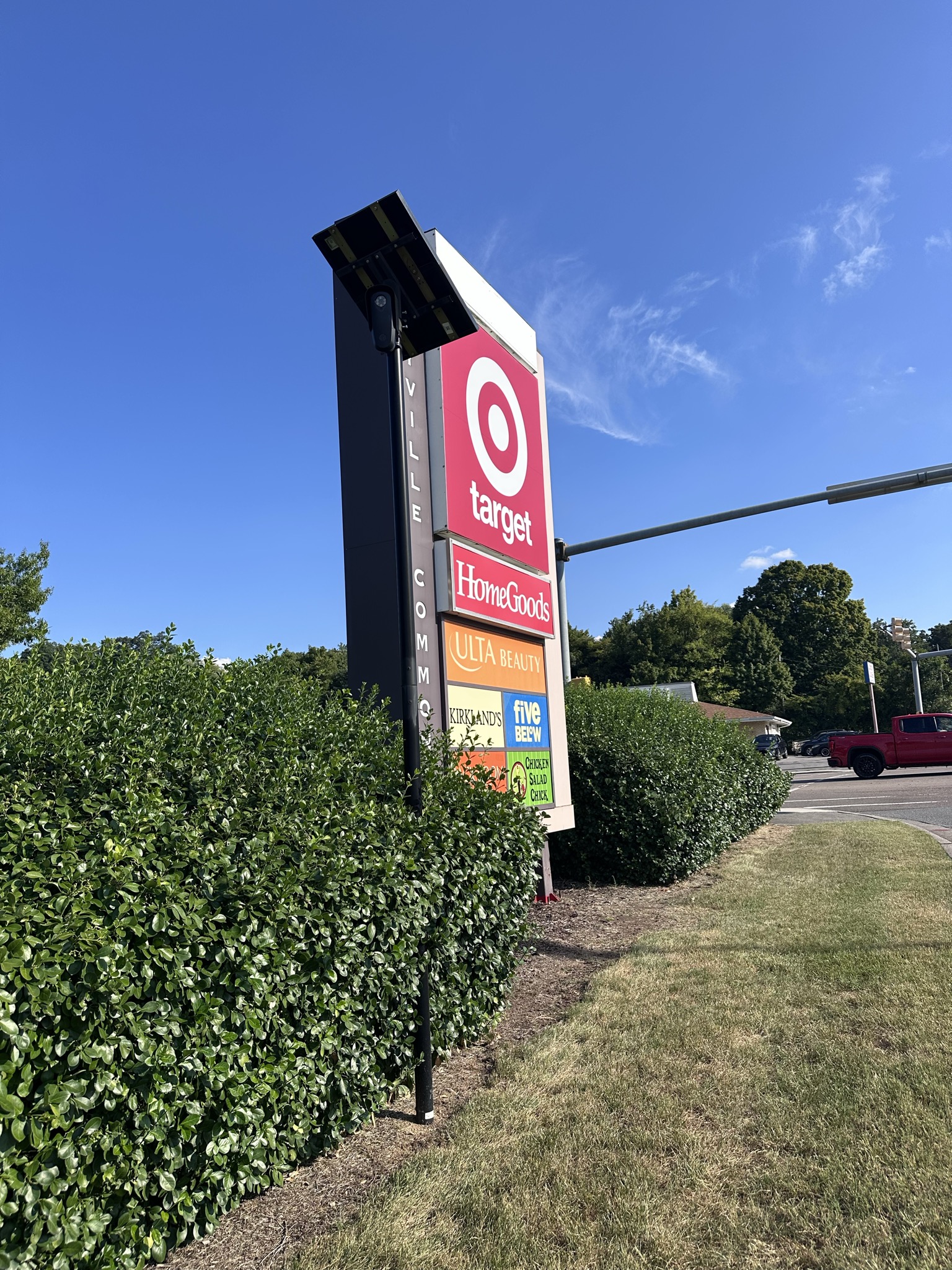
Wide field view documenting the ALPR camera beside the shopping-center monument sign.
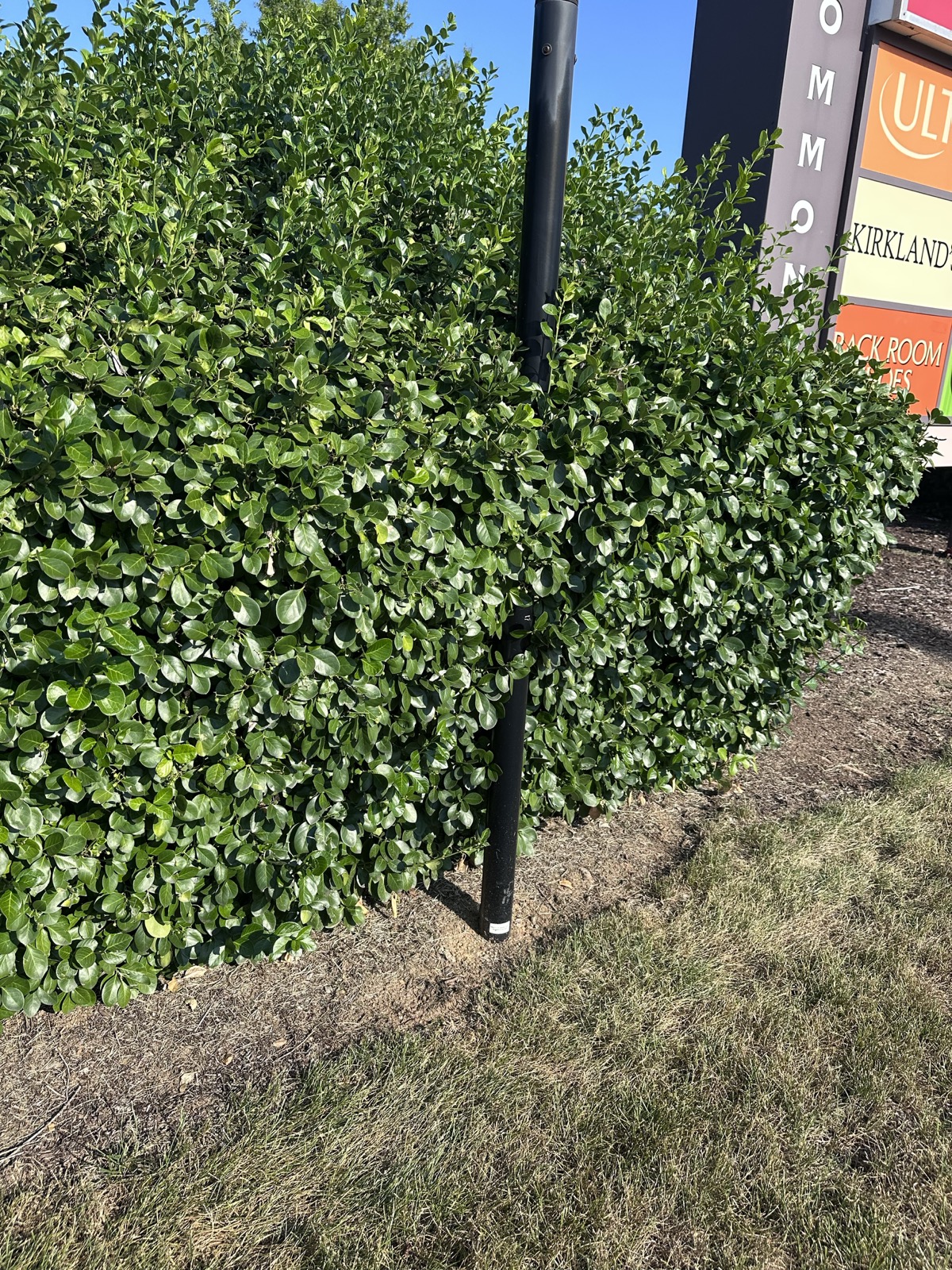
The camera pole enters the landscaped area beside the shopping-center sign.
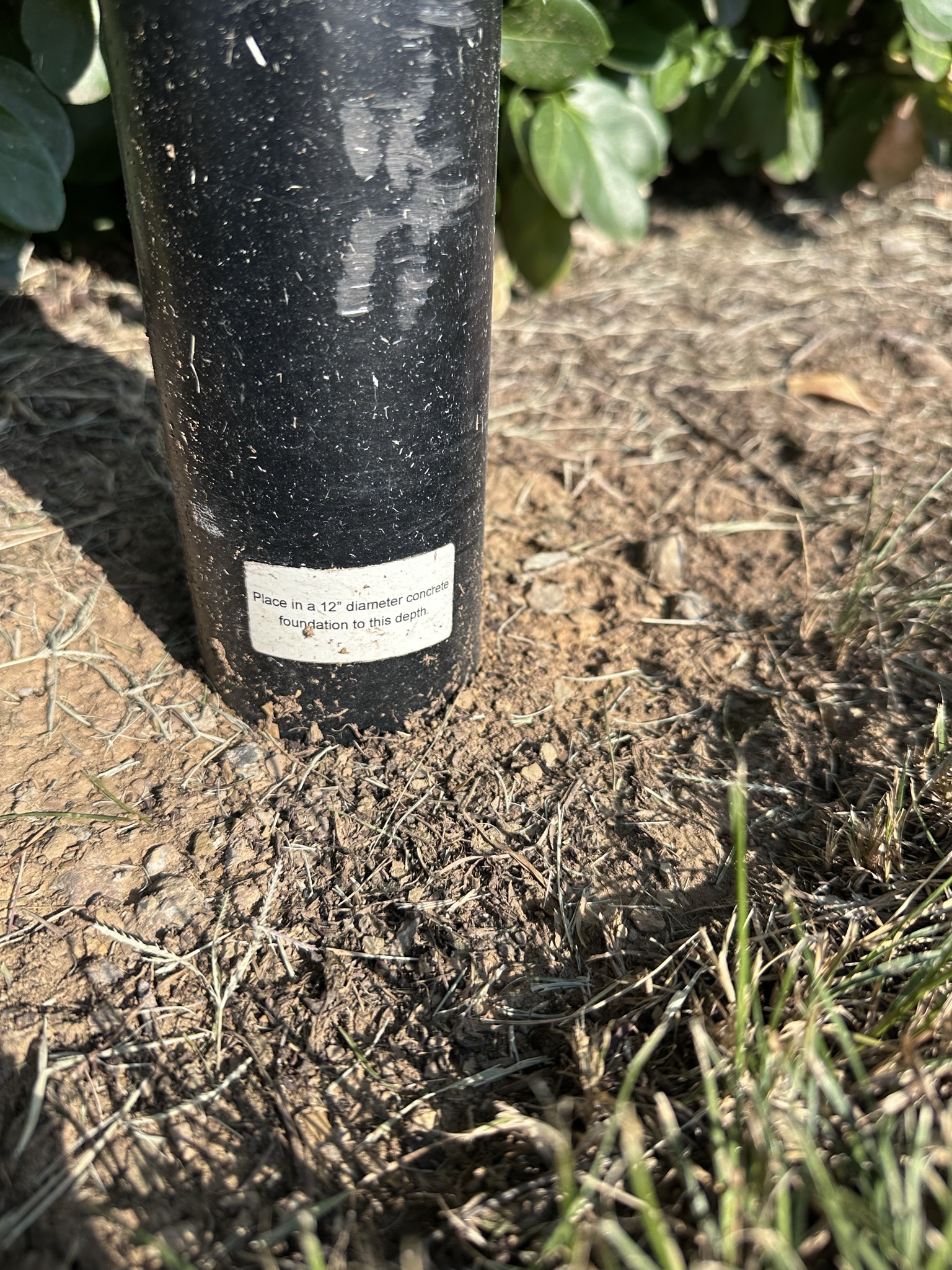
A label on the pole states: “Place in a 12" diameter concrete foundation to this depth.”
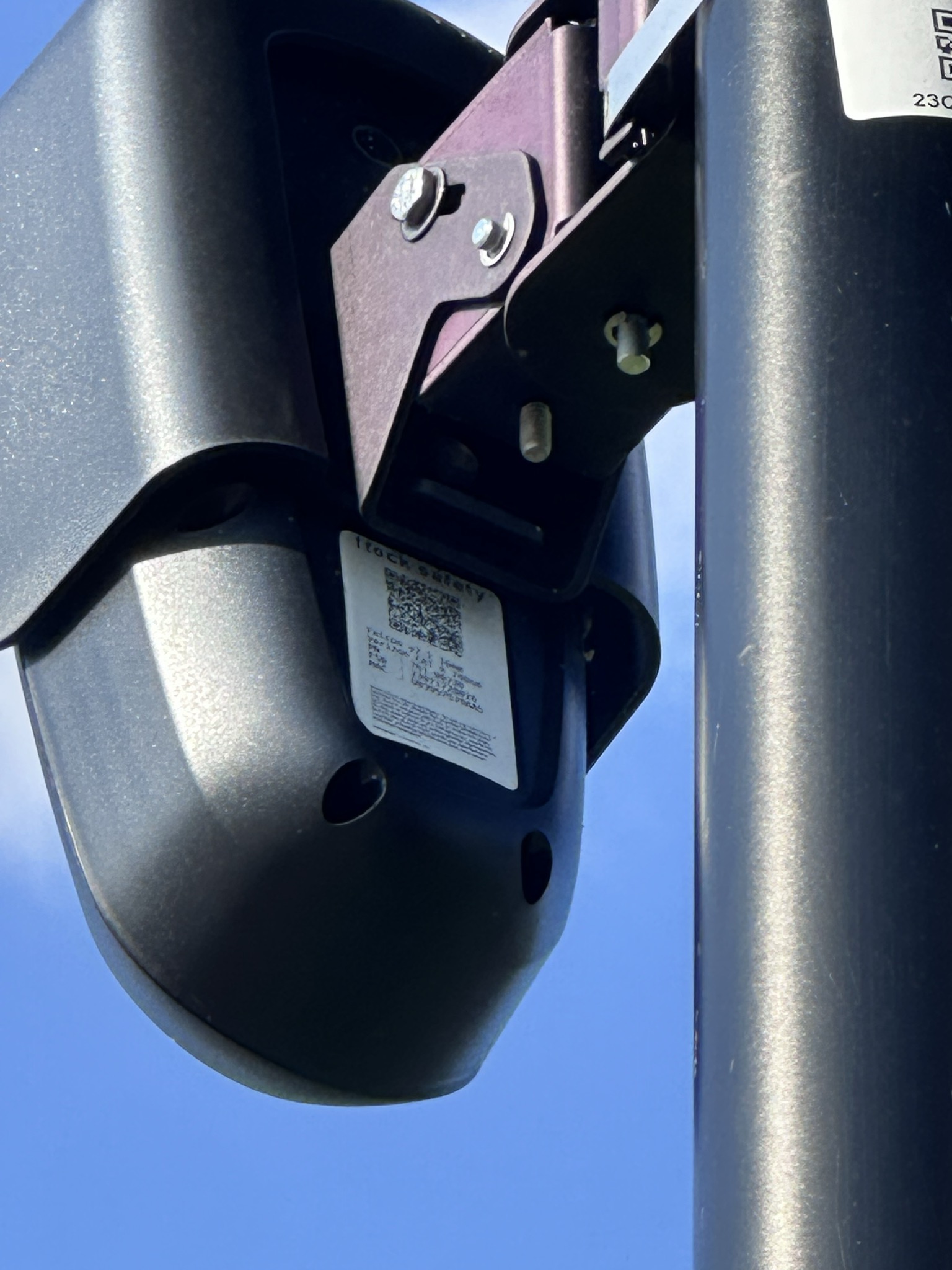
Close view documenting the camera housing, bracket, mounting hardware, pole, and equipment labels.
Site C · 2864 Morganton Road
Another standalone Flock camera pole has been documented at 2864 Morganton Rd, Maryville, TN 37801. The photograph provides a clear view of the camera, solar assembly, pole, surrounding roadside area, and the visible portion of the pole where it meets the ground.
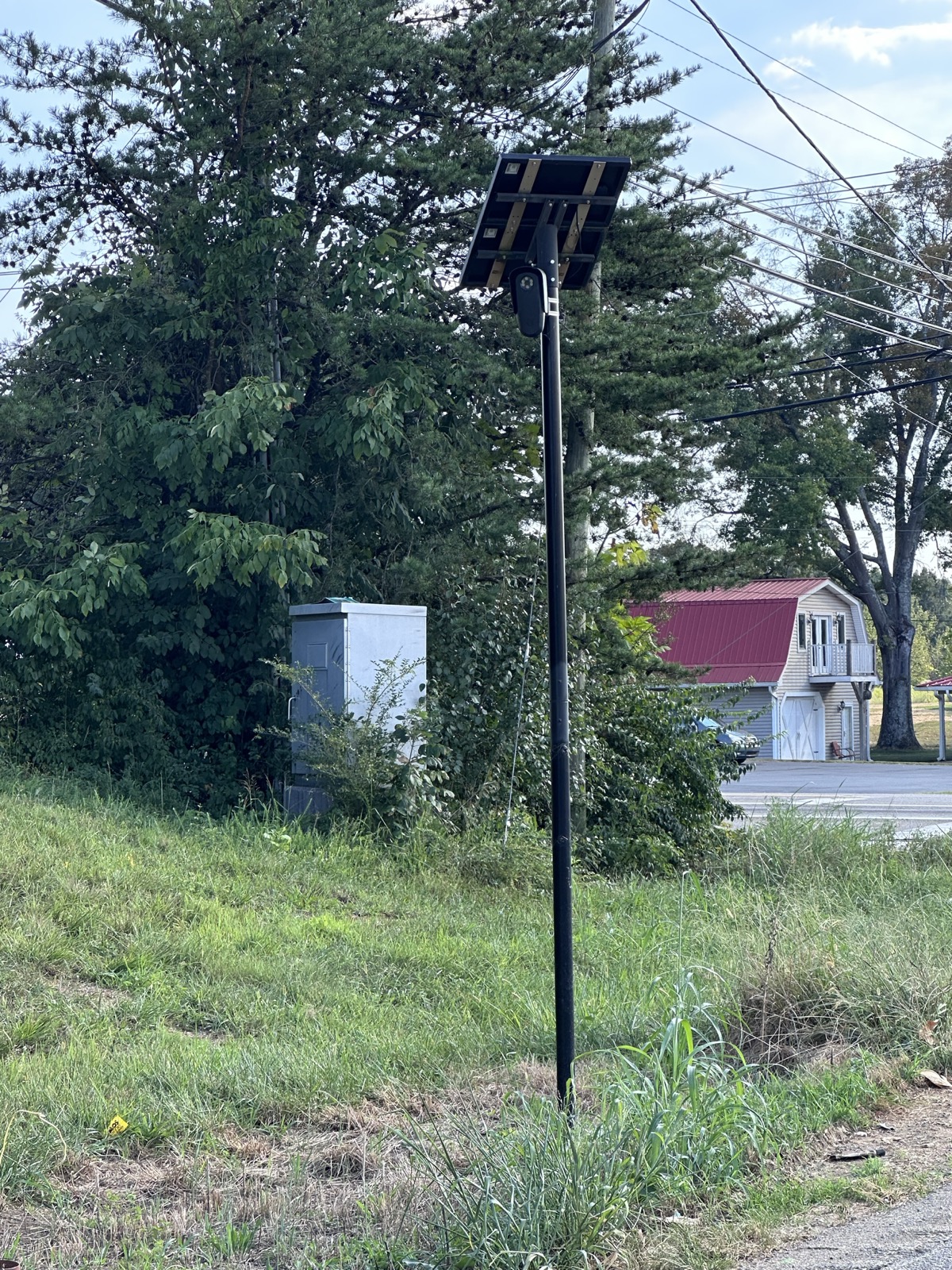
Standalone roadside Flock installation. No obvious breakaway or slip-base assembly is visible in the photographed portion of the pole above grade.
Site D · W Lamar Alexander Parkway
A fourth installation along W Lamar Alexander Pkwy, Maryville, TN 37801 illustrates a different physical arrangement: the camera is mounted to existing fixed infrastructure rather than using the same type of standalone camera pole documented at Morganton Road and other locations.
Flock camera documented mounted to existing fixed infrastructure rather than a standalone Flock pole.
FIELD-DOCUMENTED CAMERA INSTALLATIONS
│
├── FOOTHILLS MALL DRIVE
│   ├── standalone roadside pole
│   ├── solar assembly
│   └── visible base condition
│
├── MARYVILLE COMMONS
│   ├── shopping-center landscaping
│   ├── standalone pole
│   ├── concrete-foundation instruction
│   └── camera / mounting hardware
│
├── 2864 MORGANTON ROAD
│   ├── standalone roadside pole
│   ├── solar assembly
│   └── no obvious breakaway / slip base
│       visible above grade
│
└── W LAMAR ALEXANDER PKWY
    ├── existing fixed infrastructure
    └── camera attached to existing pole
          │
          ▼
FOR EACH LOCATION
│
├── identify parcel / right-of-way
├── identify pole / infrastructure owner
├── identify permit / agreement / consent
├── identify applicable installation detail
├── compare required hardware
└── obtain inspection / acceptance records
Who Controls the Ground Under the Camera?
Before evaluating the pole itself, there is a more basic question: what gives the camera the right to be at that location?
A camera may appear beside a road, utility pole, commercial property, or other existing infrastructure without making the underlying property arrangement obvious. The physical location therefore needs to be matched with the records governing that location.
FLOCK CAMERA LOCATION
│
├── PUBLIC HIGHWAY RIGHT-OF-WAY?
│   └── identify roadway authority
│
├── UTILITY EASEMENT?
│   └── identify easement instrument + holder
│
├── PRIVATE PROPERTY?
│   └── identify owner + permission
│
├── PUBLIC PROPERTY?
│   └── identify controlling government entity
│
└── OTHER PROPERTY INTEREST?
    └── license / agreement / permit
          │
          ▼
WHAT DOCUMENT AUTHORIZES
THIS CAMERA AT THIS LOCATION?
Tennessee law specifically recognizes that law-enforcement surveillance cameras may be installed on state-road rights-of-way as a non-highway use when permitted by the Tennessee Department of Transportation and when applicable requirements are satisfied. That does not determine the status of any particular local camera, but it illustrates why roadway ownership and site-specific authorization matter.
Reference: Tennessee Code § 55-8-198(f)(2) addresses TDOT authorization of law-enforcement surveillance cameras on state-road rights-of-way as a non-highway use. Read the statute.
Does Existing Utility Access Also Authorize a Police Camera?
Some roadside locations already contain power, telecommunications, or other utility infrastructure. That can create an important second question: whether the property interest being used for the camera is the same one that authorized the existing utility infrastructure.
An easement is not simply a generic permission to use land for any purpose. The relevant evidence is the actual recorded instrument and the rights it grants to particular parties for particular uses. The presence of utility equipment at a location therefore does not, by itself, establish authority for unrelated surveillance equipment.
Nor does it establish that the surveillance equipment is unauthorized. There may be a separate permit, license, property-owner agreement, attachment agreement, government authorization, or other document that supplies the necessary authority.
CAMERA AT A UTILITY / ROADSIDE LOCATION
│
├── EXISTING PROPERTY RIGHT
│   ├── utility easement?
│   ├── highway right-of-way?
│   ├── pole attachment?
│   └── private-property permission?
│
├── WHO HOLDS THAT RIGHT?
│
├── WHAT PURPOSE DOES IT AUTHORIZE?
│
└── FLOCK CAMERA
    │
    └── WHAT IS THE AUTHORIZING LINK?
        │
        ├── easement language?
        ├── use-and-occupancy permit?
        ├── license?
        ├── attachment agreement?
        ├── property-owner consent?
        ├── government agreement?
        └── another instrument?
Flock’s own implementation guidance recognizes this physical-property layer. Its published deployment materials identify state or city permits, licensing or attachment agreements with infrastructure owners, utility arrangements, and certain specialized right-of-way installations as items that may be required depending on the site.
References: Flock Safety Implementation Guide · TDOT Utilities, Encroachments & Agreements documents.
A Surveillance Pole Is Still a Roadside Object
Separately from property authority is the physical safety of a pole placed near traffic. Cameras, solar assemblies, poles, foundations, and related hardware can become roadside fixed objects. Their design and placement may therefore involve ordinary roadway engineering, permitting, and safety requirements.
Public records obtained through a Tennessee Public Records Act request include a Maryville Flock installation detail associated with TDOT permit Case No. 590786, prepared on behalf of the Maryville Police Department.
The drawing specifies an X-Squared breakaway base and an X-Squared slip base as part of the depicted pole assembly, along with the foundation, pole, camera, solar panel, and battery equipment.
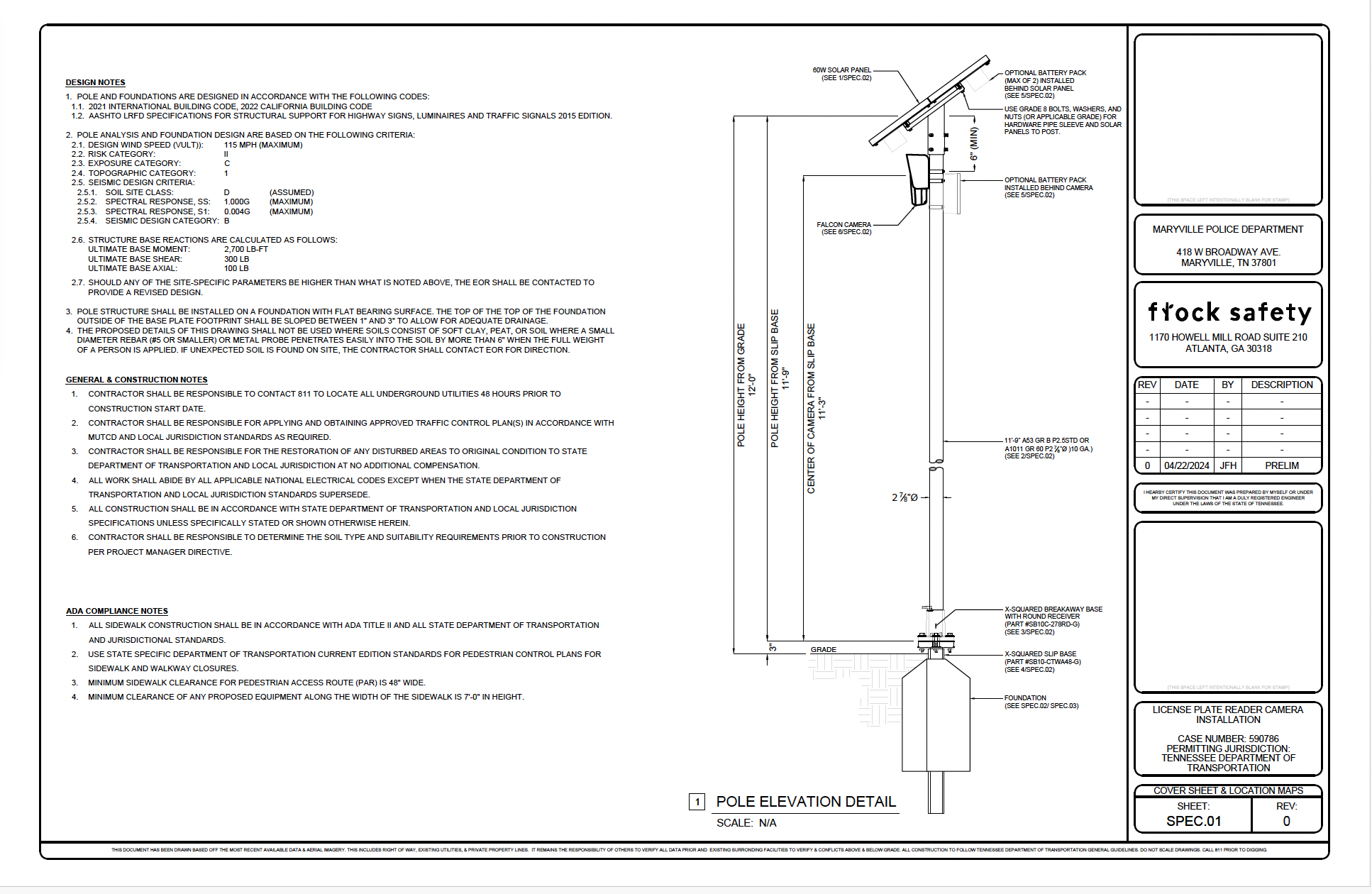
DOCUMENTED FLOCK INSTALLATION DETAIL
│
├── camera
├── solar panel
├── battery equipment
├── pole
│
├── X-SQUARED BREAKAWAY BASE
│
├── X-SQUARED SLIP BASE
│
└── foundation
    │
    ▼
ROADSIDE SAFETY HARDWARE
WAS PART OF THE DOCUMENTED DESIGN
Flock’s current implementation guidance likewise states that installations may require an NCHRP 350- or MASH-approved pole when located within a DOT right-of-way. TDOT also maintains current qualified-product categories for both NCHRP-350 and MASH roadside safety hardware.
References: Flock Safety Implementation Guide · TDOT Approved Roadside Safety Hardware.
Look for the Same Physical Feature Across Multiple Sites
The strongest use of field photographs is not to declare a violation from appearance. It is to identify a recurring physical characteristic and then ask whether the records for those locations explain it.
The field evidence now includes two very different physical settings. Foothills Mall Drive documents a roadside installation, while Maryville Commons documents a pole placed in shopping-center landscaping with a visible concrete-foundation instruction on the pole itself.
Those differences are useful. They show why each installation must be matched to its own property records, roadway jurisdiction, permit or authorization, approved construction detail, and inspection records rather than assuming that one site’s requirements apply automatically to another.
PUBLIC RECORD
│
└── documented roadside installation
    │
    ├── breakaway base
    └── slip base
          │
          │  COMPARE WITH
          ▼
FIELD PHOTOGRAPHS
│
├── Foothills Mall Drive · Maryville
├── Maryville Commons · Watkins Road
├── future Alcoa documentation
├── future Blount County documentation
└── other documented locations
          │
          ▼
FOR EACH LOCATION:
│
├── which road authority?
├── which permit?
├── which approved drawing?
├── which hardware was required?
├── what was installed?
└── was it inspected?
                 FLOCK CAMERA POLE
                        │
         ┌──────────────┴──────────────┐
         │                             │
         ▼                             ▼
  PROPERTY AUTHORITY              ROAD SAFETY
         │                             │
  Who may place it?              How must it be built?
         │                             │
  ROW / easement                 permit / drawing
  license / consent              breakaway hardware
  property rights                inspection
         │                             │
         └──────────────┬──────────────┘
                        ▼
                 PUBLIC RECORDS
                 SHOULD ANSWER BOTH
Who Actually Puts the Hardware in the Ground?
Property authority and roadside engineering are only part of the physical chain. Someone also surveys, installs, services, relocates, and maintains the equipment.
Local field documentation from April 6, 2026 shows a Dish-branded service van and technician working at a Maryville Flock camera site while a Maryville Police vehicle was present. Those photographs document third-party contractor participation at local Flock infrastructure, but they do not establish who hired or dispatched the contractor, the terms of any agreement, or what systems or data the technician could access.
FLOCK CAMERA SITE
│
├── LOCATION AUTHORITY
│   └── permit / easement / license / consent
│
├── INSTALLATION DESIGN
│   └── pole / foundation / safety hardware
│
├── INSTALLER
│   ├── Flock personnel?
│   └── third-party contractor?
│
├── INSPECTION / ACCEPTANCE
│
└── ONGOING MAINTENANCE
    └── who can physically access the equipment?
What Would Actually Answer These Questions?
The goal is to move from roadside observation to documentary verification. For each installation under review, the most useful records are:
ONE FLOCK CAMERA LOCATION
│
├── EXACT LOCATION
│   ├── coordinates
│   └── field photographs
│
├── PROPERTY / ROW
│   ├── parcel
│   ├── right-of-way
│   ├── utility easement
│   └── controlling entity
│
├── AUTHORITY TO PLACE CAMERA
│   ├── permit
│   ├── license
│   ├── easement language
│   ├── attachment agreement
│   ├── property-owner consent
│   └── other agreement
│
├── ENGINEERING / INSTALLATION
│   ├── approved drawing
│   ├── required base
│   ├── foundation
│   ├── clear-zone treatment
│   └── contractor records
│
└── COMPLETION
    ├── inspection
    ├── acceptance
    ├── corrective work
    └── maintenance records
Open questions
- Who owns or controls the land, easement, utility corridor, or right-of-way occupied by each camera?
- What document gives the customer, Flock Safety, or its contractor authority to place the equipment there?
- If a utility easement is involved, what rights does the recorded instrument actually grant and to whom?
- Is there a separate license, attachment agreement, use-and-occupancy permit, or property-owner authorization for the camera?
- Which roadway authority has jurisdiction over each roadside location?
- What approved construction or installation drawing applies to each pole?
- Does the applicable design require breakaway, slip-base, foundation, or other crash-safety hardware?
- What hardware was actually installed?
- Was the completed installation inspected or formally accepted?
- Who installed and who currently services the equipment?
1. Placement: What gives this Flock camera the legal or property authority to occupy this exact location?
2. Installation: What physical design was approved for this location, and does the completed installation match it?
Follow the Physical Infrastructure
This investigation examines the physical side of Flock deployment. Related pages document where cameras have been observed, who may operate commercial systems, and the broader surveillance programs connected to them.
Primary Sources and Technical References
Maryville / TDOT public records
TDOT permit Case No. 590786 and associated Flock installation detail
obtained through a Tennessee Public Records Act request.
Tennessee Code § 55-8-198
Addresses surveillance-camera placement on state-road rights-of-way,
including TDOT authority to permit law-enforcement surveillance cameras as
a non-highway use under specified conditions.
Read Tennessee Code § 55-8-198
Tennessee Department of Transportation
Utilities, Encroachments & Agreements materials, including
use-and-occupancy permits and private-license forms.
TDOT Utilities, Encroachments & Agreements
TDOT Roadside Safety Hardware
Current TDOT qualified-product materials include categories for NCHRP-350
and MASH-approved roadside safety hardware.
TDOT Qualified Products / Roadside Safety Hardware
Flock Safety Implementation Guide
Flock’s implementation materials identify DOT right-of-way pole
requirements, permits, specialty contractor requirements, infrastructure
licensing or attachment agreements, and utility arrangements as potential
deployment considerations.
Flock Safety Implementation Guide
Methodology: This investigation separates field observation from documentary evidence. Photographs establish what was visible at a documented location on the date photographed. A permit, engineering drawing, easement, property record, or other source establishes only what that particular document supports. The presence or absence of a visible component in a photograph is not, by itself, an engineering or legal determination. Site-specific property records, permits, agreements, approved drawings, and inspection records are needed before reaching a conclusion about authorization or compliance.