Public records show Flock Safety’s Multi-Geo and Convoy Search features are designed to track vehicles across multiple cities and states and identify vehicles traveling together. In one Tennessee case example, officers describe “got PC” (probable cause) for a stop based on travel history alone. That is a major shift toward pattern-of-life vehicle surveillance with serious Fourth Amendment implications.
These tools don’t just “read plates” — they reconstruct travel history and associations at scale.
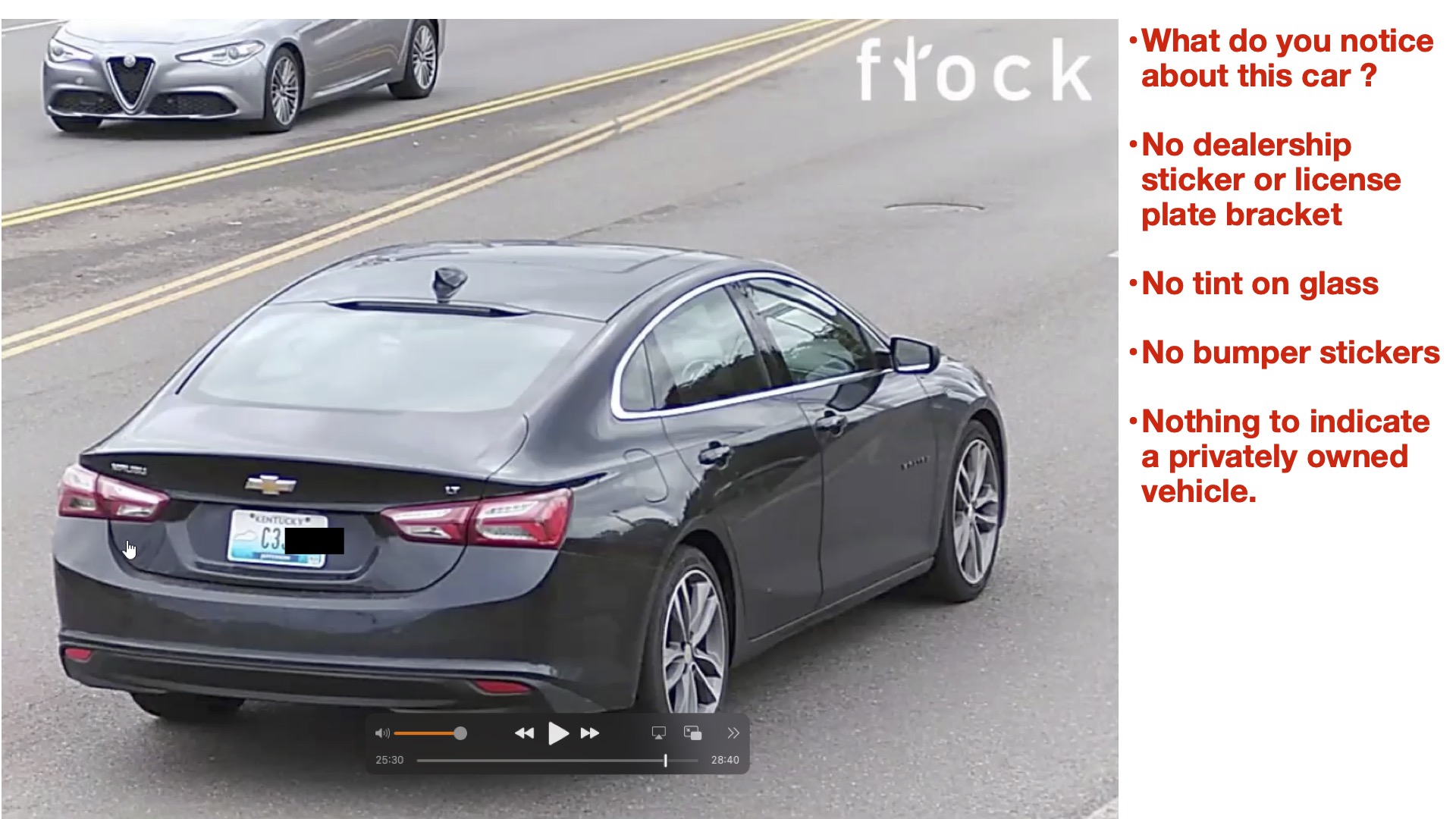
These traits are common for ordinary drivers and should not be treated as suspicious by themselves.
Flock Safety Multi-Geo & Convoy Search
Public-records research on how Flock Safety uses Multi-Geo and Convoy Search to track drivers across cities and states and link vehicles traveling together — and what that means for residents in Maryville, Alcoa, Blount County, and East Tennessee.
🚨 What These Tennessee Records Show
Newly released public records from East Tennessee show that Flock Safety’s Multi-Geo and Convoy Search features are built to (1) find vehicles that appear in multiple cities within a time window and (2) identify vehicles that travel together. The same training materials include a Tennessee example where officers describe “got PC” (probable cause) based only on travel history.
🧩 How Flock Multi-Geo + Convoy Turn ALPR Hits Into “Pattern of Life”
This infographic is specific to Flock Safety (many ALPR systems do not include these exact features). It also highlights that
Flock provides training slides and workflows to police for using Multi-Geo and Convoy.
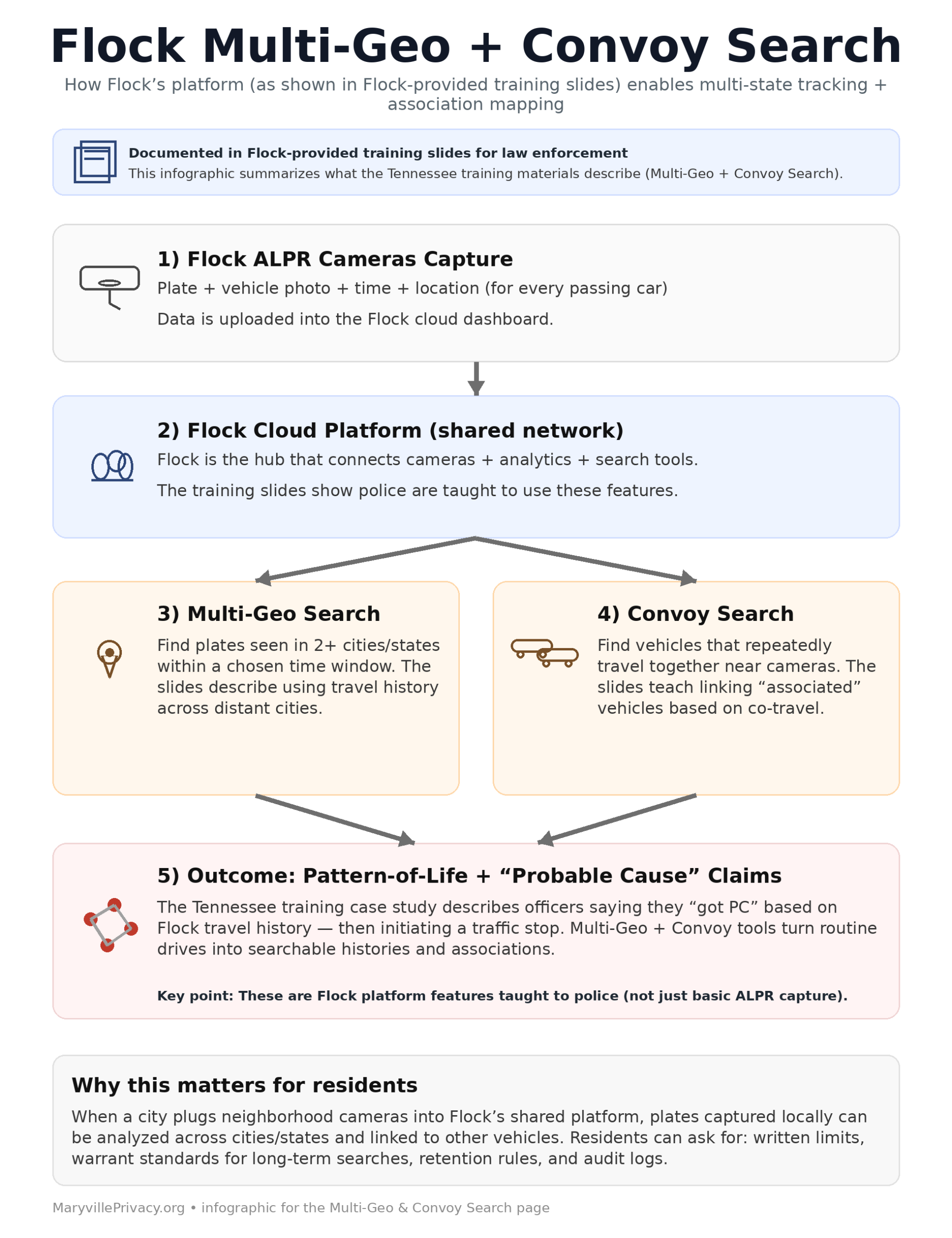
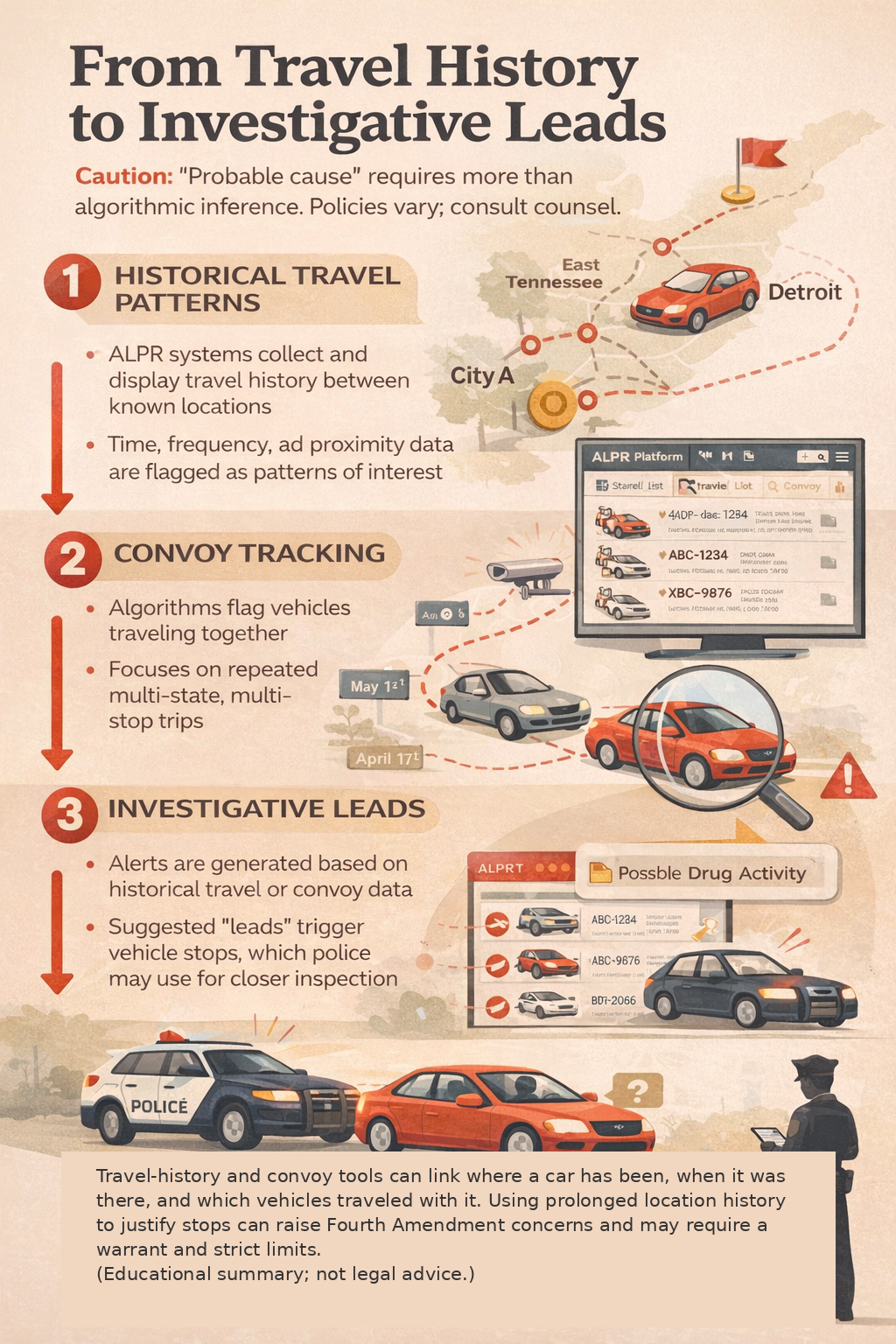
Prolonged, aggregated location tracking can implicate Fourth Amendment protections and is widely debated in courts and policy.
🔍 Multi-Geo Search
- Lets officers choose two or more cities and find vehicles that appear in all of them within a selected time range.
- Works across a shared network of ALPR cameras, turning scattered hits into a cross-city travel query.
- Training examples reference vehicles scanned in both Detroit and Knoxville and flagged for follow up.
🚗 Convoy Search
- Looks for vehicles that repeatedly appear near each other at ALPR cameras.
- Flags vehicles as “associated,” allowing investigators to map who a car tends to travel with.
- Case examples describe identifying a second “convoy” vehicle and tracking plate changes over time.
🧾 “Got PC” from travel history alone (as described in training materials)
One case summary in the training document describes officers reviewing ALPR history and noting repeated scans in Detroit and Knoxville. The notes then describe that they “got PC” (probable cause) based on that travel pattern and attempted the stop.
🏛️ Agencies and personnel named in the Tennessee document
- Knox County Sheriff’s Office (Knoxville, Tennessee).
- Detective Marcus Parton (listed in the materials as task force / narcotics / SWAT).
- Regional narcotics and task-force work tied to East Tennessee (the slides reference a task-force context).
The presence of Knoxville / Knox County agencies in the slides shows these features are part of regional training — not just a hypothetical marketing pitch.
📌 Why this matters locally
- Multi-Geo can connect neighborhood-camera hits to out-of-city and out-of-state travel history.
- Convoy can map who you drive with, not just where you drive.
- The Tennessee example shows travel history being treated as enough to claim probable cause for a stop (per the training summary).
- Residents deserve clear public rules: retention, sharing, audit logs, warrant standards, and limits on multi-jurisdiction searches.
📄 Read the Multi-Geo & Convoy Search Training Document (PDF)
The PDF below comes from a Tennessee public-records release. It includes screenshots and case summaries describing how Multi-Geo and Convoy Search are used to follow vehicles between cities, build “patterns of life,” and link vehicles traveling together.
One case example describes a stop that followed review of Flock ALPR history, with officers stating they “got PC” based on the travel pattern. This matters because it shows location history being treated as a basis for probable cause rather than just an investigative lead.
If the embedded viewer does not load on your device, open the PDF directly using the link above.
📰 National Reporting: AP Investigation on Vehicle Location Databases
An Associated Press investigation describes how government agencies have relied on nationwide vehicle location databases to follow drivers far from where data was collected. These systems are built from networks of license plate readers and enable long-range searching of travel history.
- Mass collection makes it easy to follow people across many states.
- Travel patterns can be used to generate investigative leads and targets.
- Data-sharing extends access far beyond local voters and local oversight.
- There is often limited public clarity on retention, audit logs, and access limits.
🔗 Read the AP vehicle tracking investigation
🗣️ Ask local officials for clarity
If you’re concerned about how Multi-Geo and Convoy tools could be used on drivers in Maryville and Blount County, ask local leaders to:
- Confirm whether local agencies have access to Multi-Geo and/or Convoy Search.
- Publish written policies on retention, sharing, search limits, and warrant standards.
- Release summary statistics (transparency reporting) on how often these searches are used.
- Hold a public meeting before expanding ALPR tracking capabilities or adding new features.
MaryvillePrivacy.org is a resident-run transparency project. If you have documents or questions, use the site contact options in the footer.
❓ Common questions about Multi-Geo & Convoy Search
Is this just about catching criminals?
The tools can be run on a database built from scanning everyone who drives past cameras. That means ordinary residents, churchgoers, workers, students, and visitors can be swept into the same system, even if they’re never accused of a crime.
Does this replace the need for a warrant?
The Tennessee training example describes officers claiming “PC” based on travel history alone. Whether courts ultimately require warrants for certain uses, residents are justified in demanding clear local rules, auditing, and limits when location history is used to justify a stop.
Does Maryville already use Multi-Geo or Convoy Search?
The records on this page are regional training materials, not Maryville’s internal audit logs. Because Maryville is connected to the broader network, residents can reasonably ask local officials directly whether Multi-Geo/Convoy searches are available and how they’re governed.
Why is this a Fourth Amendment issue?
Long-term automated tracking of someone’s movements and associations can be as intrusive as physically following them. When systems log routine drives and then mine that history without warrants or individualized suspicion, it can look less like targeted policing and more like continuous surveillance.
What should residents ask for?
Written policies, warrant standards for long-term searches, shorter retention where appropriate, strict access controls, audit logs, and regular public transparency reporting that covers Multi-Geo/Convoy usage.
This page is part of the MaryvillePrivacy.org transparency project, documenting how Flock Safety’s license plate reader cameras and tools like Multi-Geo Search and Convoy Search are used in East Tennessee. By reviewing public-records releases, we help residents in Maryville, Alcoa, and Blount County understand how ALPR systems can build travel histories and convoy associations that affect ordinary drivers — and why these questions matter for Fourth Amendment rights and local policy.